Most people think Gujarat is a winter destination.
They're not wrong. But they're missing something.
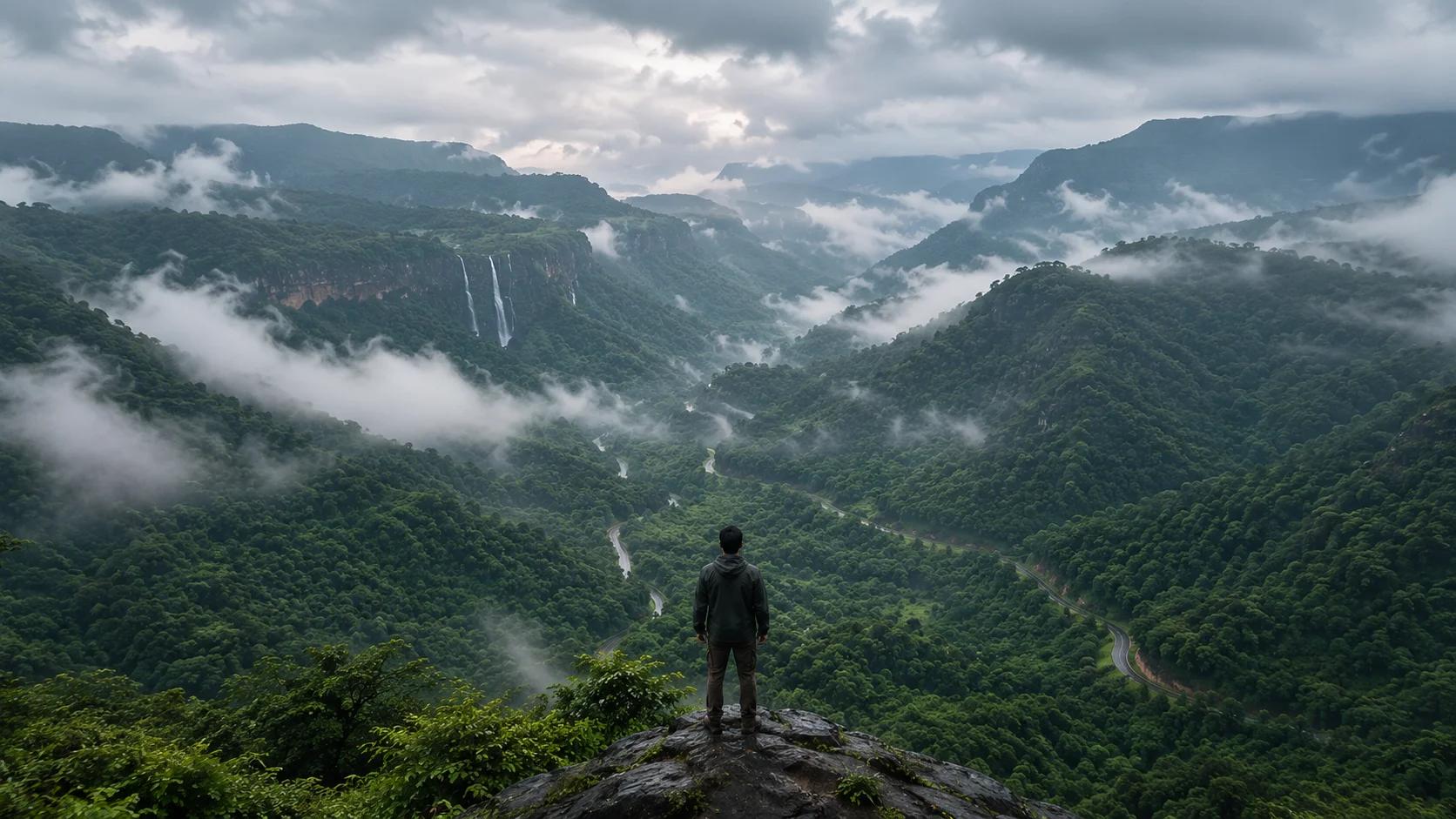
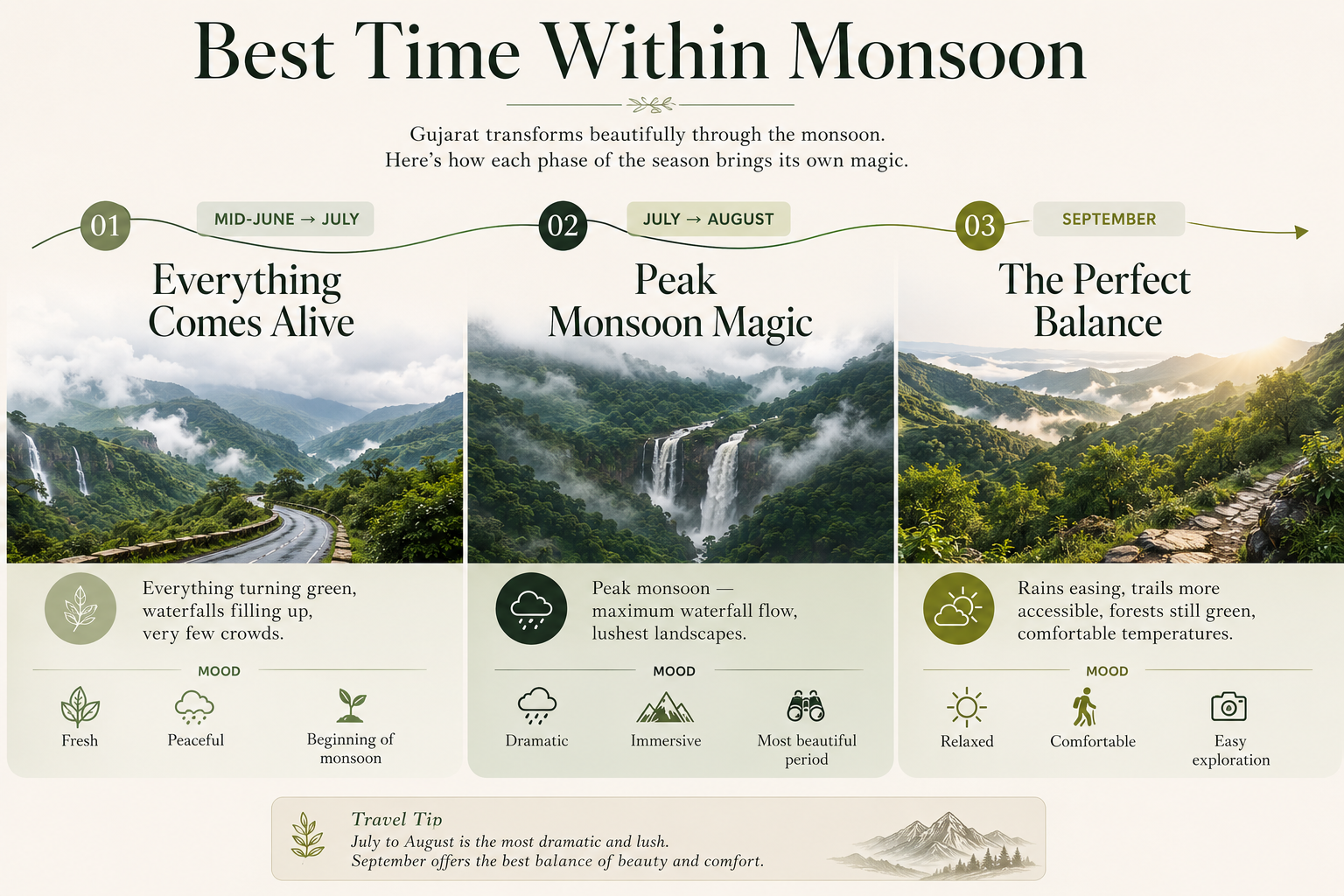
Because when the monsoon arrives in mid-June, and the first rains hit the parched red earth, something genuinely extraordinary happens to this state. The Aravalli hills go from brown to an almost unreal shade of green. Ancient forests fill with the sound of water. Waterfalls that were dry stone channels for eight months suddenly become full, thundering cascades. And the roads that wind through Gujarat's interior - through forest, hill, and village - become some of the most beautiful drives in the country.
Most tourists leave before all this happens. Which means you get it almost entirely to yourself.
Here's where to go.
When Does Monsoon Arrive in Gujarat?
Monsoon typically hits Gujarat by mid-June and stays through mid-September - about three full months of rain. The rainfall is not uniform across the state. The southern and eastern parts - Dang, Tapi, Valsad, Narmada - get heavy, consistent showers. The northern regions like Sabarkantha get moderate rains. Central Gujarat, including Ahmedabad, gets decent rainfall. Kutch in the west gets the least - the famous salt desert barely sees rain at all.
For travellers, this means the best monsoon experiences in Gujarat are concentrated in the south and east — the forested belt that most tourists skip almost entirely.
Best Places to Visit in Gujarat During Monsoon
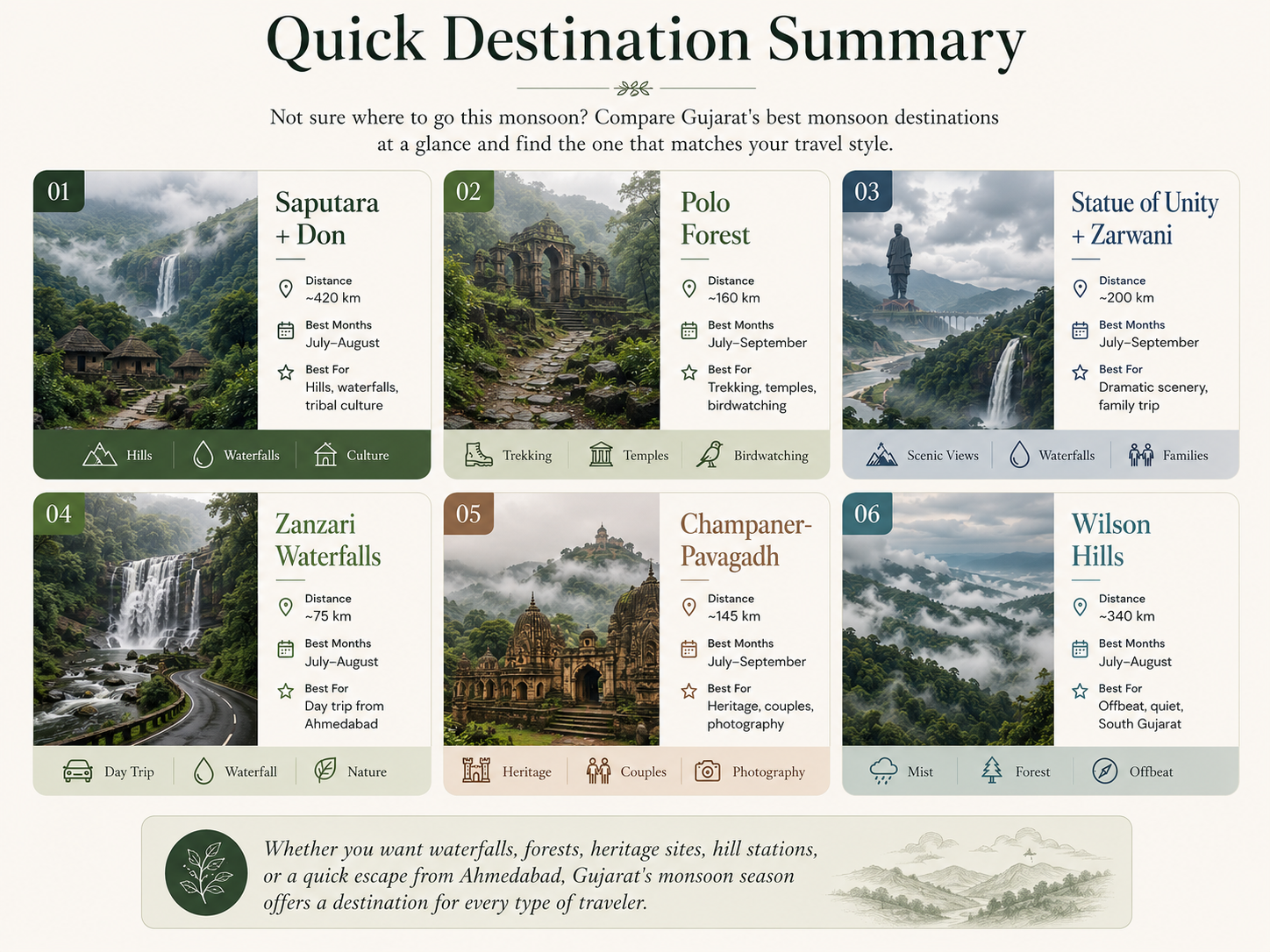
1. Saputara - Gujarat's Hill Station at Its Absolute Best
Saputara is always worth visiting. But Saputara in monsoon is something else entirely.
Tucked into the Western Ghats at around 1,000 metres above sea level in the Dang district, this is Gujarat's only officially recognised hill station. And when the monsoon arrives, it transforms completely - the hills go a deep, saturated green, mist rolls through the valleys every morning, the Sarpanganga river swells, and the air smells like wet forest and rain. You'll want to sit somewhere with chai and just watch the clouds move. That's not laziness. That's the point.
Gira Waterfalls - about 50 km from Saputara town, surrounded by dense forest - plunge from around 75 metres and are at their most powerful during the rains. The drive to get there is its own reward - ghat roads, thick canopy, and occasional waterfalls appearing from nowhere on the hillsides.
Don Hill Station, about 55 km from Saputara and 33 km from Ahwa, is the perfect extension to any Saputara trip. Sitting at around 1,000–1,070 metres in the same Dang forest belt, Don is quieter, more offbeat, and in some ways even more dramatic than its famous neighbour - the hills here feel raw and untouched, the tribal Adivasi communities are more present, and the waterfalls that emerge on the slopes during monsoon make it genuinely spectacular. Most Saputara visitors drive past the turnoff to Don without knowing it exists.
Every year, Gujarat Tourism organises the Megh Malhar Parva - the official Saputara Monsoon Festival - at Saputara Lake. Running since 2009, it typically spans a month from late July to mid-August. It's a full cultural celebration - Dangi tribal folk performances, boat races, rain marathons, local food stalls, folk art exhibitions, and a grand inaugural parade featuring artists from across India. Check Gujarat Tourism's official website for that year's exact dates before planning.
What to do:
- Sit by Saputara Lake on a misty morning - the fog on the water at 7 AM is genuinely cinematic
- Drive to Gira Waterfalls - peak flow July to September
- Take a day trip to Don Hill Station - quieter, rawer, and almost no crowds
- Watch clouds fill the valleys from Sunset Point
- Attend Megh Malhar Parva in late July if your timing allows
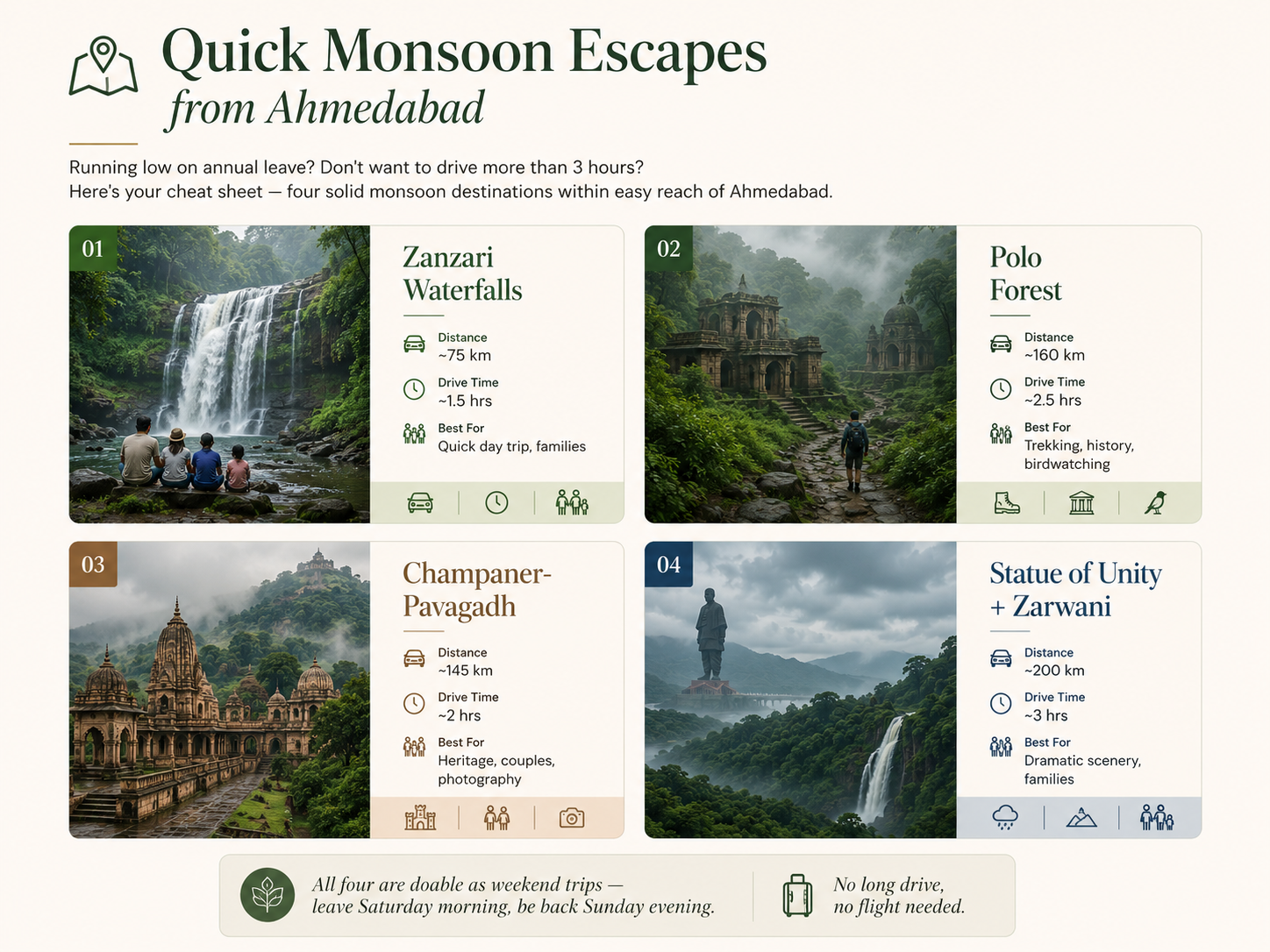
Distance from Ahmedabad: ~420 km | Best months: July–September
Best for: Couples 💑 · Families 👨👩👧 · Photographers 📷 · Nature lovers
2. Polo Forest - Ancient Temples in a Rain-Soaked Forest
Few places in Gujarat feel as quietly extraordinary as Polo Forest in monsoon.
Located in the Sabarkantha district in the foothills of the Aravalli range, Polo Forest covers about 400 square kilometres of dry deciduous forest. During monsoon, it is at its greenest and most atmospheric - the Harnav river runs full, the trails become lush, and the ancient stone temples scattered through the forest feel like discoveries from another world. Which, in a way, they are.
The name "Polo" comes from the Marwari word "pol" - meaning gate. The forest historically served as a natural passage between Gujarat and Rajasthan, and the Parihar kings of Idar built this into a thriving spiritual and trade centre from the 10th century onwards. The ruins they left behind are still here, half-swallowed by tree roots and monsoon undergrowth.
The Sharneshwar Mahadev Temple - a three-storey ancient Shiva temple built in Solanki style with over 80 intricately carved pillars - sits deep in the forest and is one of Gujarat's most overlooked architectural marvels. The Polo Jain Tirth temple complex is even more unusual: a 14th-century site where Buddhist, Jain, Hindu, and Islamic architectural influences coexist in the same set of ruins - officially described by Gujarat Tourism as "a melting pot of 4 religions." Tree roots have grown through the carved stone walls in places, creating an almost Angkor Wat-like effect.
During monsoon, the forest trails are wet and slippery in places, but extraordinarily alive. The Harnav river glints through the trees. The birdwatching is at its peak - over 275 species have been recorded here. The silence, broken only by water and birdsong, is the kind that resets something in you.
What to do:
- Walk the forest trails to the temple ruins - waterproof footwear essential
- Visit Vanaj Dam - watching it overflow during heavy monsoon is spectacular
- Birdwatching at dawn - the forest is most active in the early hours
- Overnight camping and stargazing at a forest camp (book in advance)
Distance from Ahmedabad: ~160 km | Best months: July–September
Best for: Trekkers 🥾 · History lovers · Photographers 📷 · Birdwatchers · Road trippers 🚗
3. Statue of Unity + Zarwani Waterfall - Where Scale Meets Monsoon Drama
The Statue of Unity needs little introduction. Standing 182 metres tall on a hillock called Sadhu Bet on the Narmada River near Kevadia, dedicated to Sardar Vallabhbhai Patel, it is the tallest statue in the world - nearly double the height of the Statue of Liberty.
Most people visit in winter. But monsoon transforms this place into something genuinely dramatic.
When the rains are heavy, clouds wrap around the statue mid-torso - you're standing at the base looking up at a figure rising into the cloud. The Narmada River turns a deep copper-brown and swells visibly. The Satpura and Vindhyachal hills in the background go a deep, saturated green. The Sardar Sarovar Dam nearby can overflow during peak monsoon - and watching that happen, the sheer volume of water cascading over the dam walls, is one of Gujarat's most powerful natural spectacles.
But the monsoon gem of this whole region - the one most visitors completely miss - is Zarwani Waterfall.
About 28 km from the Statue of Unity, inside the Shoolpaneshwar Wildlife Sanctuary, Zarwani is best accessed and most powerful during monsoon (mid-June to late September). Getting there involves a trek through the sanctuary - through forest that is fully alive during the rains, with birdsong, occasional wildlife activity, and the smell of wet earth on every side. The waterfall itself is a thundering, full-volume cascade during peak monsoon - the kind that you feel in your chest before you see it through the trees.
After peak monsoon - October to February - the falls still flow at a decent level, and the trek is more comfortable. But for sheer drama and volume, July–September is when Zarwani earns its reputation.
The full complex around the Statue of Unity has been developed into an extensive tourism circuit - the Valley of Flowers garden (at its absolute lushest in monsoon), the Sardar Patel Zoological Park, the laser and light show in the evening, and the immersive museum on Sardar Patel's life and India's integration story.
What to do:
- Go up to the viewing gallery at 153 metres - clouds at eye level during monsoon is a specific kind of surreal
- Trek to Zarwani Waterfall inside Shoolpaneshwar Sanctuary - the monsoon trail is the best version
- Walk the Valley of Flowers - at peak bloom and greenery during rains
- Watch the Sardar Sarovar Dam overflow (check timing and water levels - varies by year)
- Evening laser light show near the statue base
Distance from Ahmedabad: ~200 km | Best monsoon months: July–September (Zarwani at full power), October for more comfortable trekking
Important: Book Statue of Unity tickets online in advance at soutickets.in - entry and gallery tickets are time-slotted and sell out on weekends. Zarwani trek may be restricted during extremely heavy rain - check with sanctuary before visiting.
Best for: Families 👨👩👧 · Couples 💑 · Photographers 📷 · First-time Gujarat visitors
4. Zanzari Waterfalls - The Best Day Trip from Ahmedabad in Monsoon
When the first proper rains hit Ahmedabad, and you suddenly need to get out of the city - Zanzari is the answer.
Located near Dehgam in the Aravalli district, just about 75 km from Ahmedabad, Zanzari sits on the Vatrak River and does almost nothing for most of the year. A modest rocky outcrop with a dry channel. Then the monsoon arrives, and it becomes a proper, energetic waterfall surrounded by the kinds of deep green Aravalli hillsides that make you reach for your camera before you've even parked.
It's not the grandest waterfall in Gujarat - Gira and Zarwani would win that contest. But for proximity to Ahmedabad, ease of access, and the simple satisfaction of standing near moving water after a long stretch of summer heat, Zanzari earns its reputation as the city's go-to monsoon escape.
The experience is best on a weekday or early Saturday morning. By Sunday afternoon, this place gets genuinely crowded with families from Ahmedabad - which is fun if you enjoy that energy, but quiet if you don't. The rocks near the falls are slippery regardless of crowd size - non-slip footwear is non-negotiable.
There are local food stalls nearby that operate during monsoon season - stick to fried snacks and chai. The river and surrounding hillside are excellent for photography on overcast days when the light is soft and even.
What to do:
- Stand near the falls and feel the spray - simple, honest, satisfying
- Explore the rocky Aravalli terrain around the riverbank
- Photography - overcast monsoon light here is ideal
- Combine with a short road trip through the Aravalli foothills on the way back
Distance from Ahmedabad: ~75 km | Drive: ~1.5 hours | Best months: July - August (peak flow)
Practical note: Avoid Sundays in peak monsoon - crowds are significant. Arrive by 8–9 AM for the best experience. Parking is available but fills up by midday on weekends.
Best for: Families 👨👩👧 · Day trippers · Friends road trip 🚗 · First-time monsoon travelers
5. Champaner-Pavagadh - History Draped in Monsoon Green
A UNESCO World Heritage Site and one of Gujarat's most under-appreciated destinations in any season - but in monsoon, Champaner-Pavagadh develops a specific atmosphere that nothing else in Gujarat quite replicates.
Champaner is a medieval city built by Sultan Mahmud Begada in the 15th century - mosques, palaces, stepwells, and fortifications spread across a landscape that the jungle has been slowly reclaiming for centuries. When the monsoon arrives and the vegetation turns green, the stone darkens, the carvings sharpen against the wet surface, and the feeling of an ancient city returning to nature becomes vivid in a way that the dry season simply doesn't produce.
The Jama Masjid here is considered one of the finest examples of pre-Mughal mosque architecture in India - its proportions and the detail of its carved stone screens are extraordinary. Even if you're not particularly interested in history, standing inside it during light rain, with the sound of water on carved stone, is something you won't forget.
Pavagadh Hill rises above Champaner, with the Mahakali Temple at its summit - one of the 51 Shakti Peethas. During monsoon, the ropeway to the top offers views of clouds filling the valleys below. The trek up the hill is possible during the rains but requires good footwear and caution - the stone paths get wet and slippery.
What to do:
- Jama Masjid and Kevada Masjid - allow at least 1.5 hours for the ruins complex
- Ropeway up Pavagadh - cloud views from the summit during monsoon
- The ancient stepwells of Champaner - water is alive and present during rains
- Photography walk through the ruins - monsoon light and wet stone make for exceptional images
Distance from Ahmedabad: ~145 km | Best months: July–September
Best for: Couples 💑 · History lovers · Photographers 📷 · Weekend road trip 🚗
6. Wilson Hills - One of the Few Hill Stations Where You Can See the Sea
Most people outside South Gujarat have never heard of Wilson Hills. That's the point.
Located near Dharampur in Valsad district, Wilson Hills sits at around 750 metres in a densely forested stretch of the Western Ghats - right next to the Pangarbari Wildlife Sanctuary. It has something most hill stations in India don't: from certain viewpoints on a clear day, you can actually see the Arabian Sea. That combination of hills, forest, and ocean horizon is specific to this place alone.
The name itself has a story. Wilson Hills was named after Leslie Wilson, the British Governor of Bombay from 1923 to 1928, by Vijayadevji, the Maharana of Dharampur, who had planned to develop it into a full hill station. That plan never materialised. The Marble Chatri - a small marble pavilion sitting on the summit - was built as a memorial to that friendship and that unfulfilled vision. It still stands today, quiet and slightly melancholy, at the highest point of the hill. In monsoon, when the clouds sit low, and the forest below is deep green, it feels like the most peaceful place in Gujarat.
Ozone Valley - about 500 metres from the hilltop centre - is the spot locals actually love. It's a broad, bowl-shaped valley completely enclosed by dense trees, named for the quality of air that hangs in it. During monsoon, the fog sits inside the valley like something settled. Walking down into it early morning is the kind of experience that sounds simple and lands differently in person.
The Barumal Mahadev Temple - on the road approaching Wilson Hills - is an ancient Shiva temple set in the forest, surrounded by greenery that reaches its peak intensity during the rains. It's part pilgrimage site, part forest walk, and genuinely beautiful in the monsoon light.
The Shankar Waterfalls nearby are active only during and just after monsoon - another reason July–September is the window that makes Wilson Hills worth the drive.
What to do:
- Marble Chatri at the summit - sit, look out, and appreciate the view that a British Governor and a Maharana once imagined building around
- Ozone Valley walk at dawn - fog in the valley, complete quiet, no crowds
- Barumal Mahadev Temple - ancient Shiva temple in the forest, especially atmospheric in the rain
- Shankar Waterfalls - active only in monsoon, worth a detour
- Look for the sea - from the right viewpoint on a clear monsoon morning, the Arabian Sea is visible on the horizon
Distance from Surat: ~120 km | From Valsad: ~27 km | From Ahmedabad: ~340 km
Note: Wilson Hills makes most sense as a destination from Surat, Vapi, or Valsad. From Ahmedabad it's a longer drive - better as part of a South Gujarat road trip than a standalone day trip.
Best for: Couples 💑 · Offbeat travelers · Photographers 📷 · Solo travelers · Road trippers from South Gujarat 🚗
A Practical Monsoon Travel Guide for Gujarat
What to Pack
- Waterproof footwear - non-negotiable for waterfall trips and forest trails
- A good raincoat or compact poncho - a poncho works better on forest trails than umbrellas
- Dry bags for your phone and camera - especially near waterfalls
- Extra set of clothes - always
- Basic medicines: mosquito repellent, ORS sachets, basic first aid
Roads and Safety
Gujarat's main highways are well-maintained year-round. Rural and forest roads in Dang, Sabarkantha, and Narmada districts can get waterlogged during heavy rain spells. Always check local IMD weather forecasts before heading into forest areas. If a red or orange weather alert has been issued for a district, reschedule.
River crossings in forest areas - especially near Harnav in Polo Forest - can be dangerous during peak monsoon. Never attempt to cross fast-moving water on foot.
Frequently Asked Questions (FAQ)
Q1. Is Gujarat good to visit during monsoon? Yes - Gujarat is a wonderful monsoon destination, especially its southern and eastern regions. Saputara, Polo Forest, the Statue of Unity area, and Champaner-Pavagadh are all at their most beautiful during the rainy season. The state is less crowded in monsoon, and accommodation rates are lower than the peak winter season.
Q2. When does monsoon start and end in Gujarat? Monsoon in Gujarat typically arrives in mid-June and lasts until mid-September. Southern and eastern districts - Dang, Narmada, Valsad, Tapi - receive the heaviest rainfall. Ahmedabad and central Gujarat receive moderate rain. Kutch in the west receives very little monsoon rainfall.
Q3. Which is the best weekend monsoon trip from Ahmedabad? For a quick day trip, Zanzari Waterfalls (~75 km) is the closest option. For a full weekend, Polo Forest (~160 km) offers trekking, ancient temples, and forest camping. For a 2-night trip with the most complete experience, Saputara and Don Hill Station in Dang district are the best choice.
Q4. Are Gujarat's roads safe to drive during monsoon? Major highways in Gujarat are generally safe and well-maintained. Rural and forest roads in Dang, Sabarkantha, and Narmada districts can get waterlogged during heavy rainfall. Always check IMD weather forecasts before heading into hilly or forested areas, and avoid river crossings when water is running fast.
Q5. What is Megh Malhar Parva at Saputara? Megh Malhar Parva is Gujarat Tourism's annual monsoon festival held at Saputara hill station in the Dang district. Organised since 2009, it typically runs for about a month from late July to mid-August. The festival features Dangi tribal folk performances, boat races, rain marathons, local food stalls, and cultural exhibitions around Saputara Lake.
Q6. Is Polo Forest accessible during monsoon? Yes, Polo Forest is accessible in monsoon and is at its greenest and most atmospheric during this season. Main forest approach roads are drivable. Trekking trails can be slippery, and the Harnav River runs fast during heavy rain - avoid wading across. Non-slip footwear is essential.
Q7. Can I visit the Statue of Unity in monsoon? Yes. The Statue of Unity is open year-round. During heavy rain, clouds wrap around the statue, creating a dramatic visual unique to monsoon. The nearby Zarwani Waterfall inside Shoolpaneshwar Wildlife Sanctuary is best visited in monsoon when it's at full flow. Book entry tickets online in advance at Soutickets, as they sell out on weekends.
Final Thoughts
There's a version of Gujarat that most people never see - the version that exists for three months between June and September, when the rains turn everything green. The waterfalls come back to life, and the ancient forest roads become some of the most beautiful drives in the country.
Most of it is empty. Most of it is genuinely beautiful. And most of it is within a few hours of wherever you're sitting reading this.
You don't need a reason to travel in monsoon. The smell of rain on Gujarat's red earth is reason enough.
Just go. And take a raincoat.
Planning a Monsoon Trip in Gujarat?
Tell Yatray where you're starting from, your budget, and how many days you have.
We'll create a personalised itinerary with stays, experiences, and monsoon-ready recommendations - in minutes.