Dwarka
Where the Gomti meets the Arabian Sea, and a kingdom the tide could not keep still draws pilgrims home
Dwarka sits at the western edge of Gujarat's Saurashtra coast, where the Gomti River meets the Arabian Sea beside one of Hinduism's most revered temples. This is one of India's char dham, a city Krishna is said to have ruled and which the sea reclaimed after he left. Beyond the temple bells, Dwarka is a coastal town of ghats, islands, and a Blue Flag beach barely twenty minutes away.
Overview
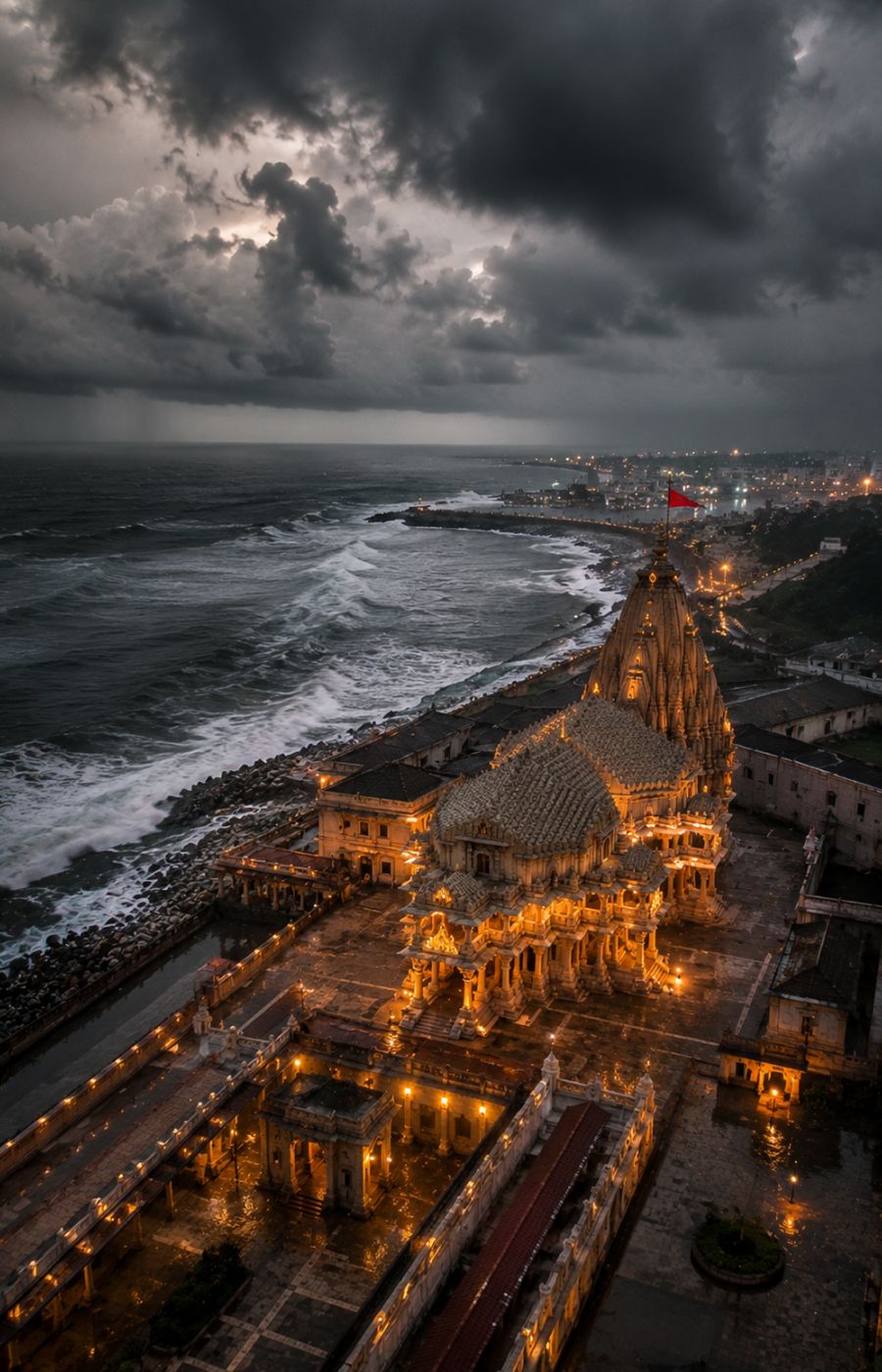
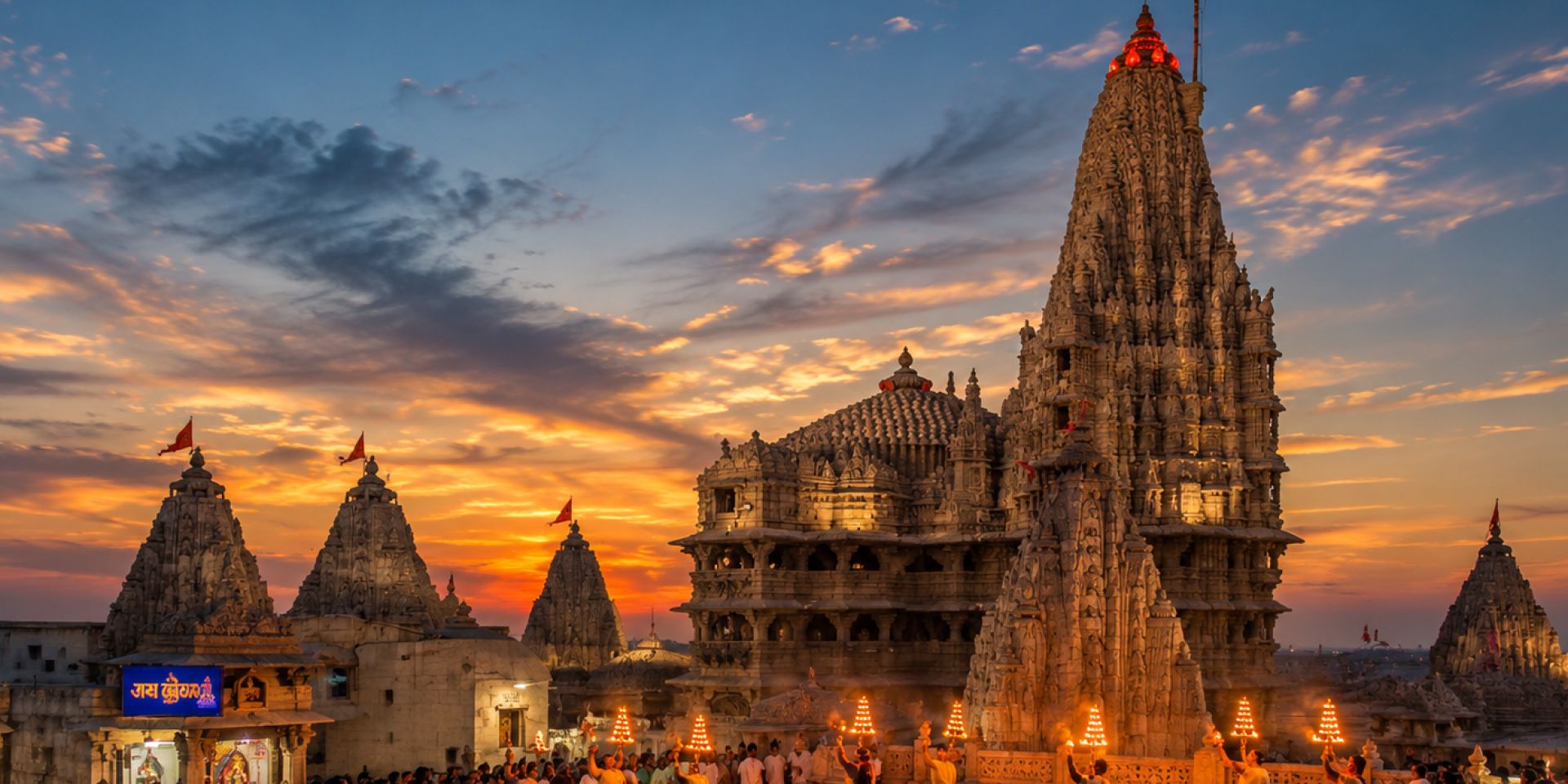
Dwarka occupies the far western tip of Gujarat's Okhamandal peninsula, in what is now Devbhumi Dwarka district, at the exact point where the Gomti River empties into the Arabian Sea. Hindu tradition holds this as the site of Krishna's own capital - the kingdom he is said to have built after leaving Mathura, and which the sea reclaimed after his departure. That dual identity, sacred capital and coastal town, still shapes almost everything about the place. Dwarkadhish Temple, believed to stand over the site of Krishna's residence and rebuilt in its present form around the sixteenth century, rises directly from the Gomti's bank, its carved spire visible from boats well out at sea.
Unlike inland pilgrimage towns, Dwarka never lets you forget the sea is close. The salt air reaches the temple courtyards, gulls circle the ghats alongside temple pigeons, and the fishing boats at Okha share the same coastline as the pilgrims crossing to Bet Dwarka. Dwarka is one of India's char dham - the four cardinal pilgrimage sites established by Adi Shankaracharya - and also one of the sapta puri, the seven most sacred cities in Hindu tradition, a double distinction very few places in India hold. Yet the streets around the temple feel less like a monument and more like an ordinary Gujarati market town that happens to have one of the country's most important shrines at its centre.
What makes Dwarka linger with visitors is the way devotion and geography keep intersecting. Marine archaeologists from the National Institute of Oceanography have surveyed submerged structures off this coast for decades, adding a layer of genuine scientific curiosity to the mythology of a city swallowed by the sea. Bet Dwarka, the island believed to hold Krishna's actual home, was reachable only by boat until a cable-stayed bridge opened in 2024 - so even the way you now arrive at one of India's oldest pilgrimage sites is, in places, brand new.
Dwarka, Gujarat
Explore the location of Dwarka on the Saurashtra coast.
Dwarka sits on the western tip of the Okhamandal peninsula in Gujarat's Devbhumi Dwarka district, at the point where the Gomti River meets the Arabian Sea.
Why Visit
- 01
One of India's Four Char Dham
Dwarka is one of the four cardinal pilgrimage sites established by Adi Shankaracharya in the eighth century, alongside Badrinath, Puri, and Rameswaram. It also counts among the sapta puri, the seven most sacred cities in Hindu tradition - a double distinction that places Dwarka in a very small category of Indian destinations.
- 02
A Temple That Has Stood for Millennia
Dwarkadhish Temple, also called Jagat Mandir, is believed to have first been built around Krishna's own residence roughly 2,500 years ago, with the present five-storey structure dating to around the sixteenth century. The carved limestone spire, visible from far out at sea, remains the single defining image of the town.
- 03
An Island Finally Reached by Road
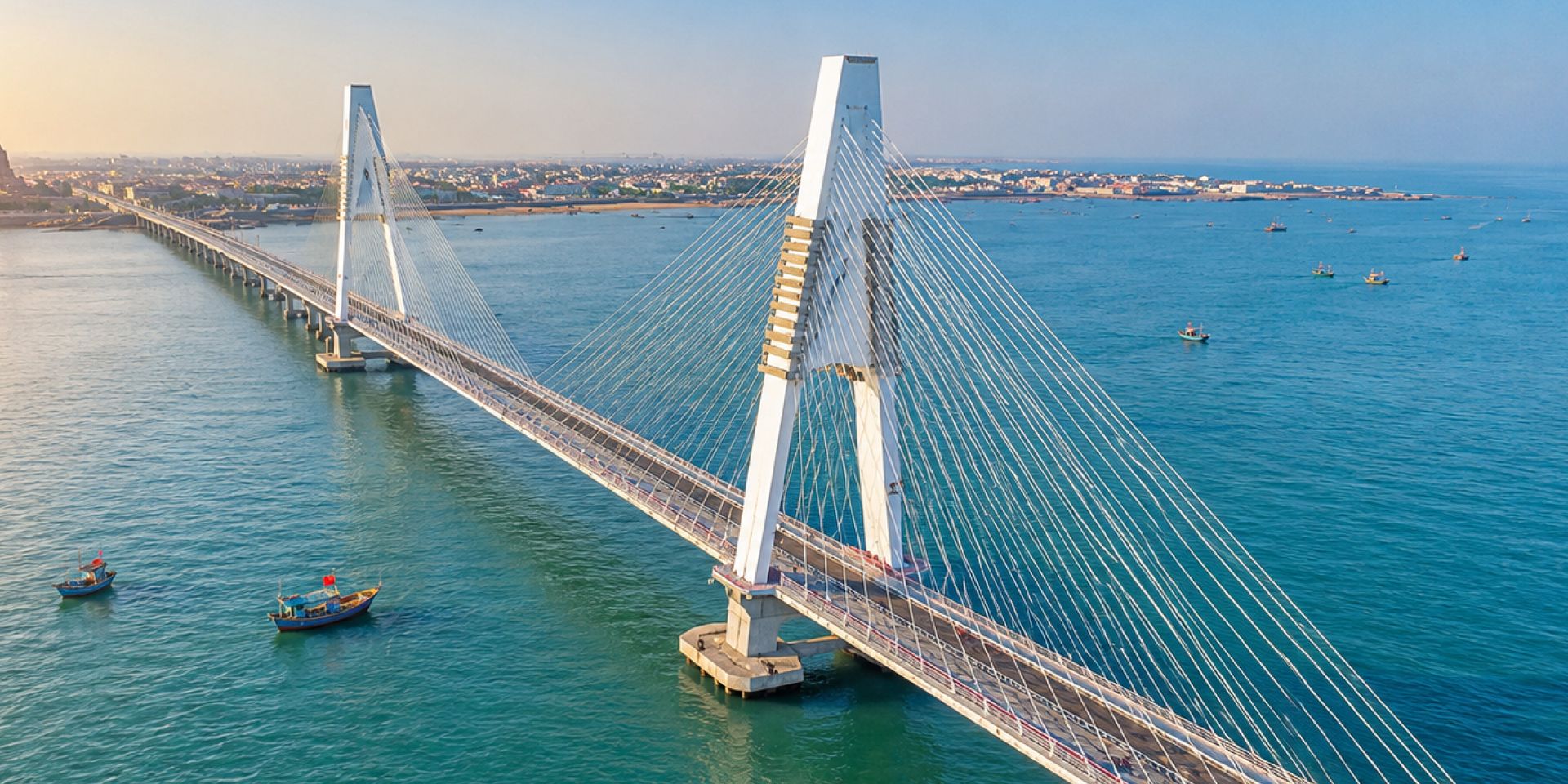
Bet Dwarka, the island said to hold the site of Krishna's actual home, was reachable only by boat for generations. The Sudarshan Setu, India's longest cable-stayed bridge, opened in February 2024 and now carries pilgrims and vehicles across the Gulf of Kutch from Okha in minutes rather than a lengthy ferry crossing.
- 04
A Jyotirlinga Just Outside the City
Nageshwar, roughly seventeen kilometres from Dwarka on the road toward Bet Dwarka, is one of the twelve Jyotirlingas of Shiva described in the Shiva Purana - among the most significant Shaiva pilgrimage sites in the country, and easily combined with a Dwarka visit rather than requiring a separate journey.
- 05
A Blue Flag Beach Twenty Minutes Away
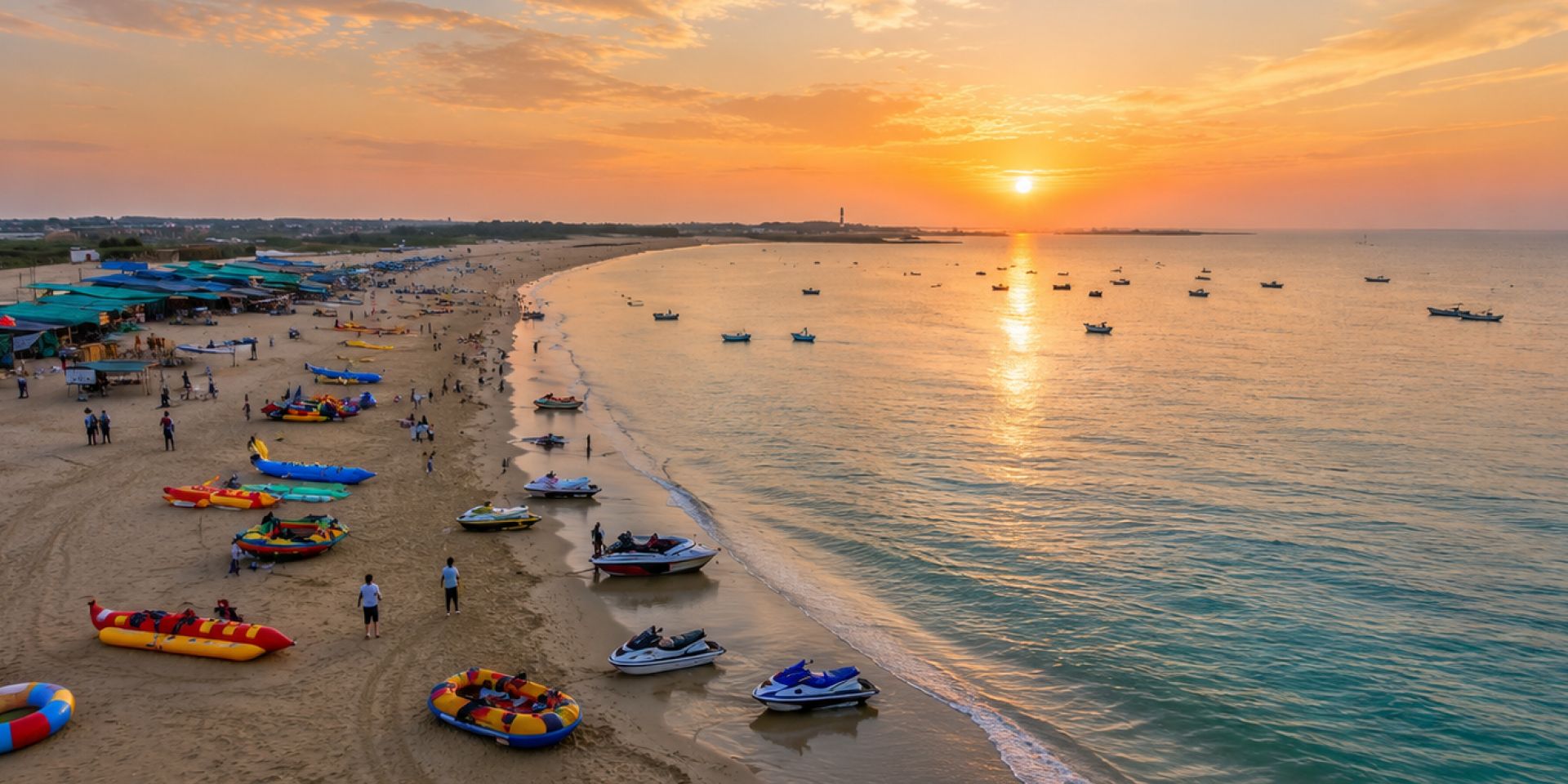
Shivrajpur was the first beach in Gujarat to earn Blue Flag certification, the international eco-label for clean, well-managed coastlines. Clear shallow water, organised water sports in season, and a real chance of spotting dolphins in the early morning make it a welcome counterpoint to the temple town nearby.
- 06
A Coastline With Its Own Mythology
Dwarka's founding legend holds that the sea eventually reclaimed Krishna's city after he left it - and marine archaeologists have in fact surveyed submerged structures off this coast for decades. Few places let mythology and genuine marine archaeology sit this close together without one having to explain away the other.
Must-Visit Places
The experiences that define your journey.
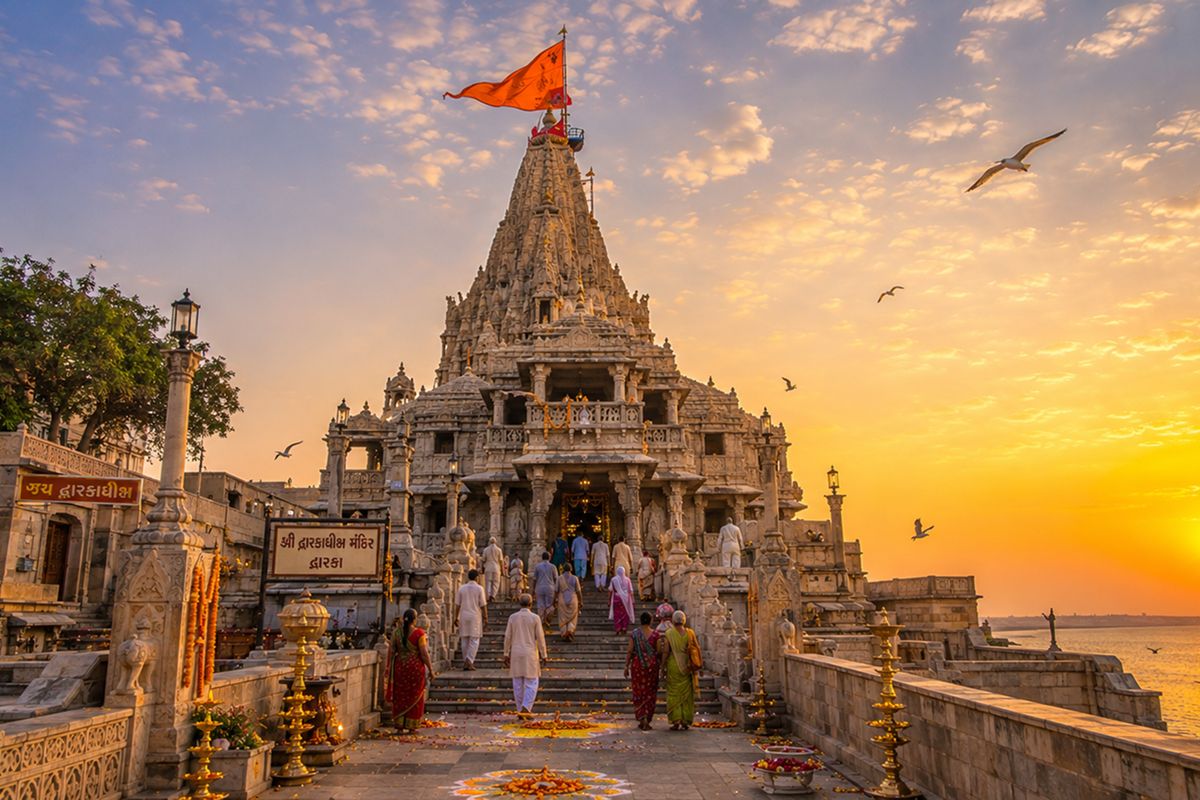
Morning Darshan at Dwarkadhish Temple
Arriving for the Mangala Aarti at 6:30 AM means reaching Dwarkadhish Temple before the day's main crowds build, when the carved stone corridors still hold the previous night's quiet. Mobile phones, cameras, and leather items are not permitted inside - free lockers sit just outside the entrance - so this is one of the few truly device-free hours most travellers experience on an Indian trip. The idol of Krishna as Dwarkadhish, dressed and adorned fresh each morning, is the reason two and a half thousand years of pilgrims have made this exact walk.
Duration: 45 minutes to 1 hourBest: Daily, 6:30 AM to 1:00 PM and 5:00 PM to 9:30 PM; early morning is calmest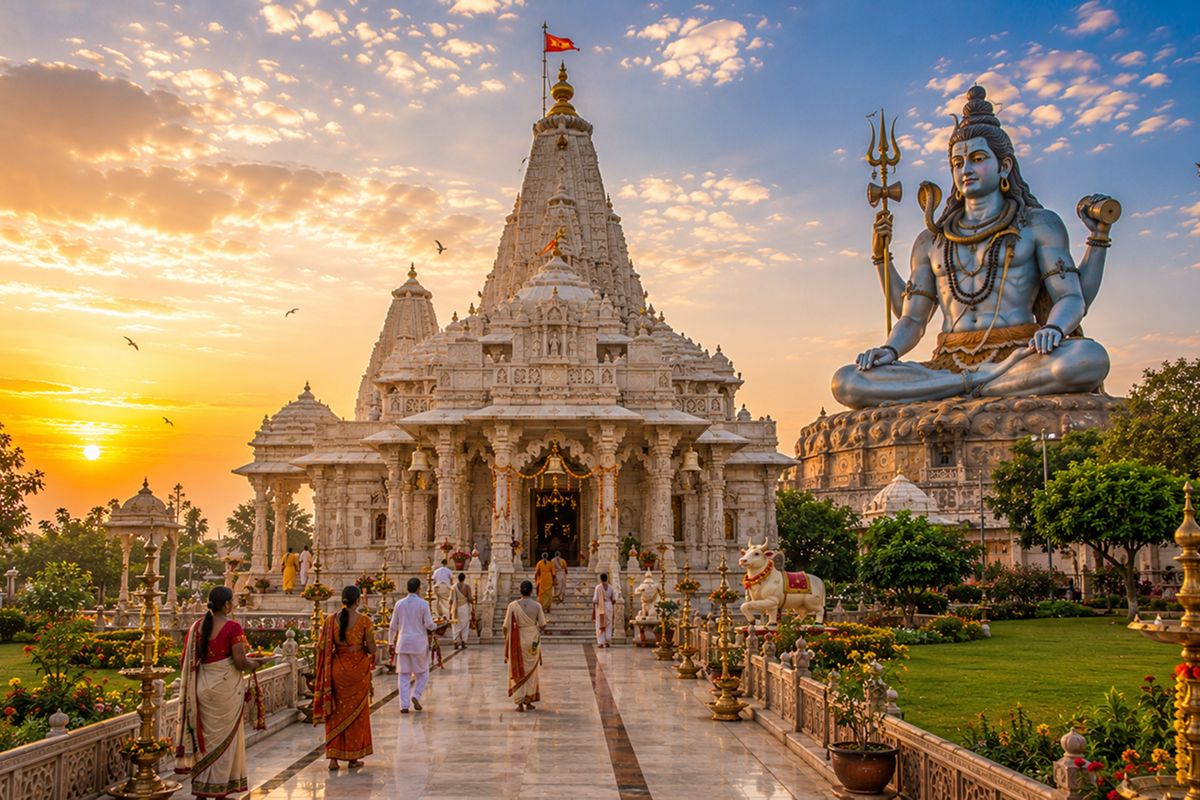
Nageshwar Jyotirlinga
A roughly thirty-minute drive from Dwarka, Nageshwar is one of the twelve Jyotirlingas described in the Shiva Purana and among the most visited Shaiva sites in western India. The 25-metre statue of Shiva seated in meditation outside the temple is visible from the approach road long before you arrive, and the underground sanctum itself has a stillness that the more crowded Dwarkadhish complex does not offer.
Duration: 1 to 1.5 hoursBest: Daily, 6:00 AM to 9:00 PM; mornings are quieter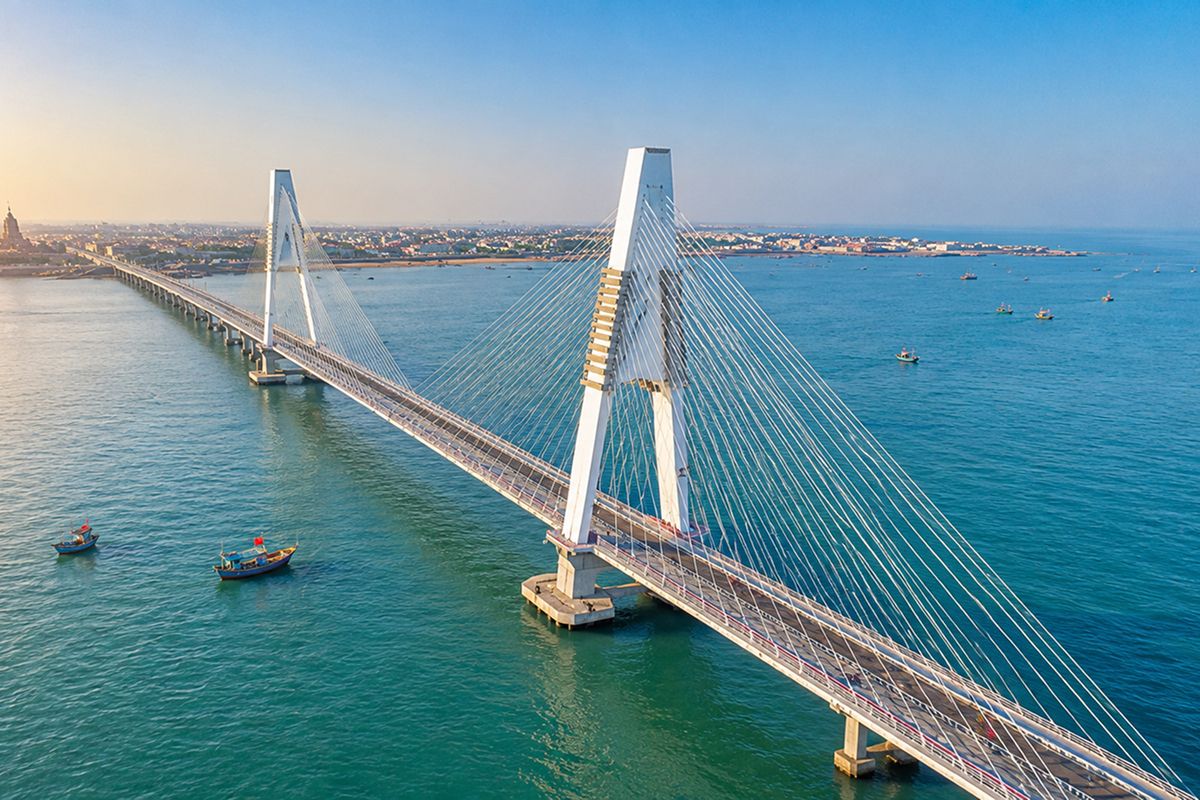
Crossing Sudarshan Setu to Bet Dwarka
Until February 2024, reaching Bet Dwarka - the island tradition holds as the site of Krishna's actual home - meant a boat crossing from Okha. The Sudarshan Setu, a 2.3-kilometre cable-stayed bridge and now India's longest of its kind, carries the same journey in a few minutes by car or shared auto. The island itself is unhurried: a temple complex, a few lanes of shops selling conch shells and prasad, and stretches of quiet shoreline that the mainland's crowds rarely reach.
Duration: 2.5 to 3 hours including the drive from DwarkaBest: Morning to early afternoon, 9:00 AM to 3:00 PM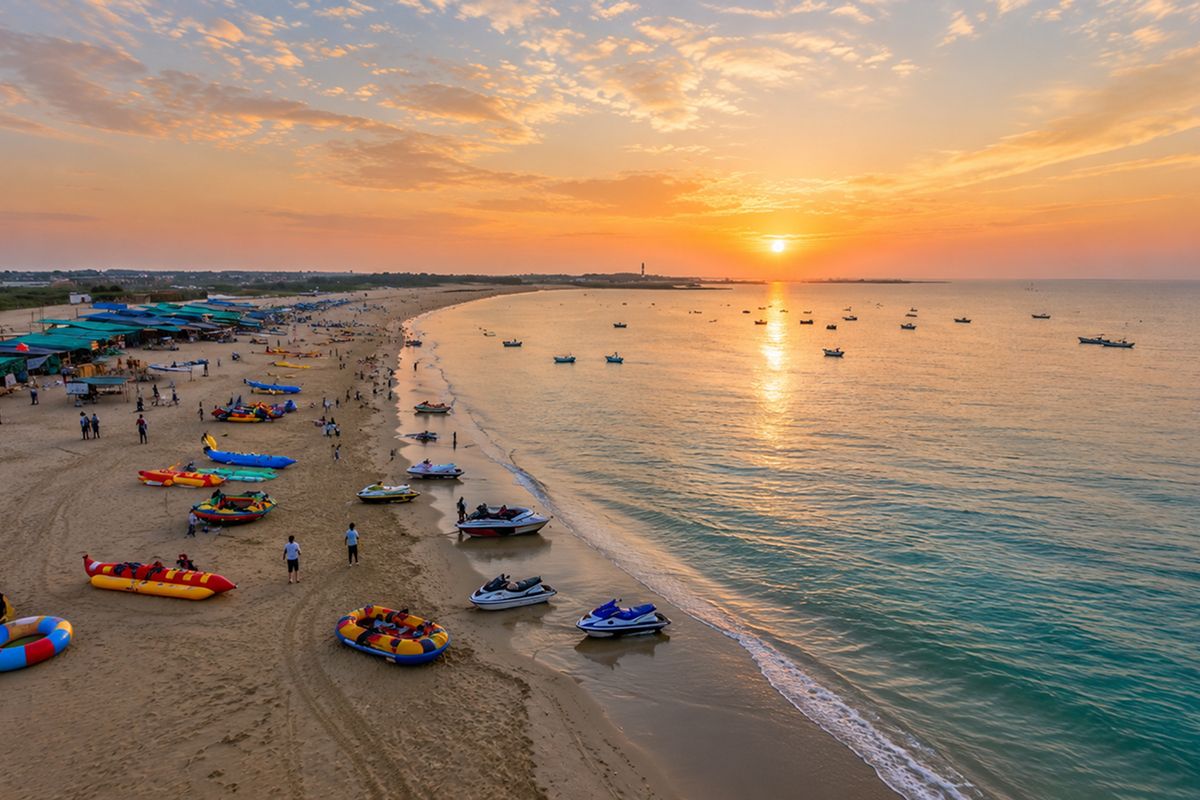
Morning at Shivrajpur Beach
Shivrajpur earned Gujarat's first Blue Flag certification in October 2020, and the difference from an ordinary Indian beach town shows in the clean sand and noticeably clear shallow water. Early risers occasionally spot dolphins offshore, and a short boat ride improves the odds further. Water sports operate through the cooler months, and the whole stretch stays largely uncrowded outside weekends - a real contrast to the temple town twenty minutes south.
Duration: 1.5 to 2 hoursBest: Early morning, 7:00 AM to 10:00 AM, October to March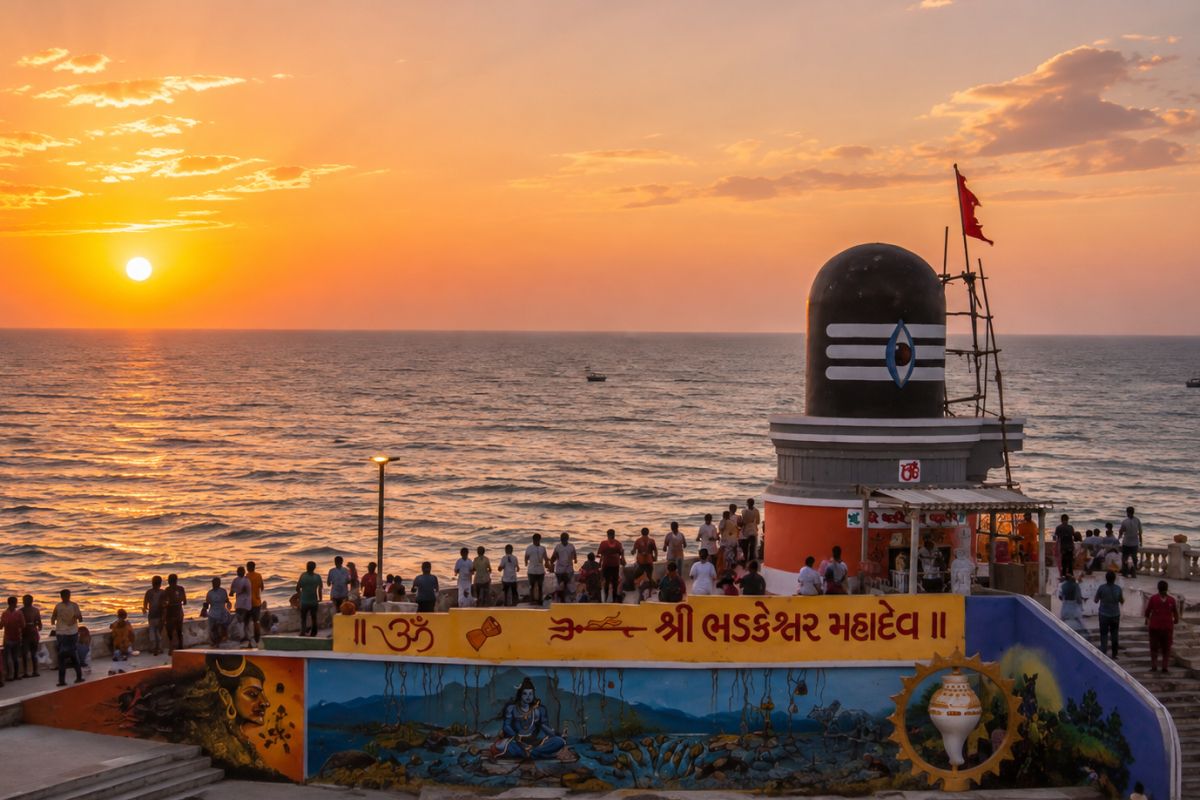
Bhadkeshwar Mahadev Temple
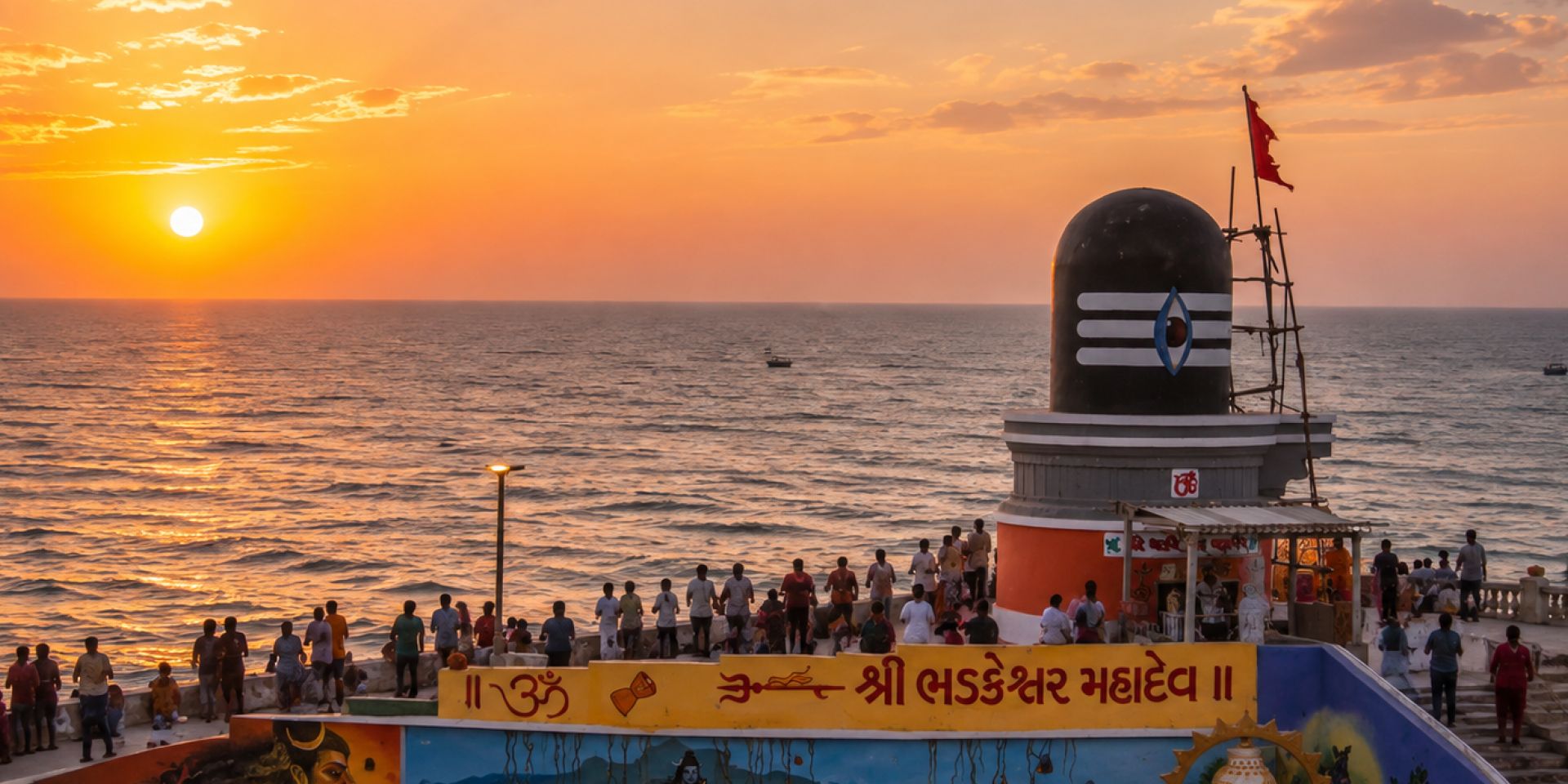
Set on a small headland on Dwarka's western edge, where the Arabian Sea presses in on three sides, Bhadkeshwar Mahadev sits closer to open water than any other shrine in town - a compact Shiva temple built into the rock rather than set back from the coast. Local tradition holds the Shivalinga inside as swayambhu, self-manifested rather than installed, and regulars describe certain high tides later in the year rising far enough to reach the temple itself. Most visitors time the short walk out here for the last hour of daylight, when the temple sits dark against a sea turned gold - reason enough that it's known locally as Dwarka's quieter sunset point, a short drive from the Lighthouse rather than a substitute for it.
Duration: 30 to 45 minutesBest: Daily, 6:00 AM to 7:00 PM; best near sunset and at low tide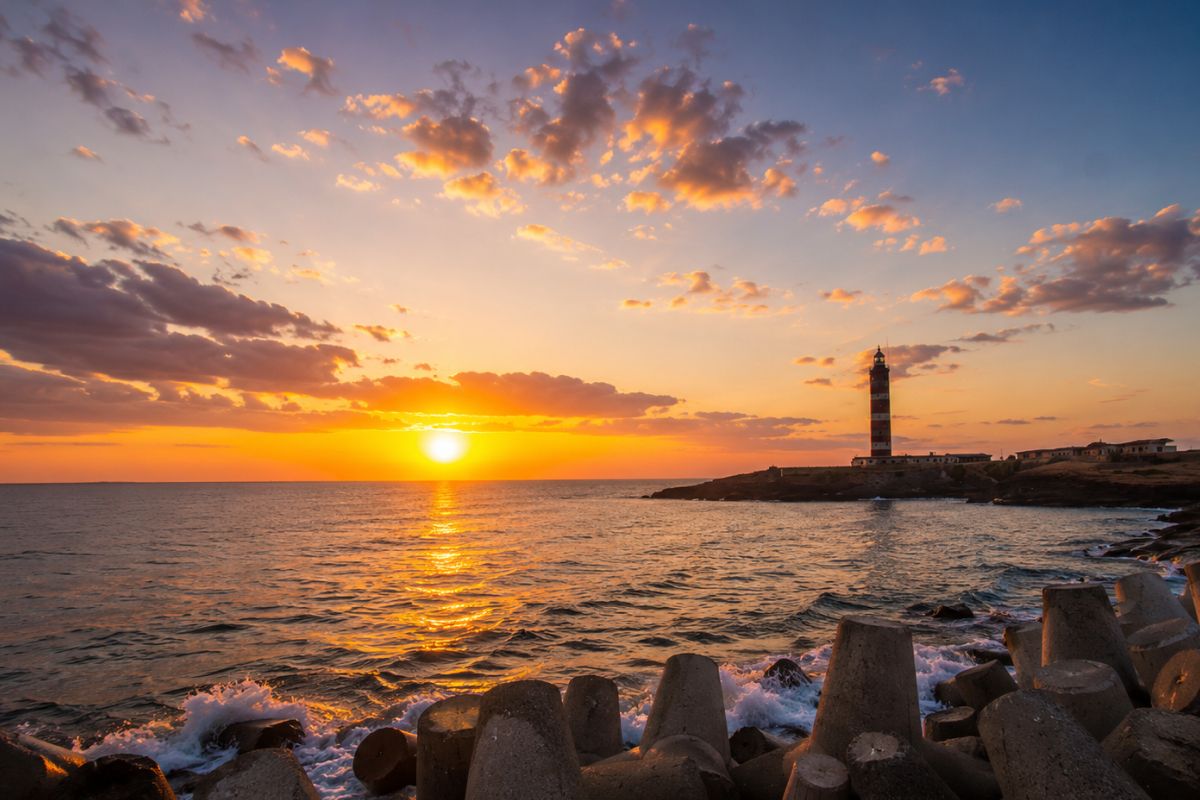
Sunset from Dwarka Lighthouse
The working lighthouse beside Dwarkadhish Temple opens to visitors for a small fee, and the climb rewards you with the one view that puts the whole town in context at once - the temple spire, Gomti Ghat, the fishing boats, and the open Arabian Sea beyond. Timing the climb for the hour before sunset means descending just as the temple begins to light up for the evening aarti.
Duration: 30 to 45 minutesBest: One hour before sunset, daily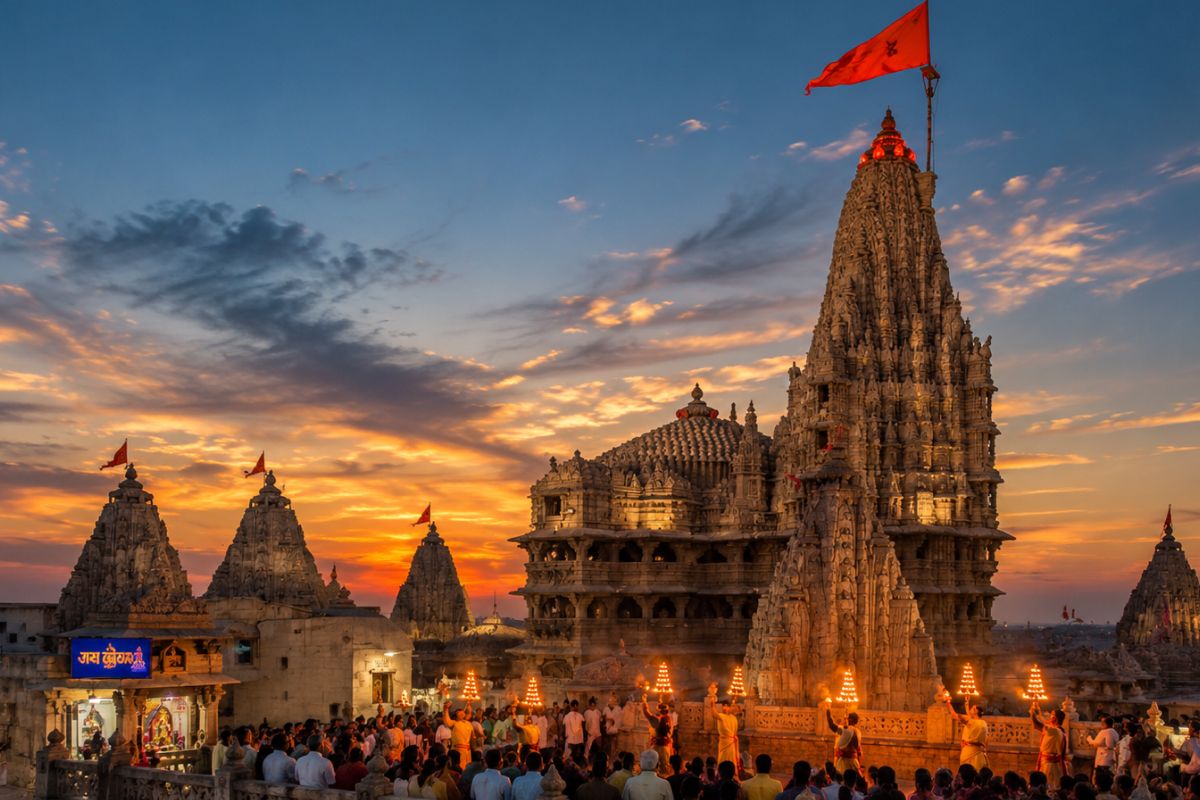
Evening Aarti at Dwarkadhish Temple
The Sandhya Aarti, held as evening sets in, draws a noticeably different crowd than the morning darshan - more local families, fewer day-trippers, and a longer, more musical ritual than the brisk morning ceremony. Standing in the courtyard as the temple lights come on against the darkening sky, with the sound of bells carrying out toward the Gomti, is the version of Dwarkadhish Temple most pilgrims describe as the one that stays with them.
Duration: 45 minutes to 1 hourBest: Daily, around 7:30 PM; entry for darshan closes by 9:15 PM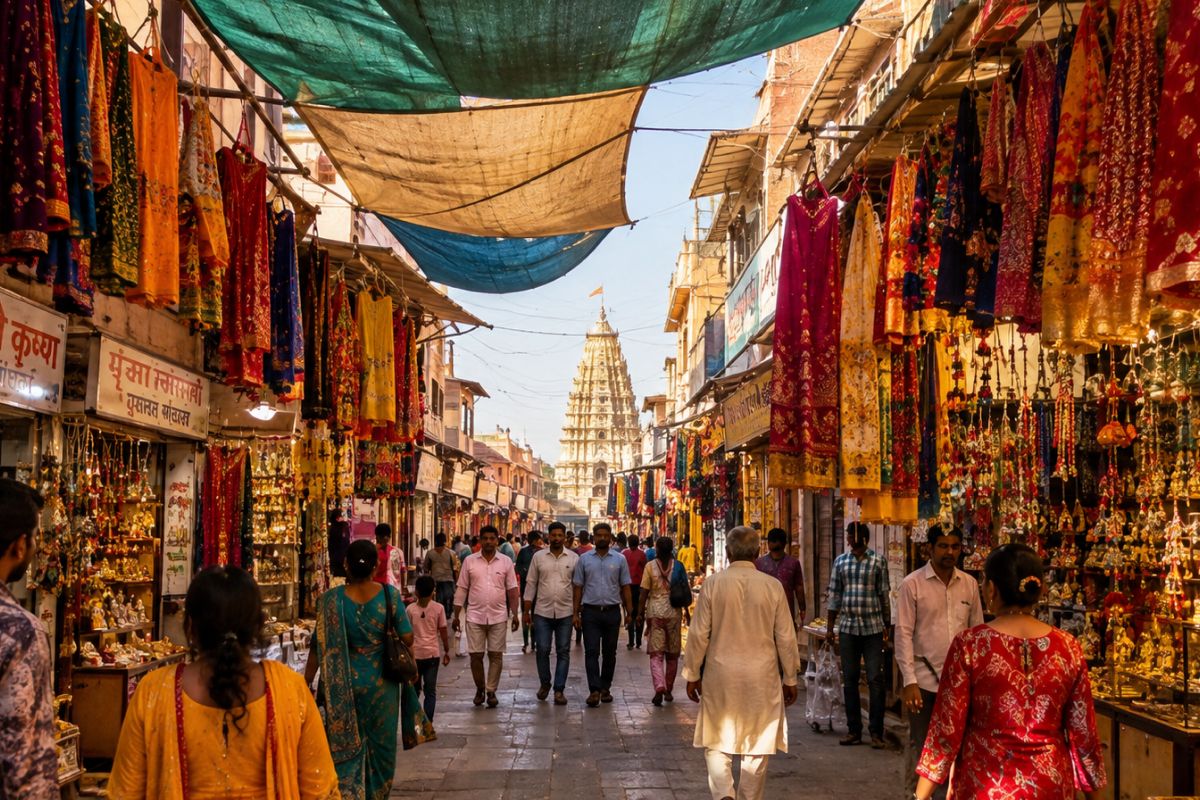
The Temple Bazaar Walk
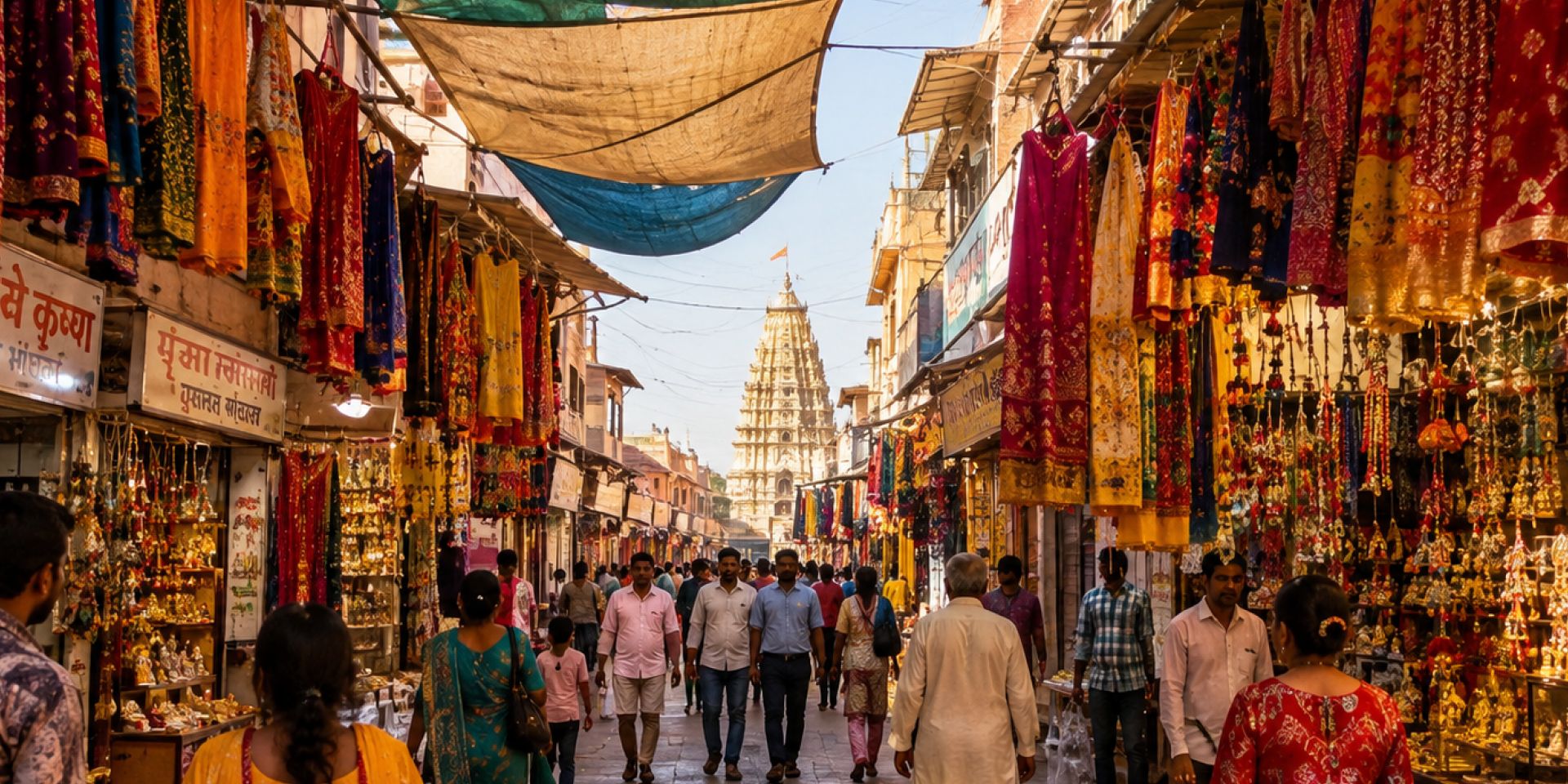
The lanes immediately around Dwarkadhish Temple function as Dwarka's real town centre - shops selling prasad sweets, conch shells, tulsi beads, and Saurashtra's distinctive Bandhani tie-dye textiles sit shoulder to shoulder with simple thali restaurants and juice stalls. It is unpolished in a way that larger pilgrimage towns often are not, and half the value of the walk is simply watching a working temple town go about its ordinary day around you.
Duration: 1 hourBest: Late afternoon to early evening, 4:00 PM to 7:00 PM
Best Time To Visit
October to March is when Dwarka is at its most comfortable. Daytime temperatures generally sit between 20°C and 30°C, the sea stays calm enough for boat crossings to Bet Dwarka and water sports at Shivrajpur Beach to run without disruption, and mornings are cool enough for an early temple visit to feel pleasant rather than rushed. December through February draws the heaviest pilgrim traffic, especially around Janmashtami-adjacent dates on the Hindu calendar, so book accommodation ahead if your visit falls in this window.
April to June brings properly hot, dry weather, with afternoon temperatures regularly climbing past 38°C and offering little relief until evening. The temple itself stays functional and even slightly quieter, but sightseeing at Nageshwar, Bet Dwarka, and Shivrajpur becomes considerably more taxing between late morning and late afternoon. Early starts are less a suggestion than a requirement in this window, and afternoons are best spent resting rather than out on the open coast road.
July to September is the monsoon, and the Arabian Sea does not stay calm through it. Rough water regularly suspends boat activity and water sports at Shivrajpur, humidity is high, and heavy rain can occasionally affect the coast road toward Okha and Bet Dwarka. The upside is a distinctly quiet town with far fewer pilgrims, greener surroundings inland, and the lowest hotel rates of the year - workable for a temple-focused visit, less so if the beach and island crossing are part of the plan.
- October
- November
- December
- January
- February
- March

- ❄️
Winter Season
Pros / HighlightsOctober to March delivers Dwarka's most comfortable weather, with daytime temperatures between roughly 20°C and 30°C. Seas stay calm for the Bet Dwarka crossing and Shivrajpur's water sports season, and this window carries the richest run of festival dates, including Janmashtami-adjacent celebrations that draw the year's largest pilgrim crowds.Cons / Trade-offsDecember through February is peak season, and accommodation near Dwarkadhish Temple can book out well in advance around major festival dates. Morning darshan queues are noticeably longer on weekends and during festival periods than at other times of year. - ☀️
Summer Season
Pros / HighlightsHotel rates ease compared to peak winter months, and the temple itself and its immediate lanes are somewhat less crowded. Early-morning sightseeing before the heat builds remains pleasant enough to justify the trip.Cons / Trade-offsAfternoon temperatures regularly exceed 38°C between April and June, making the open coast road to Nageshwar, Bet Dwarka, and Shivrajpur uncomfortable outside the early morning and evening hours. Extended outdoor time in the middle of the day is best avoided entirely. - 🌧️
Monsoon Season
Pros / HighlightsThe town is at its quietest, with the fewest pilgrims and travellers of the year and the lowest accommodation prices. Inland Saurashtra turns visibly greener, and the temple experience itself is unaffected by rain.Cons / Trade-offsRough seas frequently suspend boat activity and water sports at Shivrajpur Beach, and heavy rain can occasionally disrupt travel along the coast road to Okha and Bet Dwarka. Humidity is consistently high from July through September.
Yatray Smart Advice
Plan your visit for November through February for the fullest version of Dwarka - comfortable temperatures, a calm sea for Bet Dwarka and Shivrajpur, and the richest festival calendar of the year. If a quieter, lower-cost trip matters more than beach and island access, September offers a reasonable middle ground as the rains ease.
Recommended Places To Stay
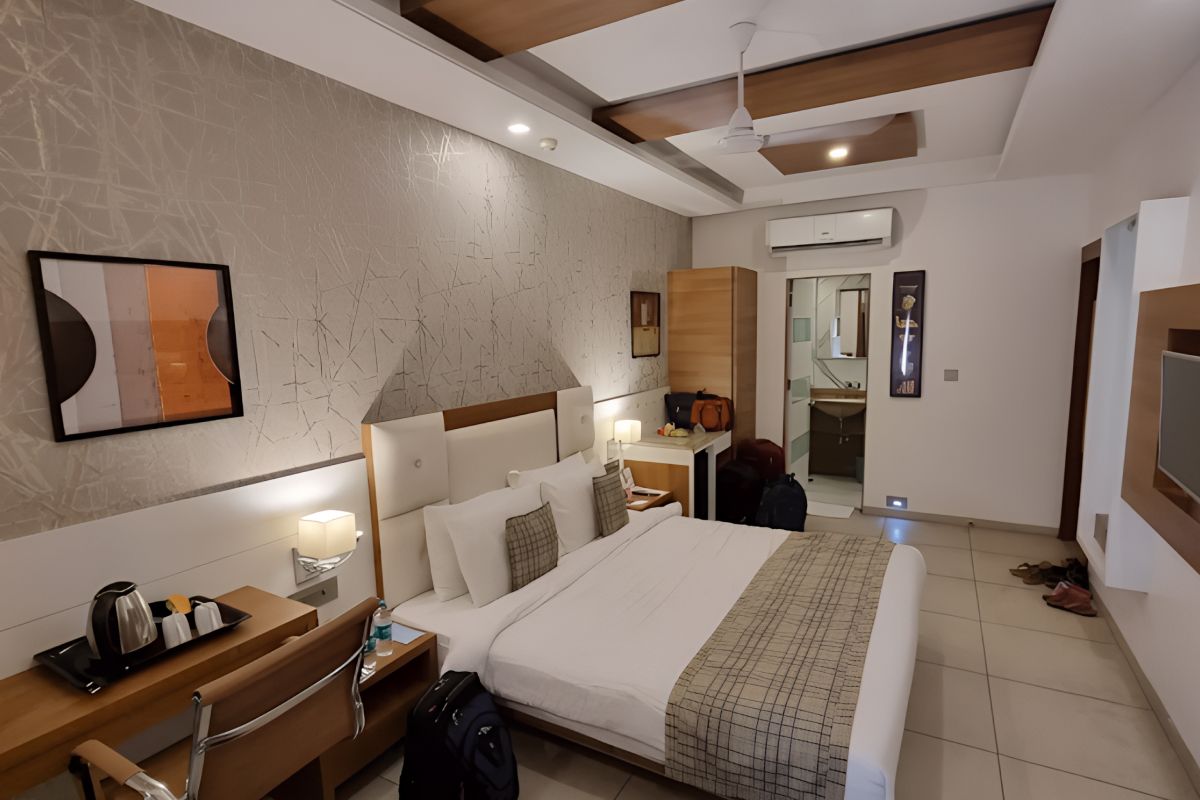 Budget
Dwarkadhish Lords Eco Inn Dwarka
Dwarka town
Best ForBudget travellers and pilgrim families who want a simple, clean, pure-vegetarian stay without needing to prioritise views or resort-style amenities
Estimated Budget₹2,500 to ₹4,500 per night
per night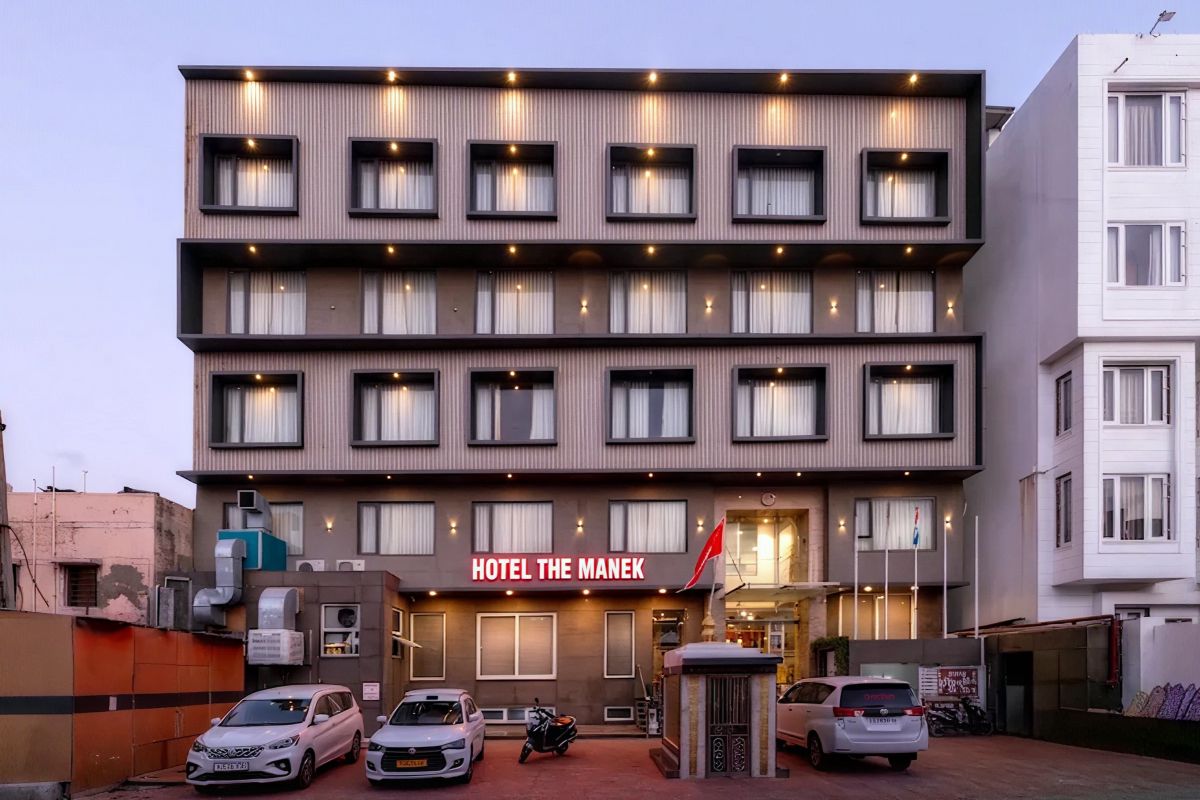 Mid-Range
Hotel The Manek
Near Dwarkadhish Temple, Dwarka town
Best ForPilgrim families and travellers seeking a comfortable, well-located stay with pure-vegetarian dining just minutes from Dwarkadhish Temple
Estimated Budget₹2,000 to ₹3,500 per night
per night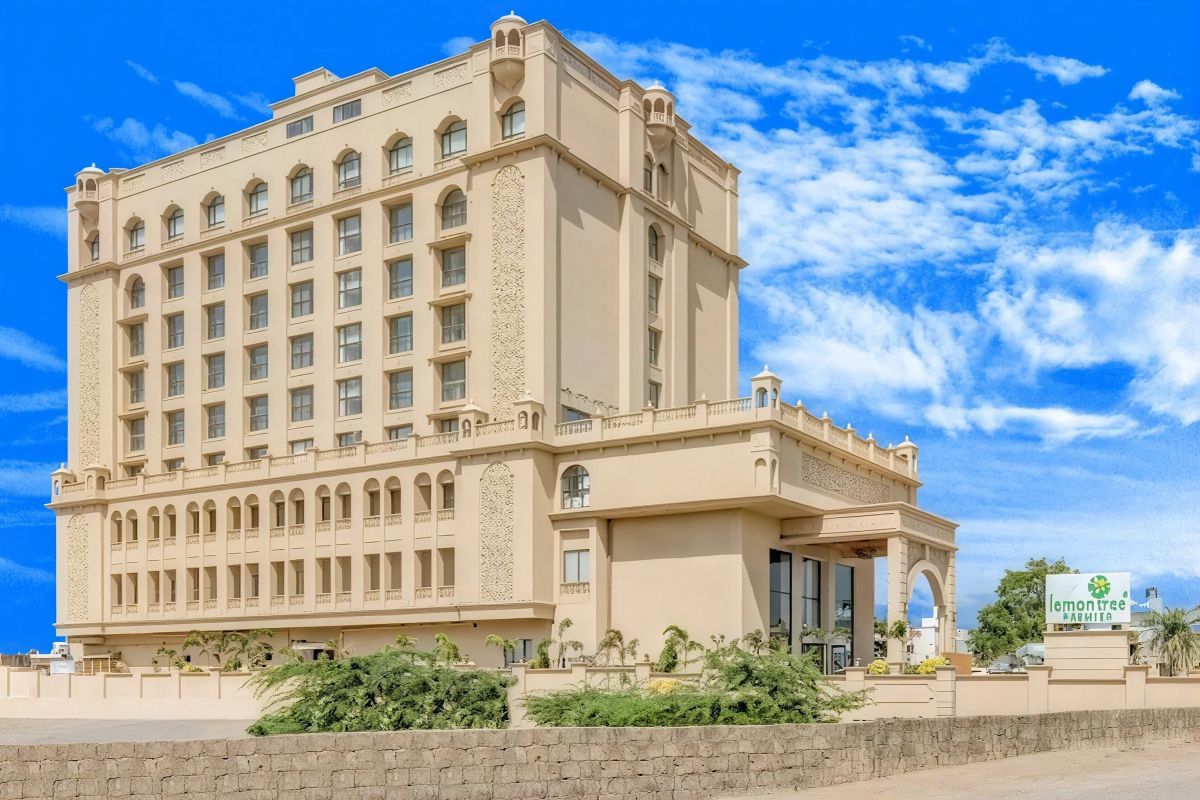 Premium
Lemon Tree Premier Dwarka
An 11-minute walk from Dwarkadhish Temple
Best ForCouples and families wanting a full-service upscale hotel with spa and pool facilities in a town where such options remain limited
Estimated Budget₹4,500 to ₹7,500 per night
per night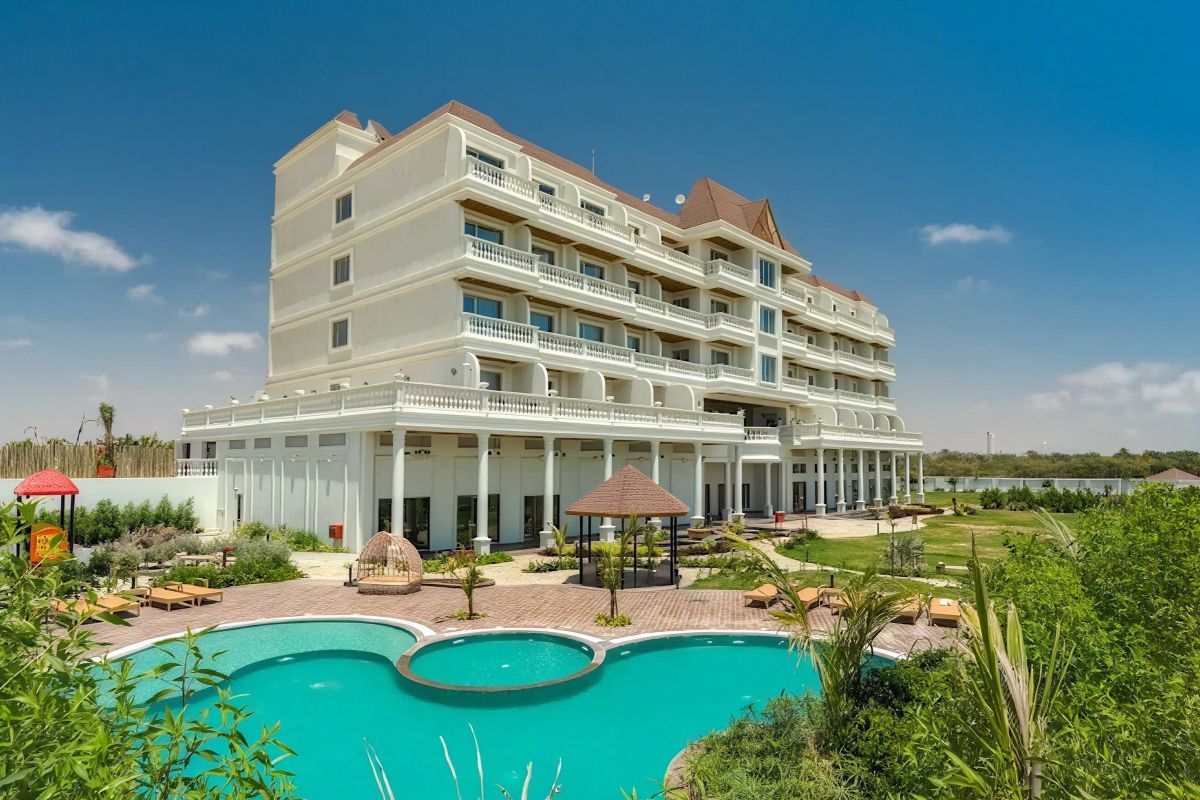 Premium
The Fern Sattva Resort Dwarka
Baradia, about 10 to 15 minutes from Dwarkadhish Temple
Best ForTravellers wanting a resort-style stay with sea-view family rooms, a vegetarian restaurant, and a full range of leisure facilities a short drive from the temple
Estimated Budget₹6,000 to ₹10,000 per night
per night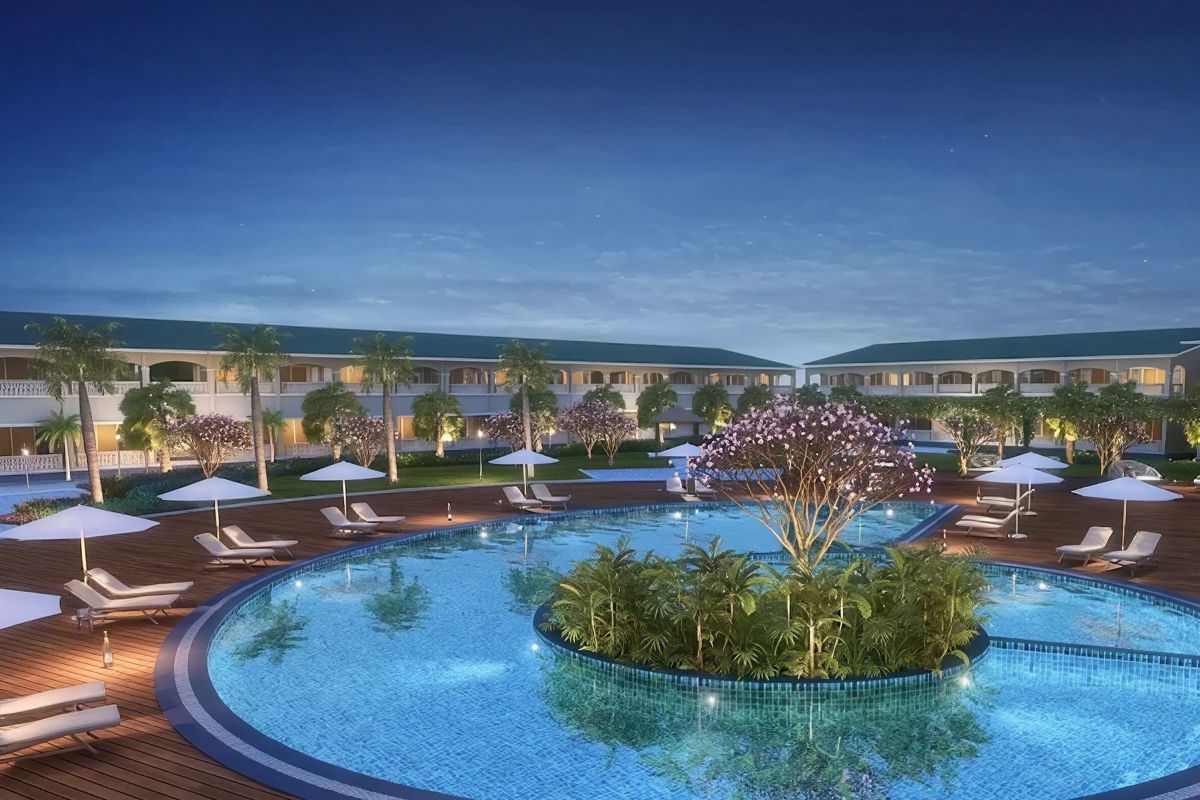 Premium
Hawthorn Suites by Wyndham Dwarka
About 15 minutes from Dwarkadhish Temple
Best ForTravellers wanting the most complete facilities Dwarka currently offers - spa, pool, and a dedicated Satvik vegetarian restaurant - under an internationally recognised hotel brand
Estimated Budget₹4,500 to ₹8,500 per night
per night
Dwarka doesn't perform its faith for visitors - it simply continues it, exactly as it has for centuries. The temple bells, the tide against Gomti Ghat, the pilgrims circling barefoot at dawn: none of it changes because you are watching.
— Yatray Editorial TeamVegetarian Food Guide
Must-Try Specialties
Gujarati Thali
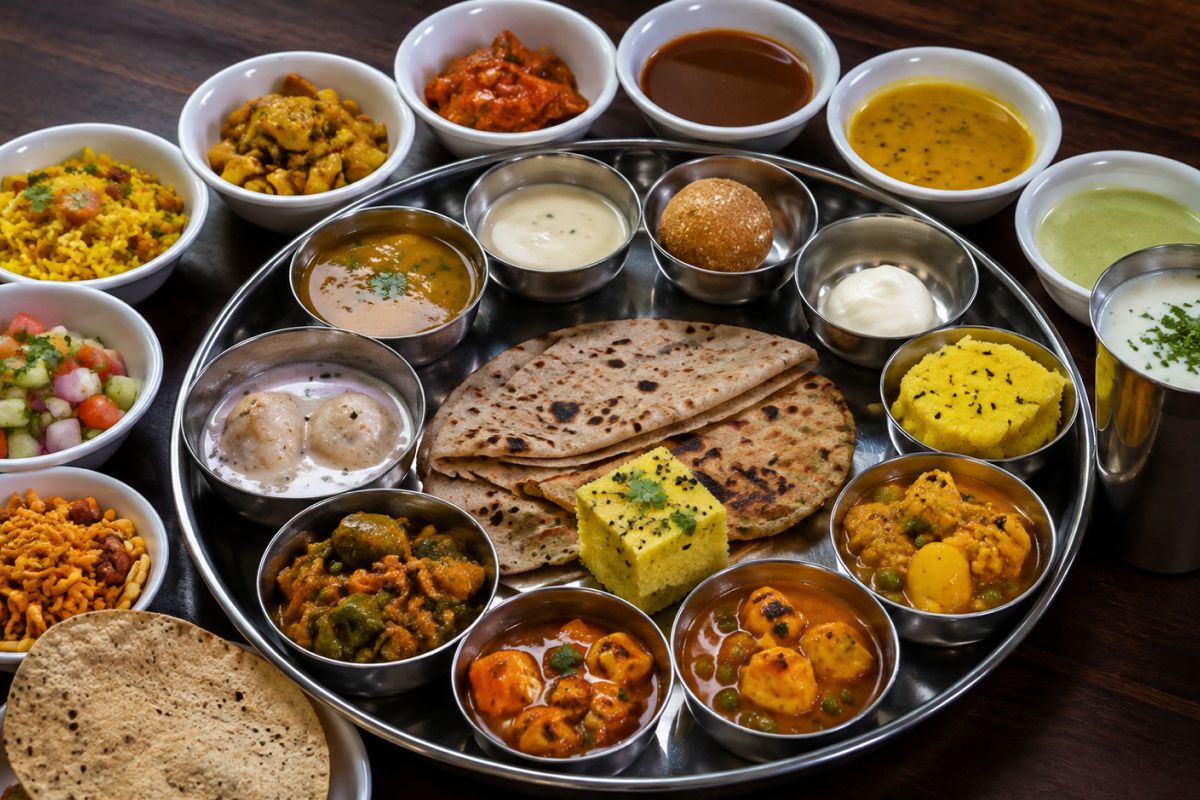
The standard Dwarka meal and a natural extension of the town's pure-vegetarian pilgrimage culture - a full thali brings together dal, kadhi, two or three vegetable preparations, rotli, rice, papad, pickle, and a small sweet, all served with the same unbidden refills found across Gujarat. Restaurants near the temple lean toward simple, home-style versions rather than elaborate multi-course spreads.
Makhan Mishri Prasad
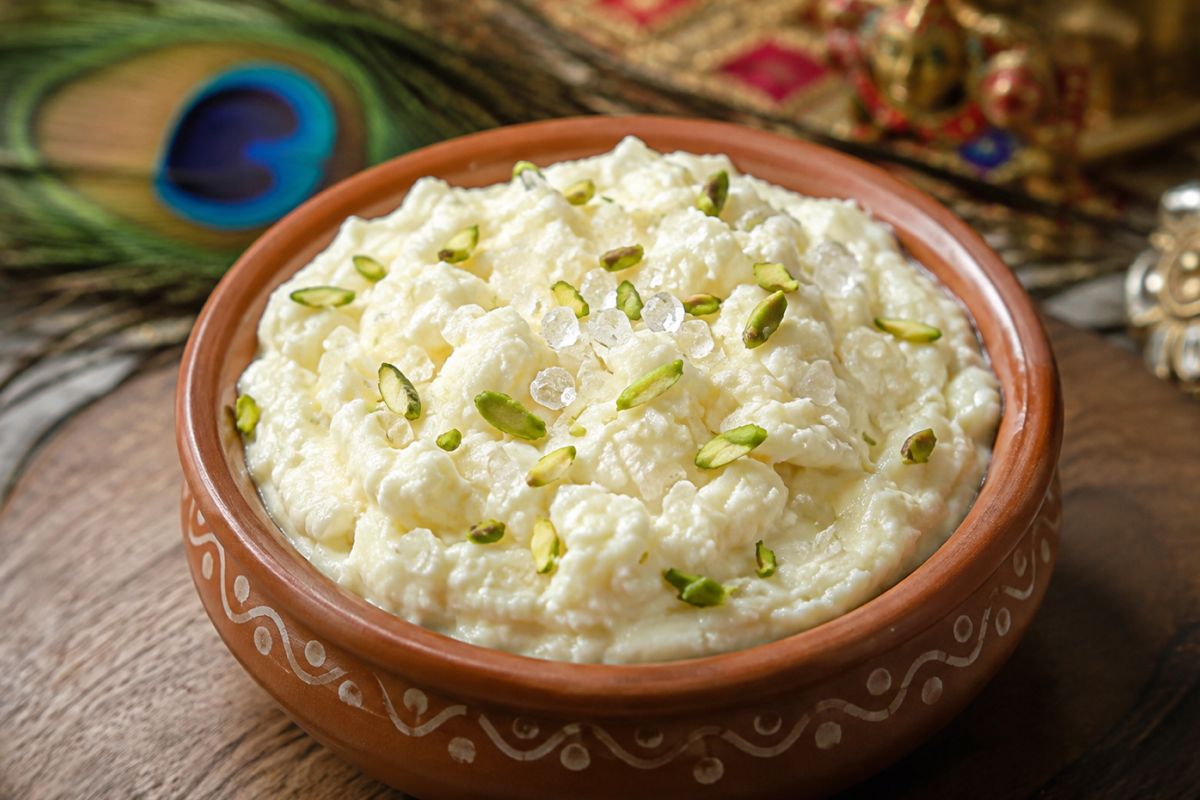
Dwarkadhish Temple's own prasad, distributed each morning during the Mangala Aarti - fresh churned butter mixed with crystallized sugar, sold at a counter inside the temple rather than the sweets shops outside. Plainer and far less sugary than most temple prasad, it's closer to what devotional tradition describes Krishna as having loved as a child, which is why pilgrims ask for it by name rather than picking up whatever prasad box is nearest the exit.
Fafda-Jalebi
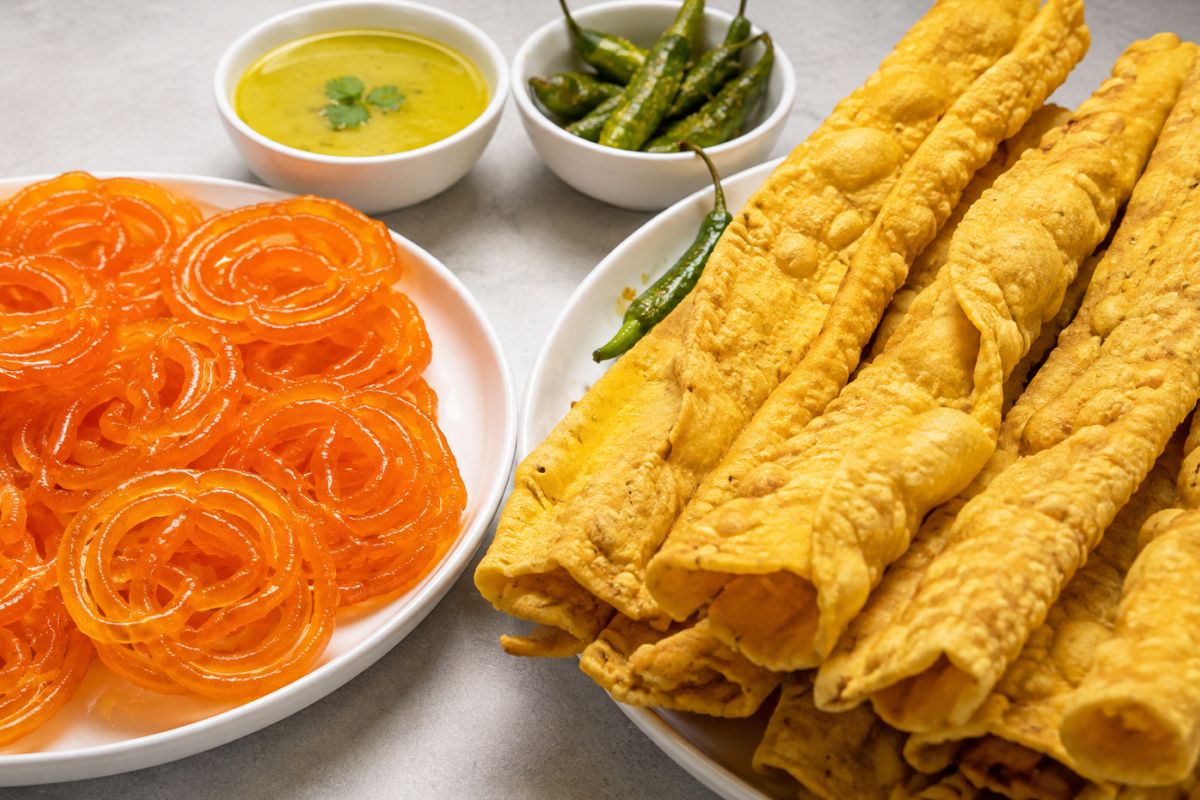
The classic Gujarati weekend breakfast pairing - crisp, savoury gram-flour fafda alongside sweet, syrup-soaked jalebi, usually eaten together within the same bite. Best found fresh in the mid-morning hours at dedicated farsan shops rather than general restaurants.
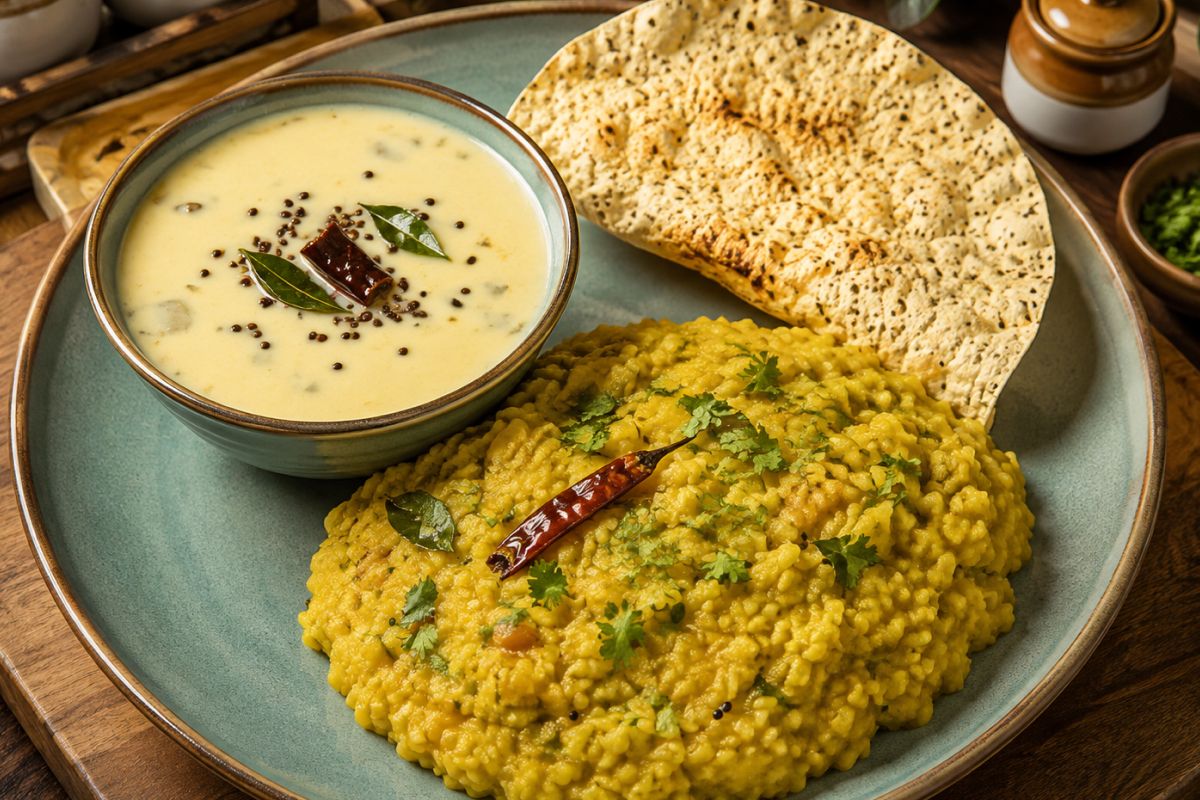
Khichdi-Kadhi
A simple, mildly spiced combination of rice-and-lentil khichdi with tangy buttermilk-based kadhi poured alongside - the meal Gujarati households actually cook on an ordinary evening rather than a restaurant showpiece. In a pilgrimage town built around pure vegetarian food, it's the dish most likely to turn up on a home-style thali when you want something lighter than a full spread.
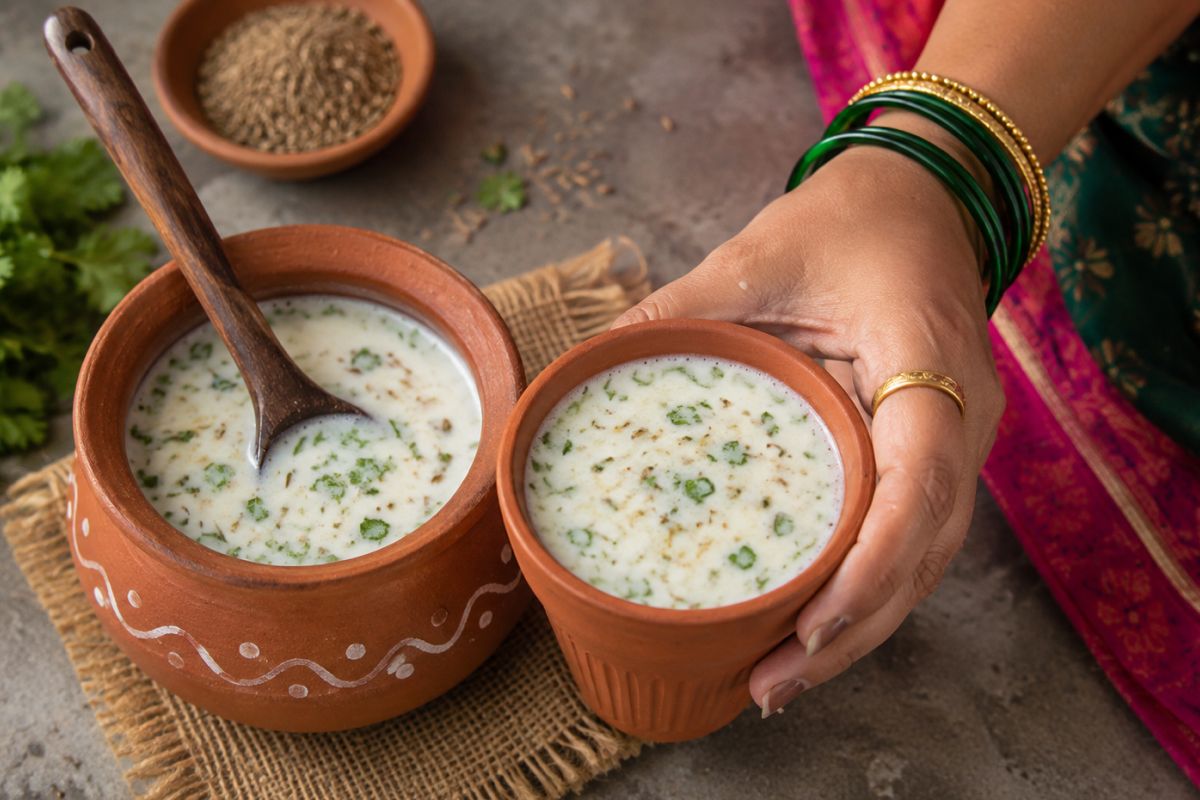
Desi Chaas
Salted, lightly spiced buttermilk served chilled, usually tempered with cumin, curry leaves, and sometimes ginger or green chilli - the standard way to finish a Gujarati meal or cool off between temple visits in the coastal heat. Roadside stalls near the temple sell it by the glass rather than the bottle, and it's worth having here rather than a packaged version.
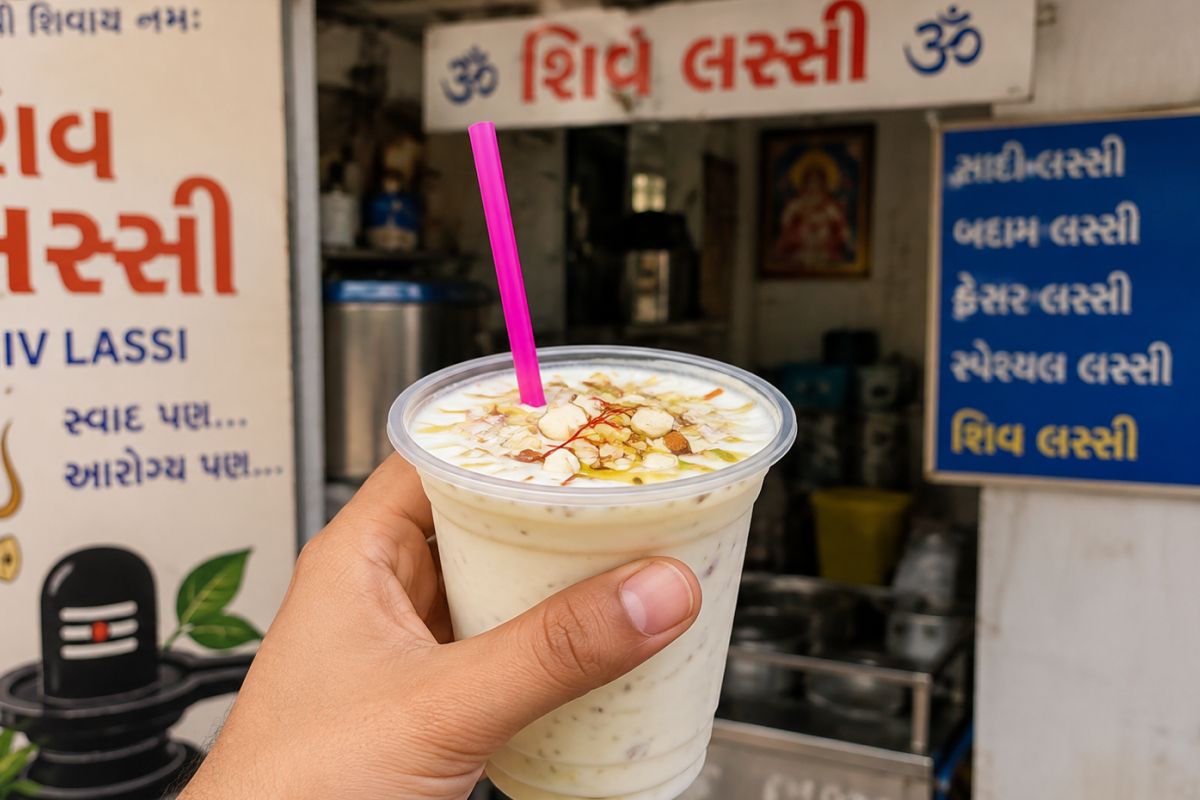
Shiv Lassi
A thick, well-chilled lassi that has become one of Dwarka's known local specialities, popular enough with pilgrims that it's regularly named alongside the town's temple prasad on local food lists. A straightforward way to cool down after a midday walk between temples, best had fresh from the glass rather than bottled.
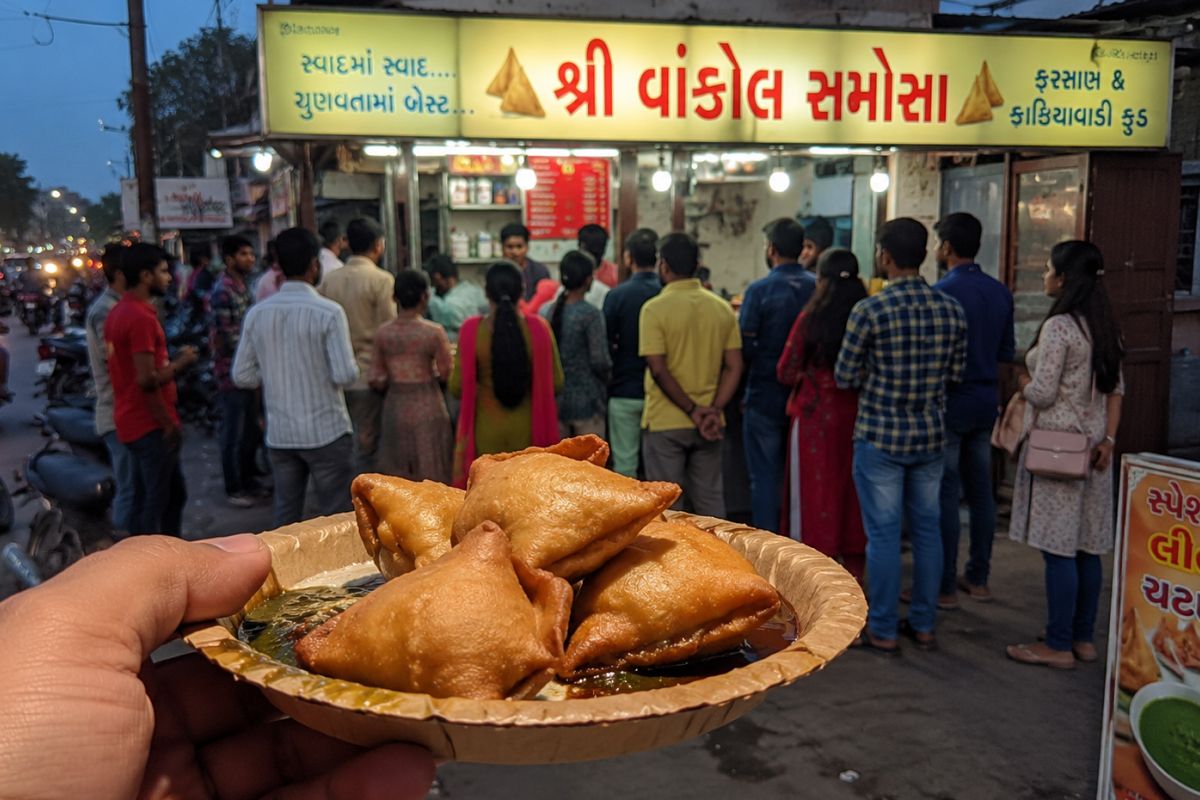
Vankol Samosa
Dwarka's most talked-about samosa, from a long-running stall in the Narshi Keshavji Vadi part of town rather than a temple-adjacent stand. Crisp, generously filled, and sold by the piece through the afternoon and evening rather than the morning - reason enough on its own to time a walk through this part of town outside temple hours.
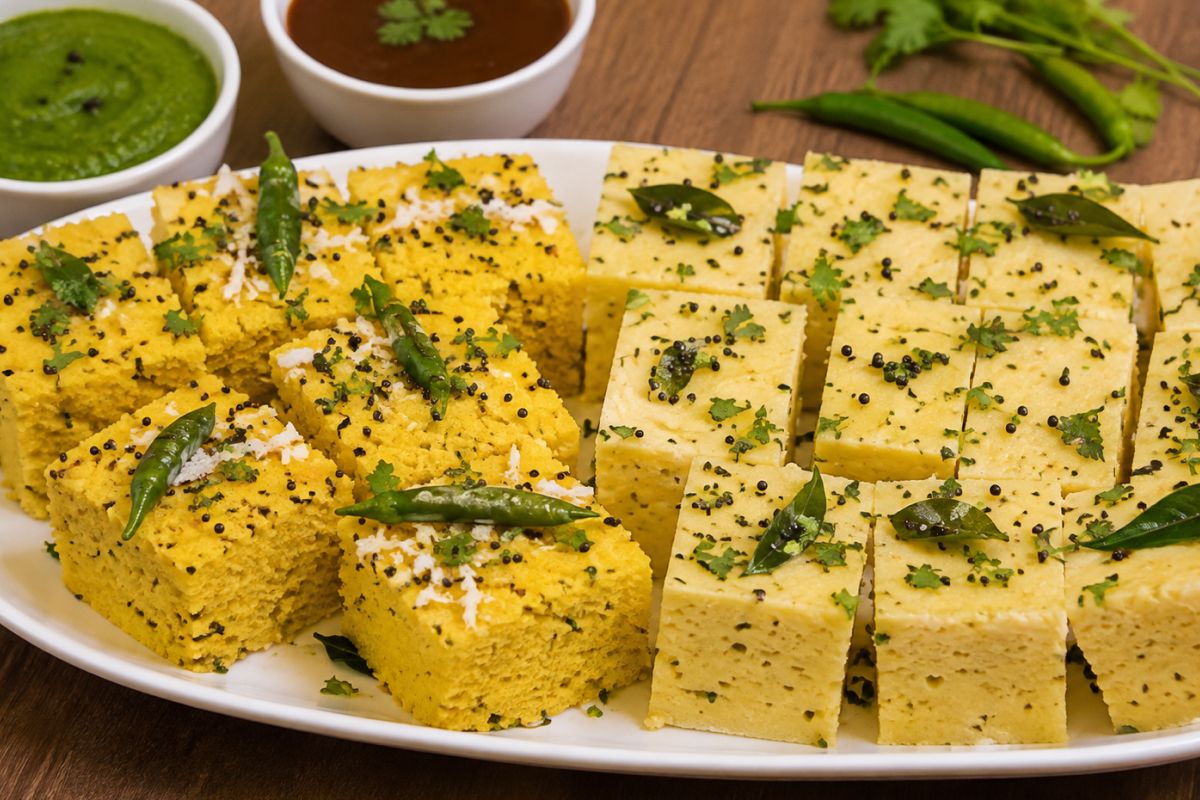
Khaman and Dhokla
Dwarka's two steamed gram-flour staples, sold side by side at nearly every stall in the market lanes: khaman is denser and tempered with mustard seed and a touch of sugar-lemon syrup, while dhokla is lighter and more delicately spiced. Both travel well, making them a practical stall-food choice between temple visits rather than a sit-down meal.
Curated Restaurants
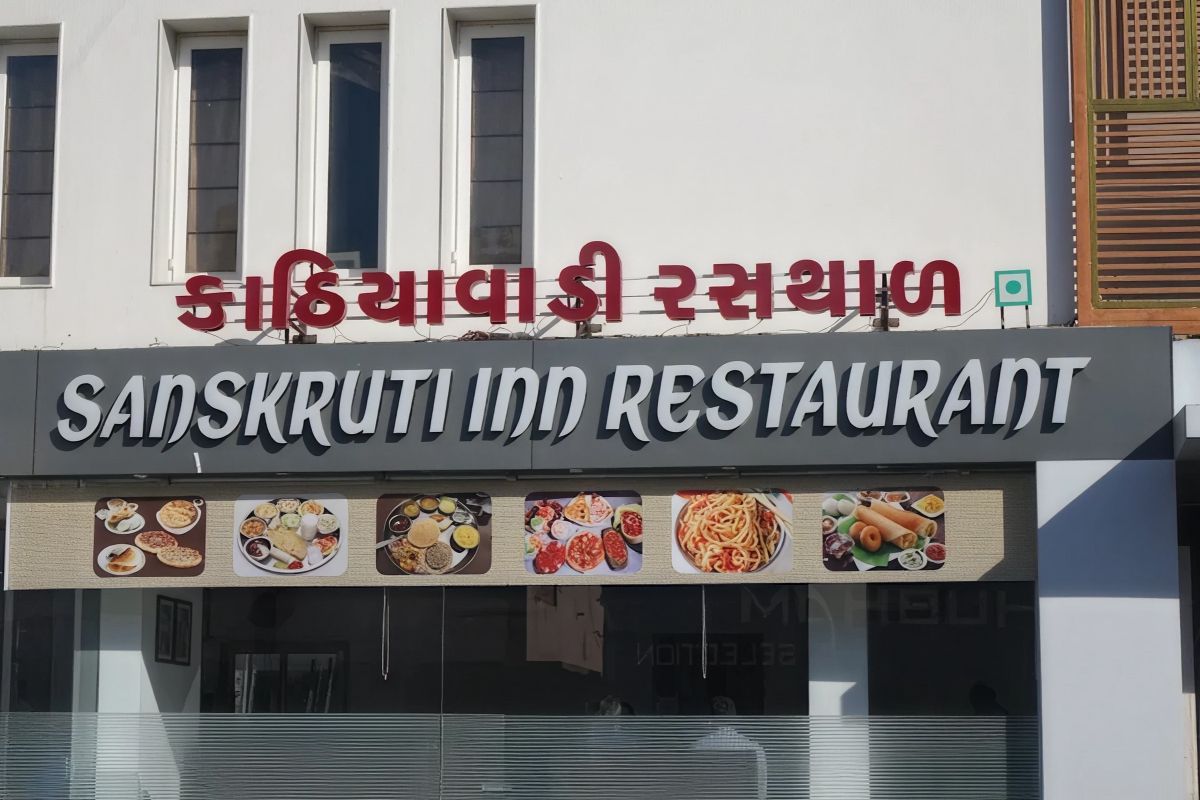
Kathiyawadi Rasthal
Traditional Kathiyawadi, Pure Vegetarian
About a ten-minute walk from Dwarkadhish Temple, this is the place to try Kathiyawadi cooking rather than the more familiar sweetened Gujarati style served elsewhere in town - sharper on chilli and garlic, and rooted specifically in the Saurashtra region Dwarka sits within. The unlimited thali here is genuinely good value.
Must Try: Kathiyawadi Thali, Ringan no Olo
Timing: 11:30 AM to 3:00 PM, 7:00 PM to 10:30 PM
Average Cost: ₹150 to ₹250 per person
Location: Short walk from Dwarkadhish Temple
Family Dining Choice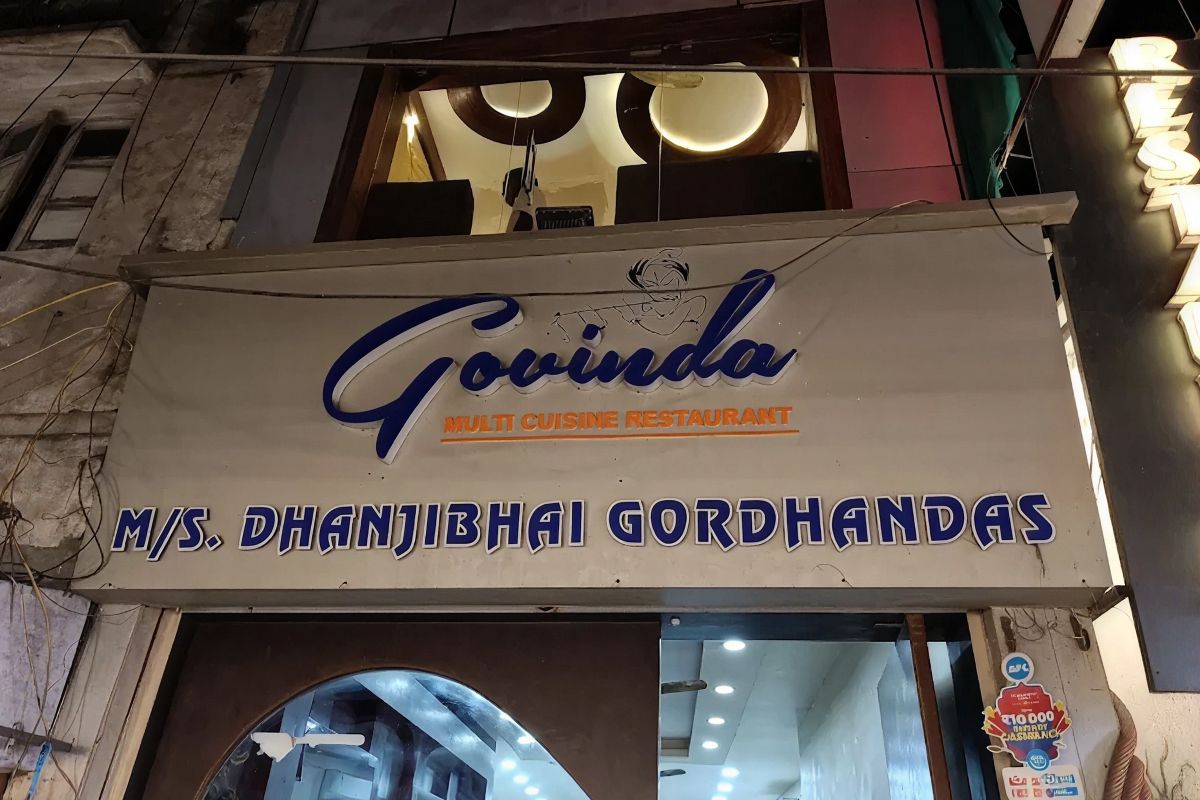 Jain Option
Govinda Multi Cuisine Restaurant
Pure Vegetarian, Multi-Cuisine
Set within the wider temple complex area, Govinda covers a broad vegetarian menu spanning Gujarati thalis, South Indian breakfast dishes, and simple Chinese-style options, making it a practical choice for groups with differing preferences. It is consistently busy around meal times, which is usually a reasonable sign of steady local trade.
Must Try: South Indian Thali, Gujarati Thali
Timing: 8:00 AM to 10:00 PM
Average Cost: ₹200 to ₹350 per person
Location: Dwarkadhish Temple complex area
Family Dining Choice
Jain Food Availability
Dwarka's temple-town character means Jain-friendly food, prepared without onion, garlic, or root vegetables, is widely and easily available. Most thali restaurants around Dwarkadhish Temple will prepare a Jain version on request, and several list it as a standard option rather than a special accommodation.
👨👩👧👦 Family Dining Notes
Dwarka is a comfortable destination for family dining given its uniformly vegetarian, mild-to-moderately spiced food culture. Thali restaurants near the temple offer the widest variety within a single meal, which tends to work well for families with children or differing tastes, and most establishments are used to accommodating pilgrim families with young children or elderly members.
Suggested Itinerary
2-Day Escape
- Day 1
Morning
Reach Dwarkadhish Temple for the Mangala Aarti at 6:30 AM, before the day's crowds build - remember that phones, cameras, and leather items must be left at the free lockers outside. After darshan and breakfast near the temple, take a short auto ride to Rukmini Devi Temple, two kilometres away, and walk the base of this quieter twelfth-century shrine before heading back toward the ghats.
Afternoon
Spend the warmer hours at Gomti Ghat, watching the everyday rhythm of the riverfront, then browse the market lanes around the temple for prasad sweets, conch shells, and Bandhani textiles. This is also a good window for a light lunch at one of the pure vegetarian thali restaurants a short walk from the temple.
Evening
Climb Dwarka Lighthouse an hour before sunset for the clearest view over the temple, the ghats, and the open sea. Walk across Sudama Setu as the light softens, then return to Dwarkadhish Temple for the Sandhya Aarti around 7:30 PM before dinner nearby.
- Day 2
Morning
Set out early toward Nageshwar Jyotirlinga, about thirty minutes from Dwarka, for a calmer visit before the mid-morning rush. Continue a short distance further to Gopi Talav for a brief stop, then carry on toward Okha.
Afternoon
Cross the Sudarshan Setu bridge to Bet Dwarka, visit the temple complex, and take an unhurried walk through the island's lanes and quieter shoreline before lunch at Okha or on the island itself.
Evening
On the drive back to Dwarka, stop at Shivrajpur Beach for the last hour of daylight - a genuinely different close to the day after two temple-focused mornings. Return to Dwarka for a relaxed dinner.
3-Day In-Depth Experience
- Day 1
Morning
Reach Dwarkadhish Temple for the 6:30 AM Mangala Aarti, leaving phones and leather items at the free lockers outside. After breakfast near the temple, visit Rukmini Devi Temple, two kilometres away, before returning to explore Gomti Ghat.
Afternoon
Browse the temple bazaar for prasad, conch shells, and Bandhani textiles, and take a light lunch at one of the pure vegetarian restaurants nearby. Rest through the warmest part of the afternoon before the evening's activities.
Evening
Climb Dwarka Lighthouse an hour before sunset, walk Sudama Setu as the light fades, and return to Dwarkadhish Temple for the Sandhya Aarti around 7:30 PM before dinner.
- Day 2
Morning
Depart early for Nageshwar Jyotirlinga, roughly thirty minutes away, followed by a short stop at Gopi Talav on the same road toward Okha.
Afternoon
Cross the Sudarshan Setu to Bet Dwarka for the temple complex and a walk through the island, with lunch at Okha or on Bet Dwarka itself.
Evening
Break the drive back to Dwarka with a stop at Shivrajpur Beach for sunset, then return for dinner and an early night ahead of the following day's longer excursion.
- Day 3
Morning
Keep this morning free of a fixed plan. Head back to Shivrajpur Beach without the previous day's schedule to work around - stay longer, swim if the sea is calm, or arrange a short boat ride to look for dolphins offshore. This is the one stretch of the trip built for slowing down rather than covering ground.
Afternoon
Use the afternoon for anything left undone: a proper sit-down lunch instead of a quick one, a second, calmer walk through the temple bazaar for last souvenirs, or a short trip out to Bhadkeshwar Mahadev Temple on the coast before the light turns golden. Families travelling with young children or older relatives usually find this unstructured block is what the first two days were missing.
Evening
Return to Dwarkadhish Temple for a final darshan or the Sandhya Aarti, this time without the itinerary pressure of Day 1, then close the trip with an unhurried dinner before departure the next morning.
Travel Tips
Booking & Finance
- Shivrajpur Beach charges a small entry fee and is best visited before 10 AM if you want a chance of spotting dolphins offshore.
Transport & Getting Around
- Agree the fare with auto-rickshaw drivers before setting off, or use a pre-arranged hotel taxi for the Nageshwar-Bet Dwarka-Shivrajpur loop, since this route is not well served by public transport.
- Carry sufficient cash for the smaller prasad shops, boat crossings, and roadside stalls around Bet Dwarka and Okha, where card and UPI acceptance is inconsistent.
Photography Guidelines
- The Sudarshan Setu has restrictions on stopping to photograph from the bridge itself - plan any photography from the approach roads or from Bet Dwarka's own shoreline instead.
Weather & packing
- Avoid swimming or water sports at Shivrajpur during the monsoon months of July to September, when the sea is genuinely rough and most operators suspend activity.
- Boat crossings and beach activities can be cancelled at short notice in poor weather - build a spare half-day into your itinerary if these matter to your plans.
Food & Water Safety
- Pure vegetarian food dominates every part of Dwarka, including hotel restaurants - travellers who eat non-vegetarian food elsewhere should not expect to find it here.
Culture & Etiquette
- Mobile phones, cameras, belts, and other leather items are not allowed inside Dwarkadhish Temple. Use the free lockers at the entrance and carry only essentials in.
- Dress modestly for all temple visits - shoulders and knees covered for everyone. Traditional Indian attire is preferred over shorts, jeans, or sleeveless tops, so pack accordingly rather than counting on renting something suitable on arrival.
- Book accommodation well ahead if your visit falls around Janmashtami or other major festival dates on the Hindu calendar, when the town's limited hotel capacity fills quickly.
- Carry a hat, sunglasses, and sunscreen even in winter - the coastal sun reflecting off the sea and open temple courtyards is stronger than it feels.
- Wear comfortable, easily removable footwear. Temple floors are walked barefoot, and slip-on sandals make the frequent removing and re-wearing far less tedious.
- Dwarka's temple-town character means alcohol is not sold or served within the town limits - plan accordingly if this matters to your trip.
- The temple's evening Sandhya Aarti tends to be less crowded than the morning Mangala Aarti and is a good option if you prefer a calmer darshan experience.
- Keep a lightweight shawl or stole handy for women entering temples, since draping the shoulders is expected even where the outfit itself is otherwise appropriate.
- Senior travellers should note that Dwarkadhish Temple involves a fair amount of walking on stone floors and several sets of steps - a walking stick or a slower pace is worth planning for.
- Photography inside the sanctums of Dwarkadhish Temple, Rukmini Devi Temple, and Nageshwar is not permitted, phone or otherwise - reserve your camera for the exteriors and the coastline.
General Advice
- If you are combining Dwarka with Somnath, the coastal route via Porbandar is more scenic than the inland alternative, though both take a similar amount of time.
How To Reach
- By Air
- Jamnagar Airport (JGA), roughly 130 km away, is the closest airport with meaningful scheduled service, connected to Mumbai and Ahmedabad by regular flights on IndiGo and Air India; the onward drive to Dwarka takes approximately 2.5 to 3 hours. Porbandar Airport sits closer by straight-line distance but currently has very limited commercial connectivity, so most travellers route through Jamnagar or fly into Ahmedabad and continue onward by road or rail.
- Nearest Airport: Jamnagar Airport (JGA), Governmentpur - approximately 130 km from Dwarka
- By Rail
- Dwarka has its own railway station, Dwarka Junction (DWK), directly in the town - an advantage most Gujarat pilgrimage destinations do not share. Direct trains connect Dwarka to Ahmedabad, Vadodara, Surat, and Rajkot, with several onward services continuing to Okha, useful for travellers heading straight to the Bet Dwarka crossing. The Vande Bharat Express is the fastest option from Ahmedabad, covering the route in around 6.5 hours; regular overnight trains take closer to 8 to 9 hours.
- Nearest Station: Dwarka Railway Station (DWK) - about 2 km from Dwarkadhish Temple
- By Road
- Dwarka sits at the end of NH 947, approximately 449 km (around 8 to 9 hours) from Ahmedabad via Rajkot and Jamnagar. Rajkot is roughly 235 km away (about 4 hours) and Jamnagar around 141 km (about 2.5 to 3 hours), both linked by well-maintained state highway. GSRTC runs regular bus services from Ahmedabad, Rajkot, and Jamnagar, and private overnight coaches operate from Ahmedabad and Surat during the peak pilgrimage season.
Route & Transit Tips
- Mobile phones, cameras, and leather items such as belts and wallets are not permitted inside Dwarkadhish Temple. Free lockers are available just outside the entrance - budget a few extra minutes before darshan to use them.
- If travelling by the overnight train from Ahmedabad or Surat, book AC sleeper class where possible around Janmashtami and other major festival dates, when berths sell out weeks ahead.
- Hire a car or shared taxi for the Nageshwar-Bet Dwarka-Shivrajpur loop rather than relying on infrequent local buses; most hotels in Dwarka can arrange a full-day vehicle at a fixed rate.
- The walk from Dwarka Railway Station to Dwarkadhish Temple is manageable on foot in cooler months, but autos are inexpensive and easy to find just outside the station concourse.
Yatray Travel Partner
Plan Your Journey With Yatray
Let our experts craft a tailored travel experience for you. From securing domestic flight connections and train tickets to booking premium stays and private cabs with professional drivers — let us handle all the details.
Usually replies within a few hours.
Nearby Destinations
- Okha30 km, approximately 45 minutes by road
Okha is the working port town from which the Sudarshan Setu crosses to Bet Dwarka, and it is worth a slower look in its own right - an actual Saurashtra fishing harbour rather than a pilgrimage site, with boats, nets, and a rhythm entirely separate from the temple town nearby. Most visitors pass straight through on the way to Bet Dwarka; an early morning stop at the harbour itself is easy to fold into the same trip.
- Porbandarapproximately 105 km, around 2 hours by road
Porbandar is Mahatma Gandhi's birthplace, home to Kirti Mandir and a quiet, historic seafront quite different in character from Dwarka's temple-focused streets. It is also traditionally identified as the hometown of Sudama, Krishna's childhood friend - a thematic thread that connects neatly back to Sudama Setu in Dwarka itself. Worth adding only if you have a fourth day or more; as a same-day round trip squeezed into a 2-3 day Dwarka visit, it tends to turn into a rushed drive rather than a proper look at the town.
- Somnath233 km, approximately 4 to 4.5 hours by road via Porbandar
Somnath is the first among the twelve Jyotirlingas and one of the most visited pilgrimage sites on Gujarat's coast, its temple rebuilt in its current form after repeated historical destruction and reconstruction. The coastal route via Porbandar makes a longer but scenic drive from Dwarka, and many pilgrims combine both sites into a single, longer Gujarat pilgrimage circuit rather than treating them as separate trips.
- Jamnagar141 km, approximately 2.5 to 3 hours by road
Jamnagar is Dwarka's nearest city with meaningful airport connectivity, and it holds its own attractions worth a stop if you are travelling this way regardless - the Bala Hanuman Temple, known for chanting that has continued without pause since 1964, and the walled Lakhota Lake with its small island fort in the town centre.
- Madhavpurapproximately 150 km, around 3 hours by road
This small coastal village between Porbandar and Somnath is traditionally associated with the marriage of Krishna and Rukmini, celebrated each year at the Madhavpur Ghed fair. It sees far fewer visitors than Dwarka's main sites, and the quiet beach here is a real contrast to the pilgrim crowds at the larger temple towns along this coast.
- Marine National Park, Gulf of KutchAccessible via Jamnagar or Okha; distances vary by entry point
India's first marine national park protects coral reefs, mangroves, and a wide range of marine life along the Gulf of Kutch, reached by boat from designated points near Jamnagar. It is a distinctly different kind of excursion from anything else on this coast - worth arranging in advance through a registered operator rather than as a same-day add-on, since access and permits are more tightly regulated than at Dwarka's own sites.
Frequently Asked Questions
October to March is the best time to visit Dwarka. Daytime temperatures generally stay between 20°C and 30°C, the sea remains calm enough for the Bet Dwarka crossing and Shivrajpur Beach's water sports, and the festival calendar is at its richest. December to February is peak pilgrim season, so book accommodation ahead if your dates fall in this window.
Two days cover Dwarka's essentials comfortably - Dwarkadhish Temple, Rukmini Devi Temple, and Gomti Ghat on day one, then Nageshwar Jyotirlinga, Bet Dwarka, and Shivrajpur Beach as a single loop on day two. A third day is worth adding for a slower pace rather than more sightseeing - extra beach time, a second unhurried darshan, and rest, rather than rushing to a same-day Porbandar add-on.
No. Mobile phones, cameras, and leather items such as belts and wallets are not permitted inside Dwarkadhish Temple. Free lockers are available just outside the entrance for safekeeping. This rule is strictly enforced, so plan a few extra minutes before darshan to store your belongings.
Modest dress is expected for everyone - shoulders and knees covered. Traditional Indian attire such as sarees, salwar kameez, dhotis, or kurta-pajama is preferred over Western clothing like shorts, sleeveless tops, or jeans, so it is worth packing accordingly rather than assuming you can arrange something at the temple itself.
Drive or take a shared taxi to Okha, about 30 km from Dwarka, then cross the Sudarshan Setu, a cable-stayed bridge that opened in February 2024 and now carries vehicles directly to Bet Dwarka island in a few minutes. Before the bridge opened, this crossing required a boat from Okha, which some smaller local operators may still run for foot passengers.
Nageshwar Jyotirlinga is approximately 17 km from Dwarka, about a thirty-minute drive along the same road that continues toward Okha and Bet Dwarka. It is easily combined with a Bet Dwarka and Shivrajpur Beach day trip rather than requiring a separate journey.
Yes. As one of India's most significant Krishna pilgrimage sites, Dwarka's food culture is entirely pure vegetarian, and alcohol is not sold or served within the town. Travellers accustomed to non-vegetarian food elsewhere should plan around this, though the range of vegetarian Gujarati and Saurashtrian dishes available is reasonably broad.
By road, Dwarka is approximately 449 km from Ahmedabad via NH 947 through Rajkot and Jamnagar, taking around 8 to 9 hours by car or bus. By train, the Vande Bharat Express covers the same route in about 6.5 hours, while regular overnight trains take closer to 8 to 9 hours. There is no direct flight to Dwarka itself; flying to Jamnagar and continuing by road is the fastest air-linked option.
Shivrajpur, about 12 to 14 km north of Dwarka, was Gujarat's first beach to receive Blue Flag certification, an international standard for water quality, cleanliness, and environmental management. It has clear shallow water, seasonal water sports, and a reasonable chance of spotting dolphins offshore in the early morning.
Dwarka is a compact, pilgrimage-oriented town and is generally considered safe and manageable for solo and senior travellers alike. That said, temple visits involve a fair amount of walking on stone floors and several flights of steps, so senior travellers should plan a slower pace. As with any Indian pilgrimage town, keep valuables secure in crowded temple areas and use registered taxis after dark.
Dwarkadhish Temple is open from 6:30 AM to 1:00 PM and again from 5:00 PM to 9:30 PM daily, with entry for darshan closing by around 9:15 PM. The Mangala Aarti takes place at 6:30 AM and the Sandhya Aarti around 7:30 PM. Timings can extend slightly during major festivals such as Janmashtami.
Yes, and many pilgrims do exactly this. Somnath, home to the first of the twelve Jyotirlingas, is approximately 233 km from Dwarka via the coastal route through Porbandar, a drive of around 4 to 4.5 hours. Most travellers treat this as a separate day's journey rather than a same-day round trip, often stopping in Porbandar along the way.
Dwarka's temple area is compact enough to explore on foot, with auto-rickshaws readily available for short hops to Rukmini Devi Temple or the railway station. For the Nageshwar-Bet Dwarka-Shivrajpur loop, a hired car or shared taxi is the practical option, since this route is not well served by frequent public buses. Most hotels can arrange a vehicle for the full day at a fixed rate.
Dwarka is generally an affordable destination. Budget guesthouses start from roughly ₹1,000 to ₹2,000 per night, mid-range branded hotels run approximately ₹2,000 to ₹3,500, and the town's few premium resort-style properties reach ₹6,000 to ₹12,000 depending on season. Vegetarian thali meals typically cost ₹150 to ₹350 per person, keeping daily food costs modest throughout.
Prasad sweets from shops around Dwarkadhish Temple, conch shells and tulsi bead malas, and Bandhani tie-dye textiles native to the Saurashtra region are the characteristic purchases in Dwarka. Bet Dwarka's market lanes carry similar items, often at slightly lower prices than the main temple bazaar, since fewer visitors make it across.
Yatray Recommendation
Our Take, From Experience
Dwarka rewards travellers who treat it as a full destination rather than a single-temple errand. It is entirely possible to arrive, complete darshan, and leave within a few hours - and plenty of pilgrims do exactly that. But the town holds considerably more than its central shrine: an island reached by a bridge that did not exist before 2024, a Jyotirlinga a short drive away, and a Blue Flag beach that most visitors never learn is twenty minutes from where they are standing.
Our strongest practical advice is to build your visit around the two aartis rather than around sightseeing hours alone. The Mangala Aarti at 6:30 AM and the Sandhya Aarti around 7:30 PM are distinctly different experiences of the same temple - one hushed and half-empty, the other fuller and more musical - and planning your day around both, rather than a single midday visit, is what turns a quick temple stop into something closer to the actual pilgrimage experience Dwarka is built around.
Do not skip Shivrajpur Beach on the assumption that Dwarka is a purely religious stop. The contrast matters - after a morning at Nageshwar and an afternoon crossing to Bet Dwarka, an hour on a properly clean, Blue Flag-certified beach changes the character of the day in a way that is easy to underestimate until you have actually stood on that sand after two temple visits.
Plan the Nageshwar-Bet Dwarka-Shivrajpur loop as one single outing rather than splitting it across two days. All three sit on effectively the same road out of Dwarka, and travelling it once in each direction rather than twice saves a real half-day that is better spent resting or exploring the town itself.
On food: seek out a proper Kathiyawadi thali at least once rather than defaulting to the more familiar sweetened Gujarati style available everywhere else in the state. The sharper, garlic-and-chilli-forward Saurashtra cooking is a distinct regional identity in its own right, and Dwarka is exactly the place to encounter it rather than a diluted version served for a broader audience elsewhere.
If you have a third day, we would rather send you back to Shivrajpur Beach or leave the afternoon unplanned than route you out to Porbandar. Porbandar is a fine town, but as a same-day add-on from a Dwarka base it becomes four hours of driving squeezed around a couple of hours of actual sightseeing - workable if you are continuing your trip that direction, a poor use of a short one if you are not. Walk to Gomti Ghat instead, sit for a while as the fishing boats come in, and let the town's ordinary rhythm - not its festival crowds or its temple queues - be the version of Dwarka you carry home.
Your Journey Starts Here
Let us craft your perfect
Dwarka itinerary.
Share your dates, travel style, and budget — our concierge team will shape a calm, personalized journey.
Itinerary · Hotels · Flights · Transfers · Local guidance