Udaipur
Where marble palaces float on silver lakes and every sunset feels painted by hand
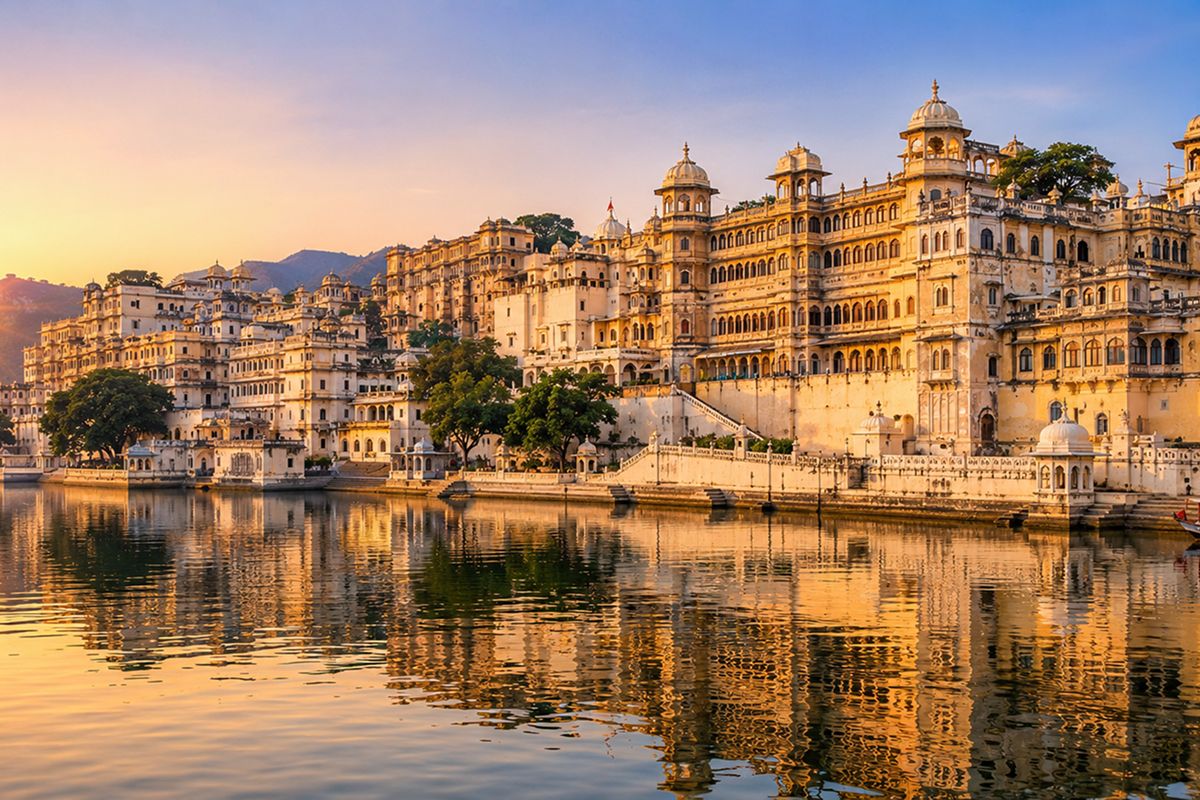
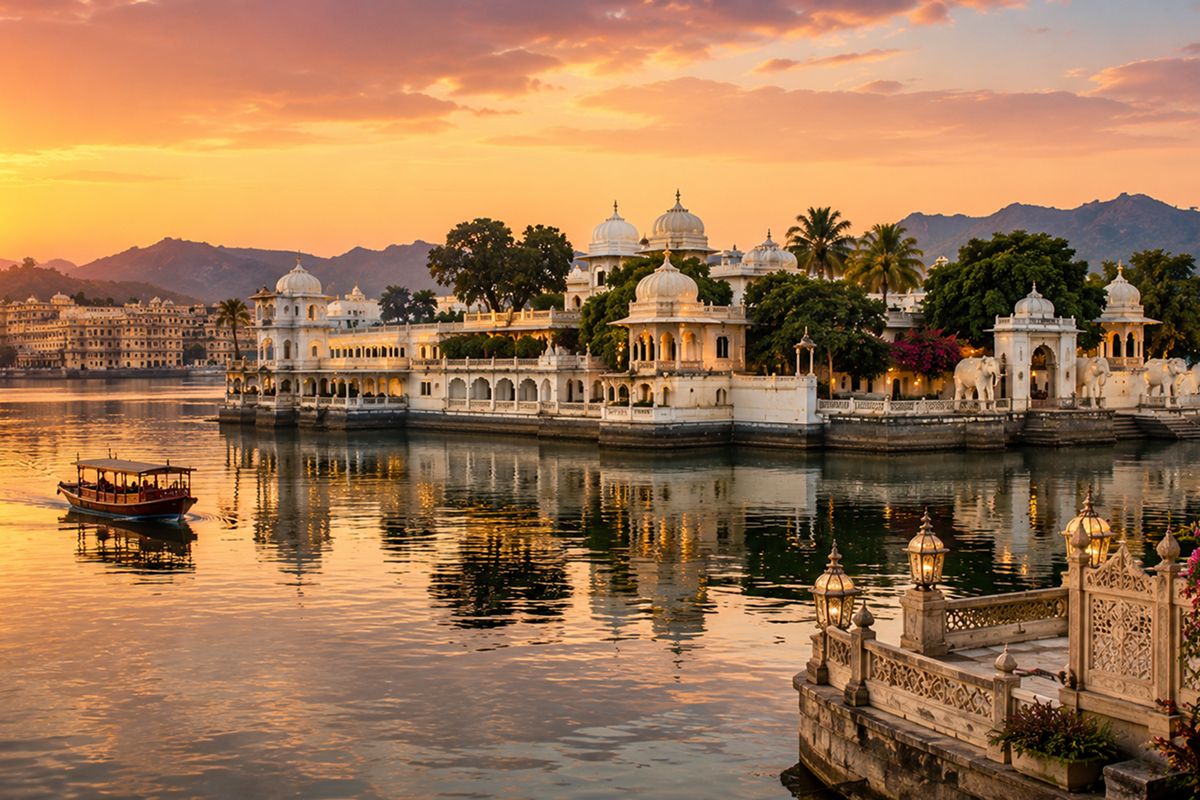
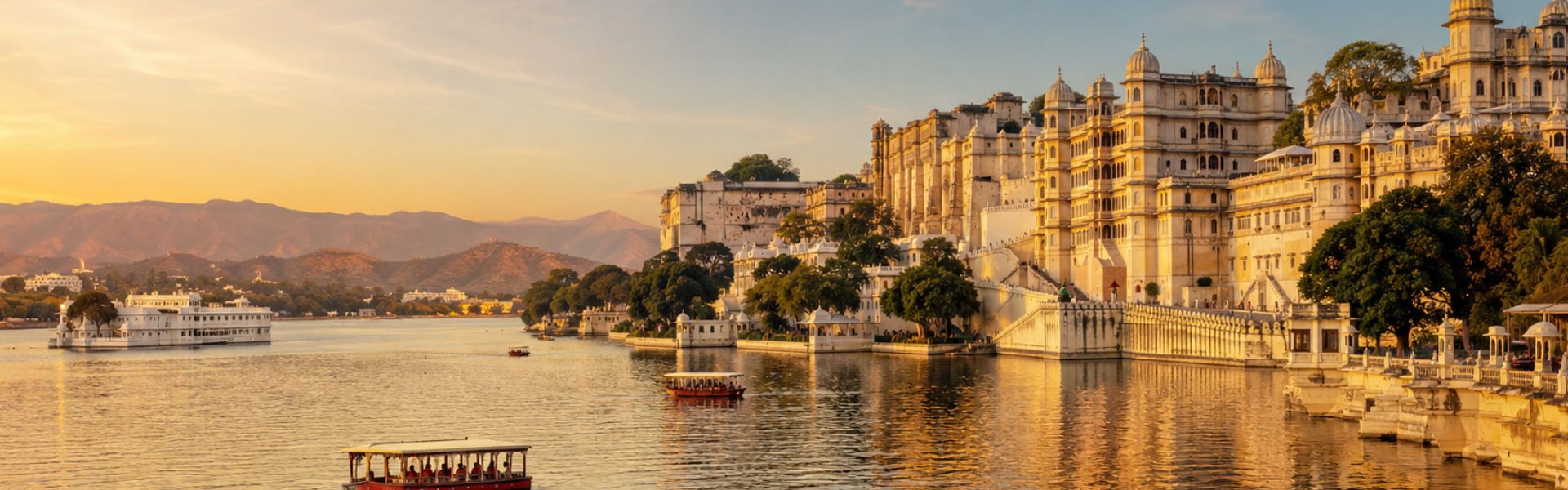
Udaipur is Rajasthan's most romantic city - a place where whitewashed havelis rise from the shores of Lake Pichola, centuries-old palaces glow amber at dusk, and wooden boat rides carry you toward island temples that seem to drift between sky and water. Every lane in the old city hides a story worth stopping for.
Overview
Udaipur sits in the southern reaches of Rajasthan, cradled between the ancient Aravalli hills and a chain of shimmering lakes that give the city its most celebrated title - the City of Lakes. Founded in 1559 by Maharana Udai Singh II after the fall of Chittorgarh, it served as the capital of the Mewar kingdom for nearly three centuries. That royal legacy is impossible to miss: the City Palace, one of the largest palace complexes in all of Rajasthan, rises directly from the eastern bank of Lake Pichola, its cream-and-marble towers visible from almost every rooftop in the old city.
Unlike the arid desert towns further north, Udaipur has a softness to it. The lakes - Pichola, Fateh Sagar, Udaisagar, Rajsamand - moderate the Rajasthani heat, give the city its distinctive silvery light, and make every view feel somehow cooler than it has any right to be in this part of the subcontinent. Walking the narrow lanes of the old city, you pass dyers hanging bolts of indigo cloth from upper-storey windows, temple bells ringing from courtyards you can barely see into, and chai stalls where the owner will insist you sit down before you have even asked for anything.
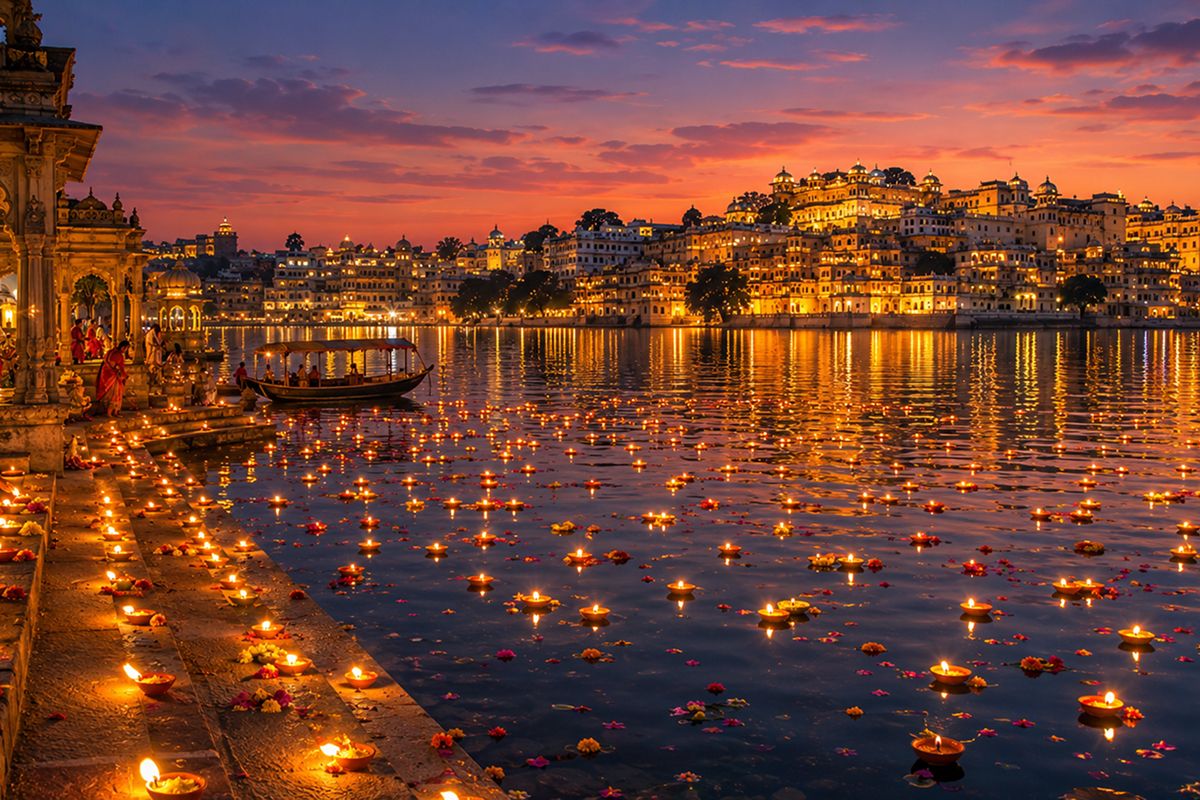
The city carries a romance that is hard to define but easy to feel. It is in the way the Jag Mandir palace floats in the centre of the lake, reachable only by wooden boat. It is in the earthen lamps drifting out onto the dark water at Gangaur Ghat each evening. It is in the intricacy of the miniature paintings sold in studios throughout Mewad Chowk - an art form practiced here, without interruption, since the fifteenth century. Udaipur does not just show you Rajasthan; it gives you the time and the atmosphere to truly feel it.
Udaipur, Rajasthan
Explore the location of Udaipur in southern Rajasthan.
Udaipur is located in the southern part of Rajasthan, India, surrounded by the Aravalli Range and cradled by three major lakes: Lake Pichola, Fateh Sagar Lake, and Swaroop Sagar Lake.
Why Visit
- 01
Palaces That Float on Lakes
Nowhere else in India do royal palaces and natural lakes coexist so dramatically. The City Palace, Jag Mandir, and Jag Niwas (Taj Lake Palace) create a skyline that looks more like a painted miniature than any real place. Seeing it at sunrise or at dusk from a moving boat is one of those sights that stays with you.
- 02
Living Mewar Heritage
The Mewar dynasty is one of the oldest surviving royal lineages in the world. Udaipur is not a heritage museum - it is a city where that legacy remains alive in rituals, classical art schools, centuries-old craft traditions, and festivals that draw enormous crowds from across Rajasthan and beyond.
- 03
World-Class Miniature Painting
Udaipur is India's undisputed capital of Rajput miniature painting. You can watch master artists at work in studios along Mewad Chowk, enrol in half-day workshops, and buy pieces that are genuinely hand-painted on handmade paper using natural mineral pigments - not printed reproductions sold as originals.
- 04
Sunsets Worth Travelling For
The combination of lakes, white marble, and the Aravalli hills to the west gives Udaipur sunsets a quality that is hard to overstate. From Sajjangarh hilltop, Karni Mata ropeway, Ambrai Ghat, or the rooftop terrace of virtually any hotel in the old city, the sky and the water turn colours you have not seen anywhere else.
- 05
A Walkable Old City
Unlike many Indian heritage cities, Udaipur's old quarter is compact and genuinely explorable on foot. The main ghats, temples, bazaars, and museums all sit within walking distance of one another - which means you spend your hours discovering, not commuting. Getting pleasantly lost in the lanes north of Jagdish Temple is half the experience.
- 06
An Extraordinary Vegetarian Food Culture
Udaipur is a deeply Jain and Vaishnav city, which means the vegetarian food here is extraordinary. From slow-cooked Dal Baati Churma ladled out at local dhabas to multi-course Rajasthani thalis that cover the entire table with small bowls, every meal in this city feels like a careful act of hospitality.
Must-Visit Places
The experiences that define your journey.
Sunrise Boat Ride on Lake Pichola
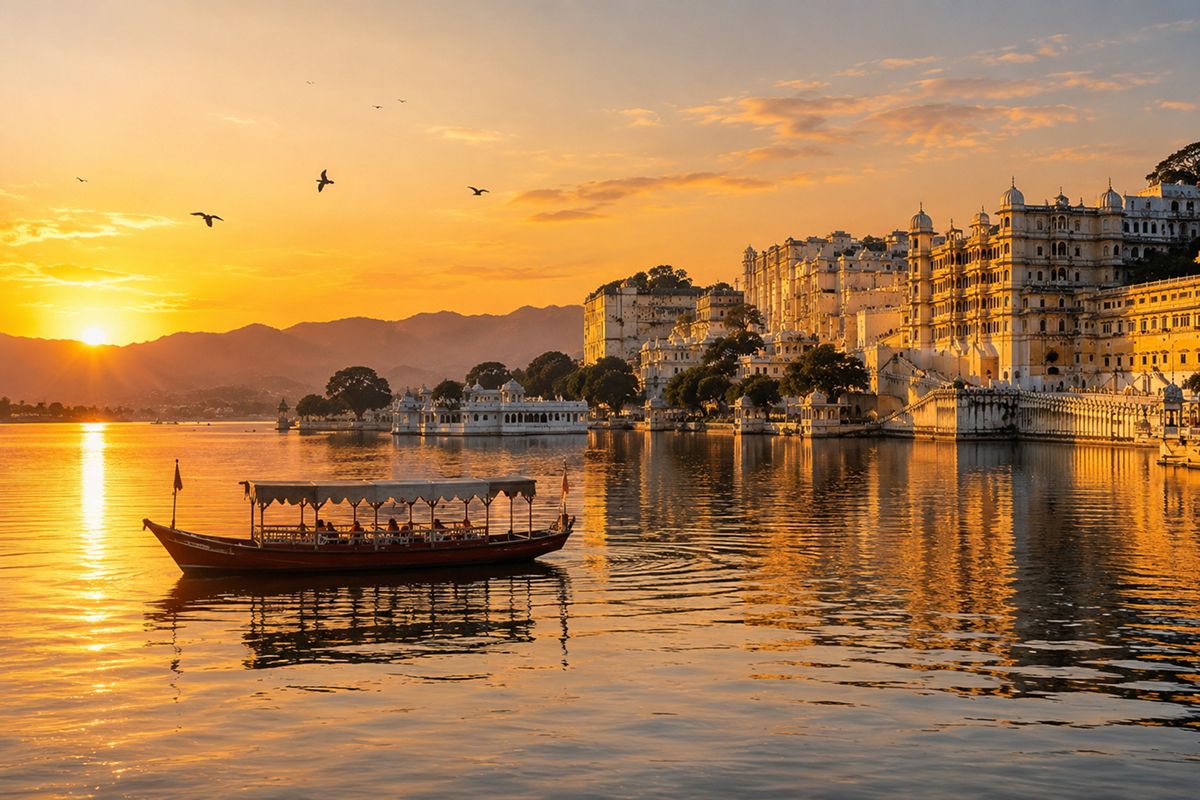
At dawn, Lake Pichola belongs entirely to you. The boatman rows you past sleeping ghats, and the City Palace slowly turns from grey stone to deep gold as the sun clears the Aravalli hills. Jag Mandir island sits in the middle of the lake like something imagined rather than built. No crowds, no noise - just oars, morning light, and the occasional heron. This is Udaipur at its most honest, and the hour you will remember longest.
Duration: 1 to 1.5 hoursBest: October to March, 6:30 AM to 8:00 AM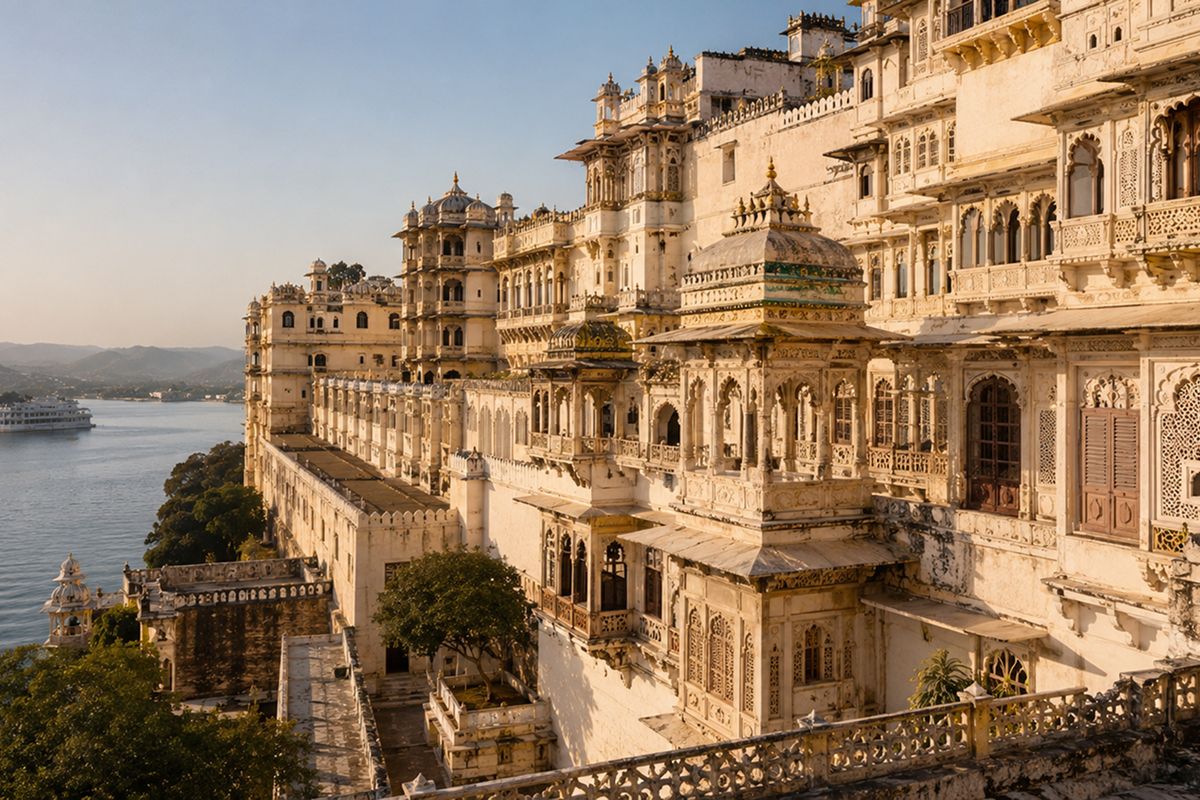
Explore the City Palace Complex
The City Palace is not one building - it is a maze of interconnected palaces, zenanas, courtyards, and rooftop terraces built over four centuries by successive Mewar maharanas. Each section adds a new layer: the Manak Chowk with its peacock mosaics, the Mor Chowk with its three stunning stained-glass peacocks, the Zenana Mahal with its unobstructed lake views, and the narrow galleries hung floor-to-ceiling with miniature paintings. Rent the audio guide. Allow at least three hours.
Duration: 3 to 4 hoursBest: Year-round; open 9:30 AM to 5:30 PM daily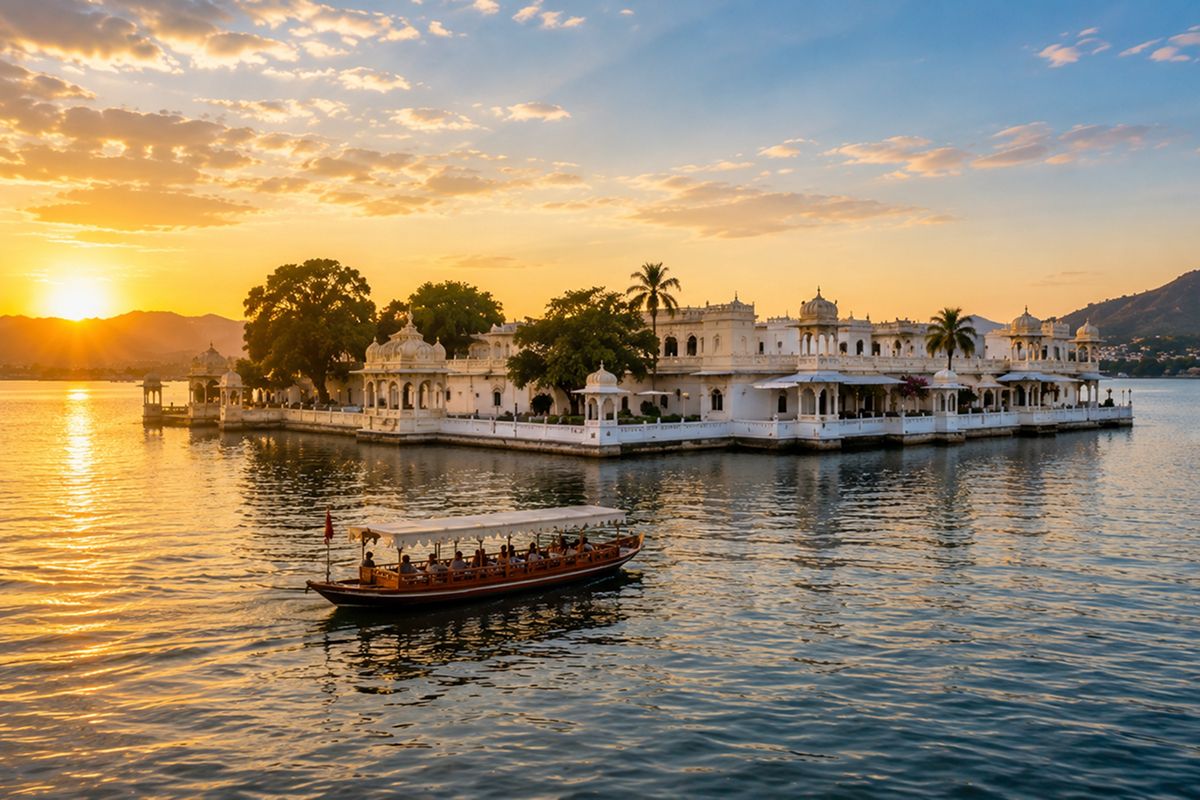
Boat Ride to Jag Mandir Island Palace
The short wooden-boat crossing from Bansi Ghat to Jag Mandir is the kind of travel moment you replay in your mind long after the trip ends. The seventeenth-century island palace - said to have inspired the Taj Mahal during Shah Jahan's exile here - sits perfectly still in the lake's centre. Walk its gardens, pass the elephant sculptures at the entry, sit at the lakeside Darikhana café, and view the mainland from a perspective that most visitors never experience.
Duration: 2 to 3 hours including the boat crossingBest: October to March, 10:00 AM to 6:00 PM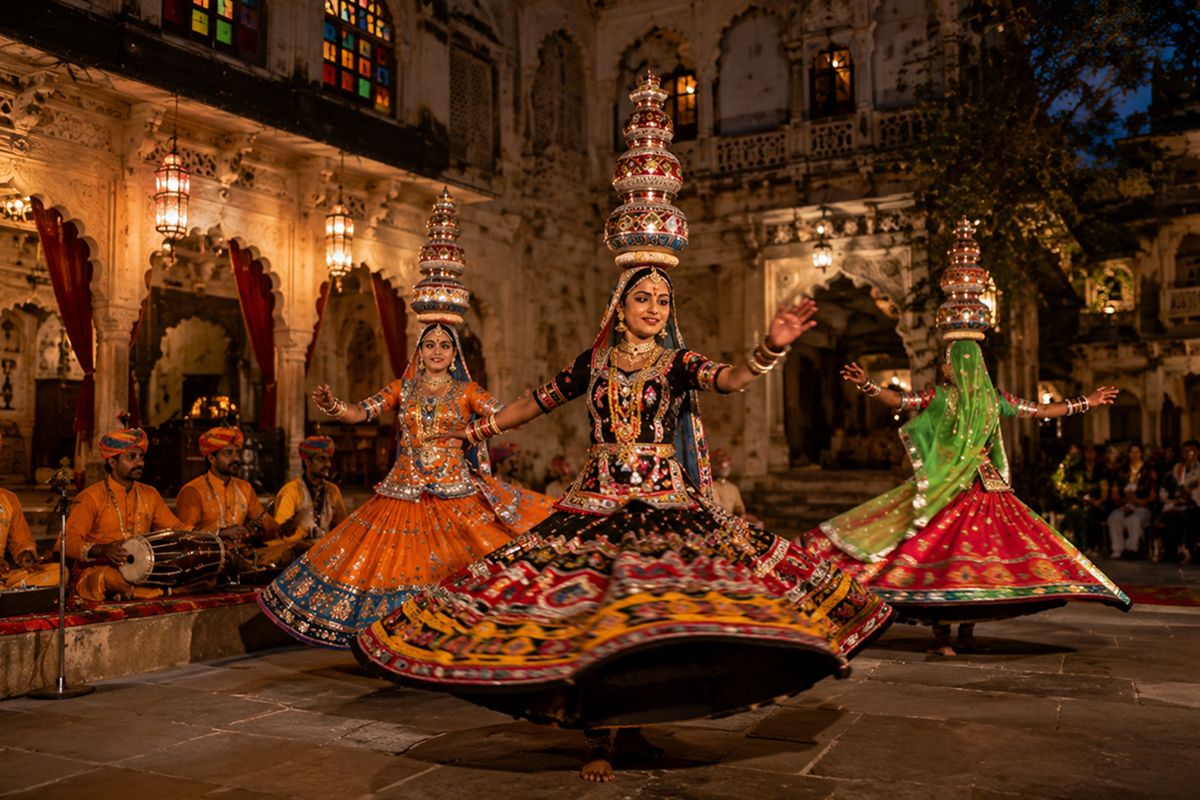
Folk Performance at Bagore ki Haveli
Every evening at 7 PM, this eighteenth-century haveli beside Gangaur Ghat stages an hour-long show of traditional Rajasthani folk music, puppetry, and dance - including the hypnotic Kalbelia snake-charmer dance and live fire performances. The setting, inside the haveli's open courtyard lit by string lights with the lake visible just beyond the arches, makes the whole thing feel intimate rather than staged. It is one of the most honest cultural evenings in Udaipur.
Duration: 1.5 hoursBest: Year-round, daily at 7:00 PM; tickets available at the haveli door from 5:00 PM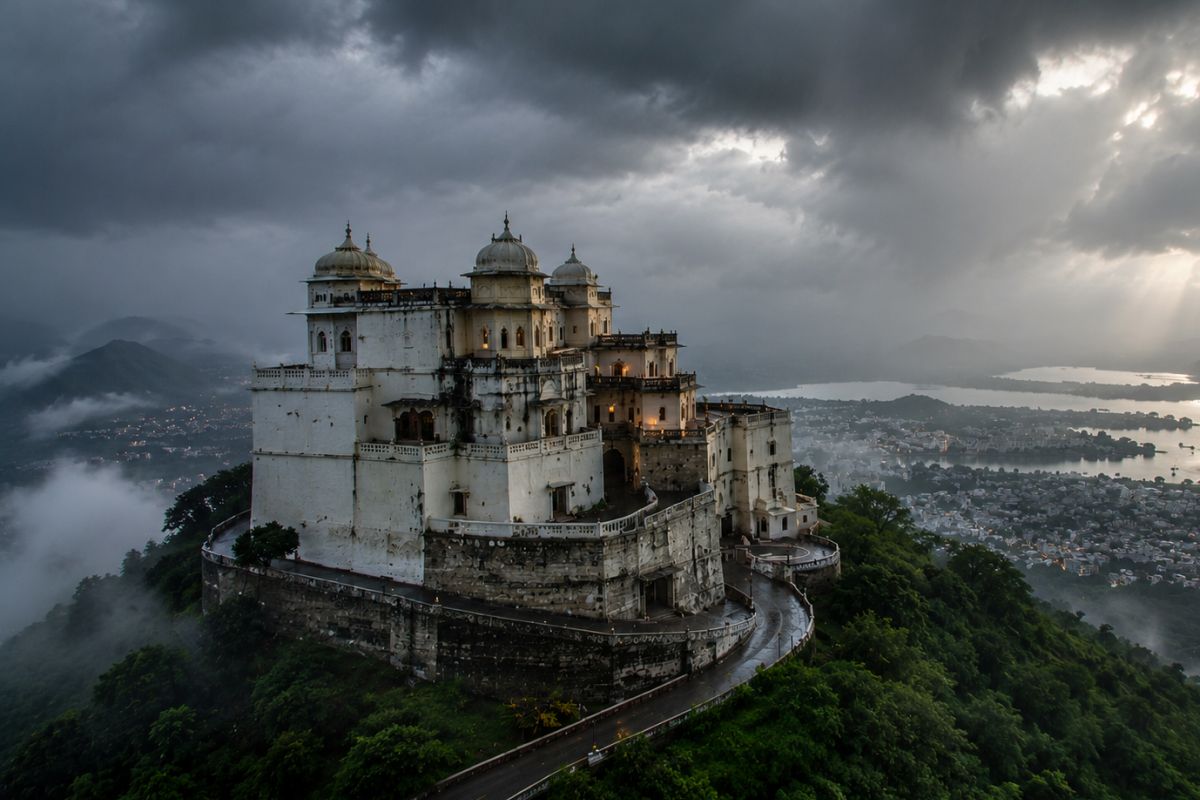
Sunset at Sajjangarh (Monsoon Palace)
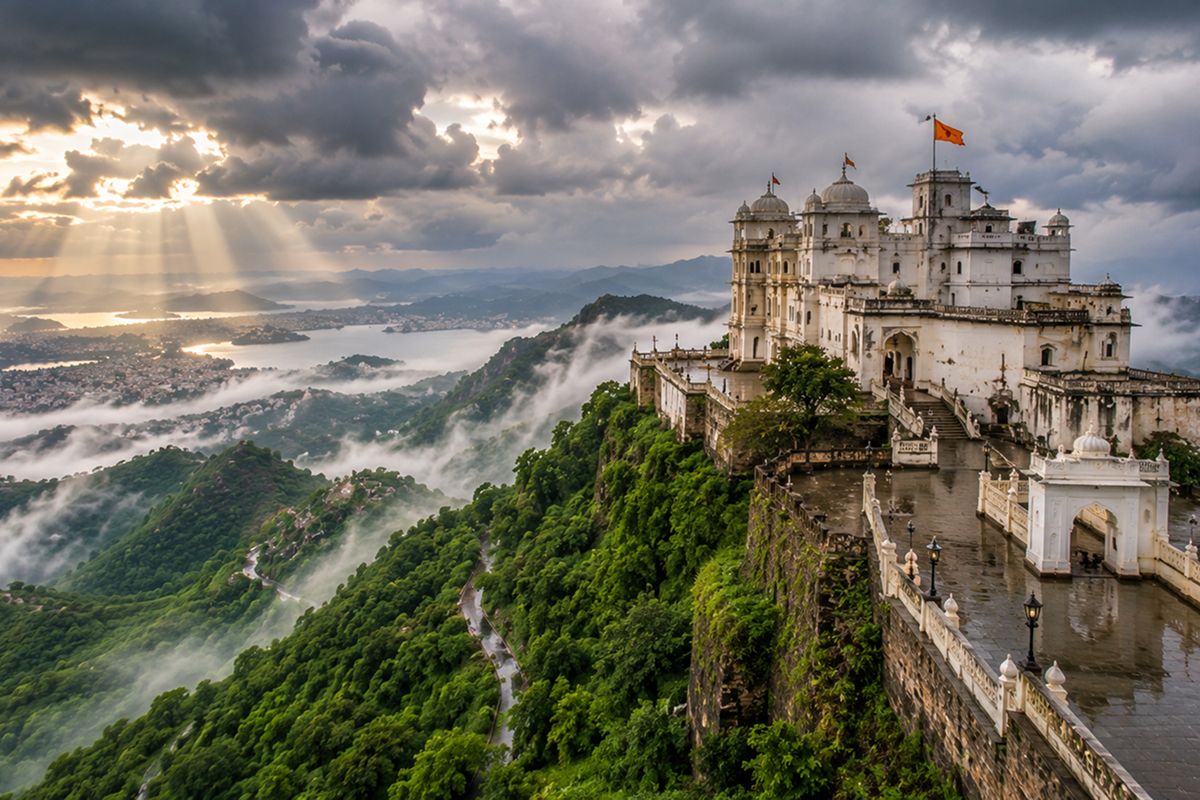
Built by Maharana Sajjan Singh in 1884 on a ridge 944 metres above the city, Sajjangarh was designed as a cloud observatory and monsoon retreat - and was never quite finished as originally planned. What remains is an open rooftop terrace with one of the most staggering views in all of Rajasthan: the entire city, its chain of lakes, and the distant Aravalli ridgeline arrayed below you, turning from gold to deep orange as the sun drops behind the hills. Take a taxi up; the road is too steep to walk comfortably.
Duration: 1.5 to 2 hours including the drive each wayBest: October to March; arrive 45 minutes before local sunset time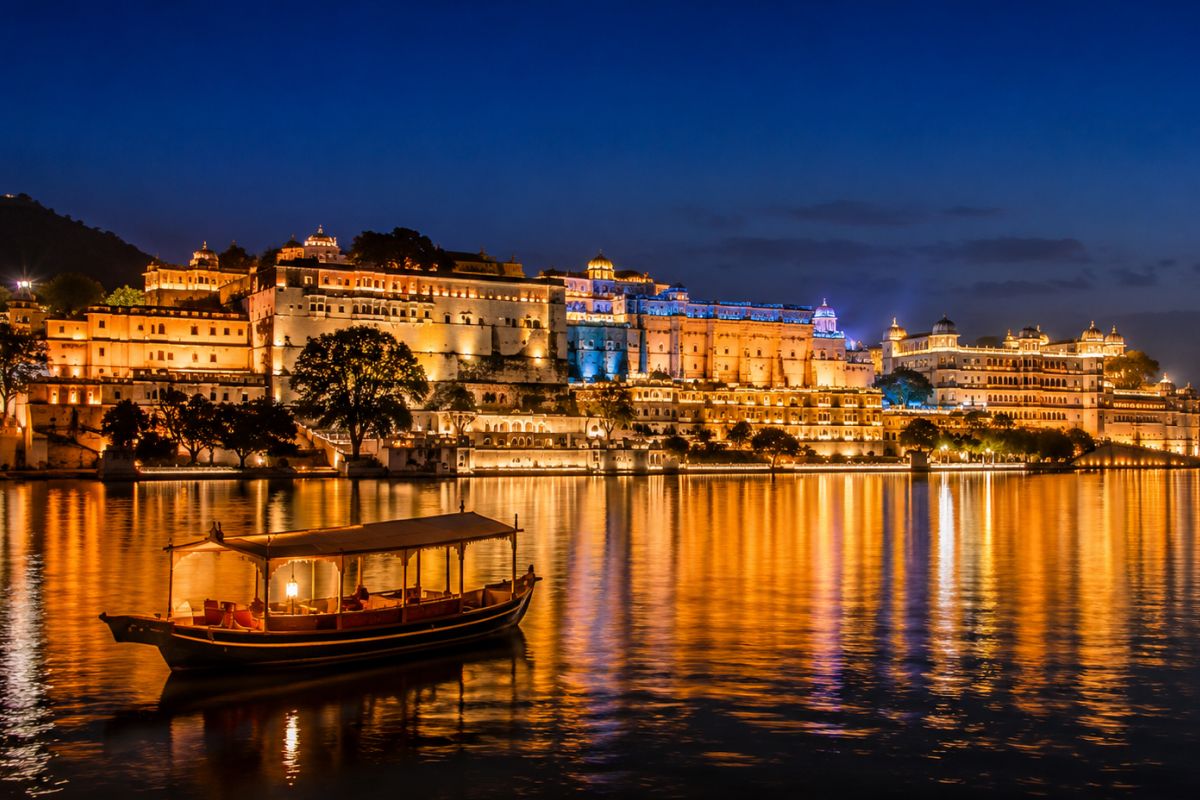
Mewar Sound and Light Show
After dark, the City Palace's Manek Chowk becomes the stage for a 50-minute sound and light show narrating the proud and turbulent history of the Mewar dynasty - from the founding of Udaipur to Maharana Pratap's celebrated stand at Haldighati. The narration is thoughtfully written, the lighting transforms the stone palace into something theatrical, and the quality is genuinely above the average for India's heritage light shows. Book tickets at the City Palace box office earlier in the day.
Duration: 1 hour including entry and seatingBest: October to March; usually two shows at 7:00 PM and 8:00 PM - confirm times locally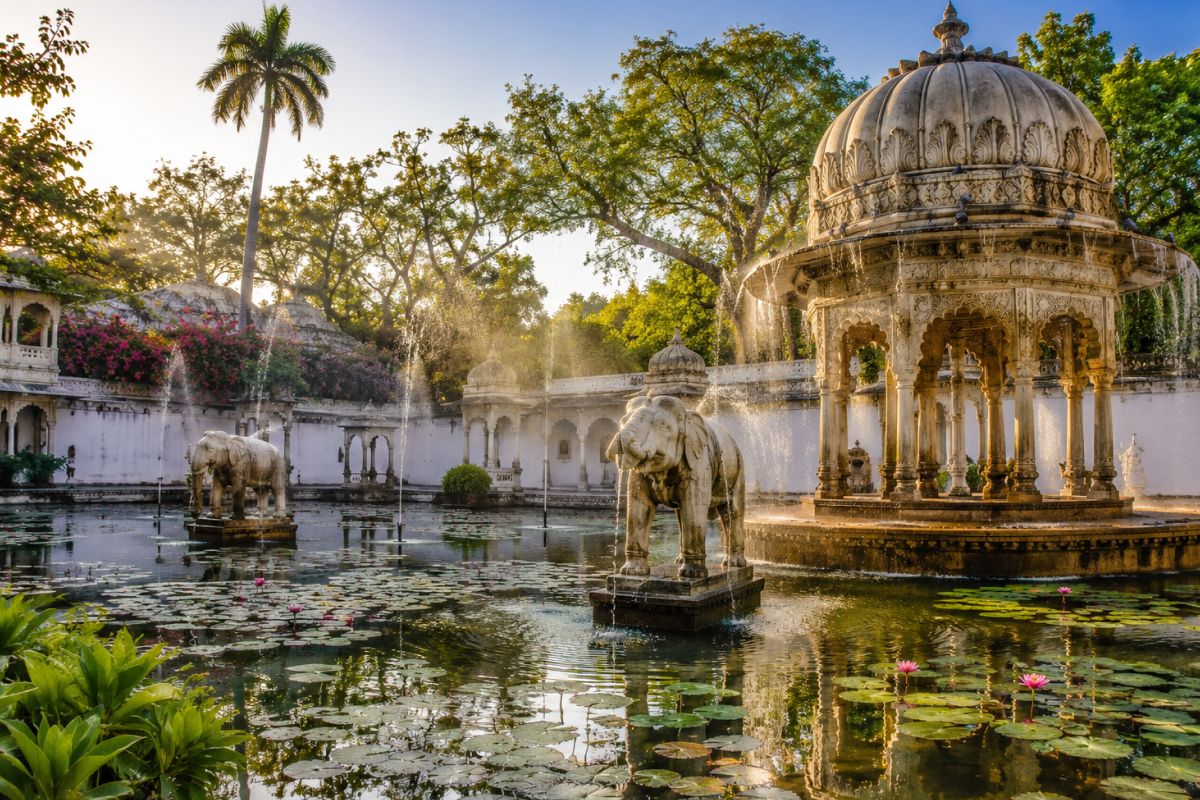
Morning Visit to Saheliyon ki Bari
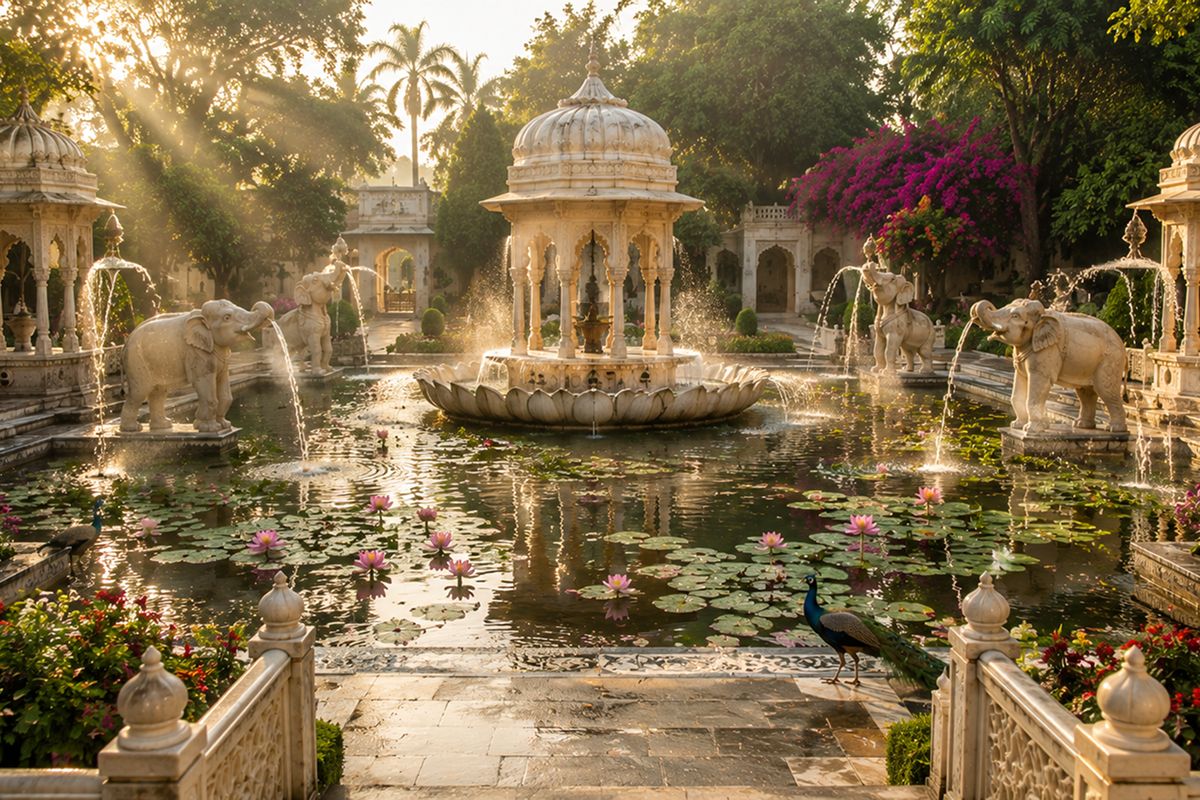
The Garden of the Maidens was commissioned by Maharana Sangram Singh in the eighteenth century as a pleasure garden for the royal women of the court and their companions. What remains is one of the most beautifully kept gardens in Rajasthan: lotus pools, marble kiosk fountains that spray mist in all directions, elephant fountains, and shaded walkways lined with sculpted hedges. Arrive at 8 AM before school groups arrive - the garden is genuinely tranquil at that hour.
Duration: 45 minutes to 1 hourBest: October to March, 8:00 AM to 10:00 AM for a quiet visit; open until 7:00 PM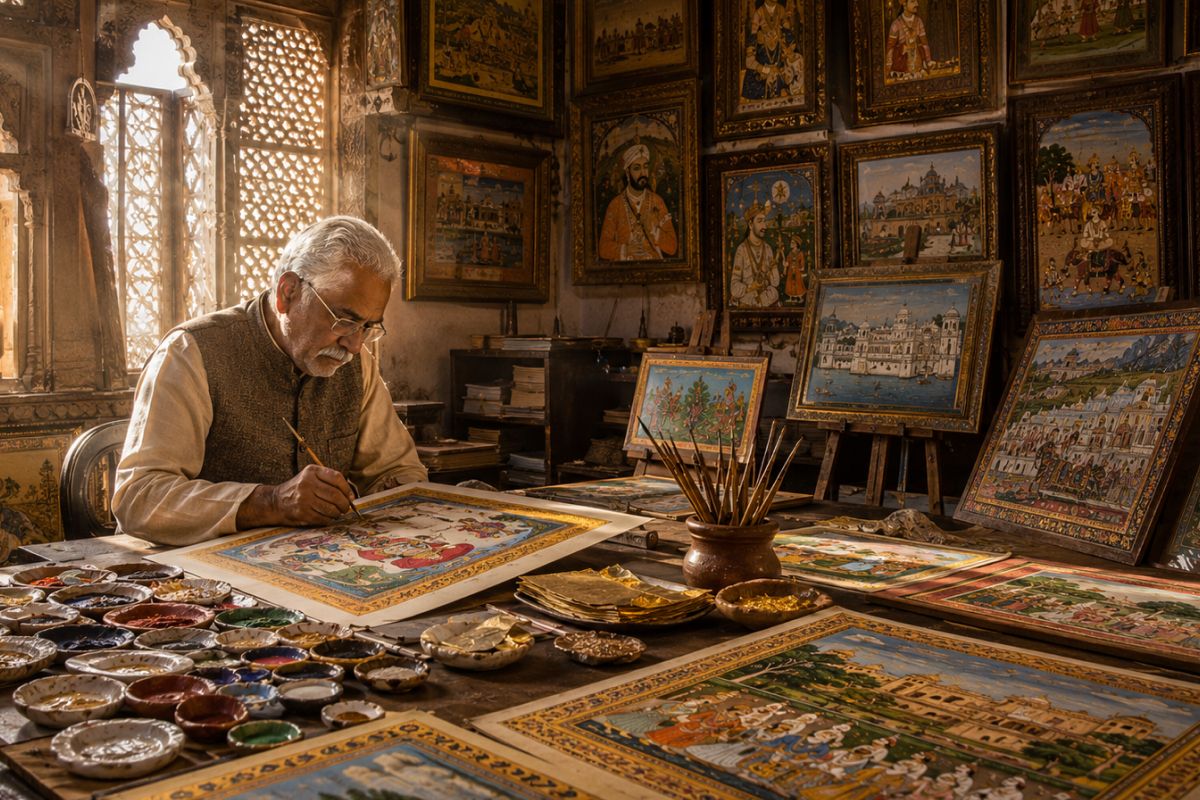
Miniature Painting Workshop
Udaipur's miniature painting tradition stretches back to the sixteenth century and is still passed from master to student in studios throughout the old city. A half-day workshop teaches you basic brush strokes, compositional rules, and the layering technique on a small canvas, using natural pigments ground fresh on stone slabs. Even a complete beginner leaves with a finished piece they made themselves - and a much sharper eye for the hundreds of paintings sold in every gallery around the city.
Duration: 3 to 4 hoursBest: Year-round; morning sessions are best for natural light in the studios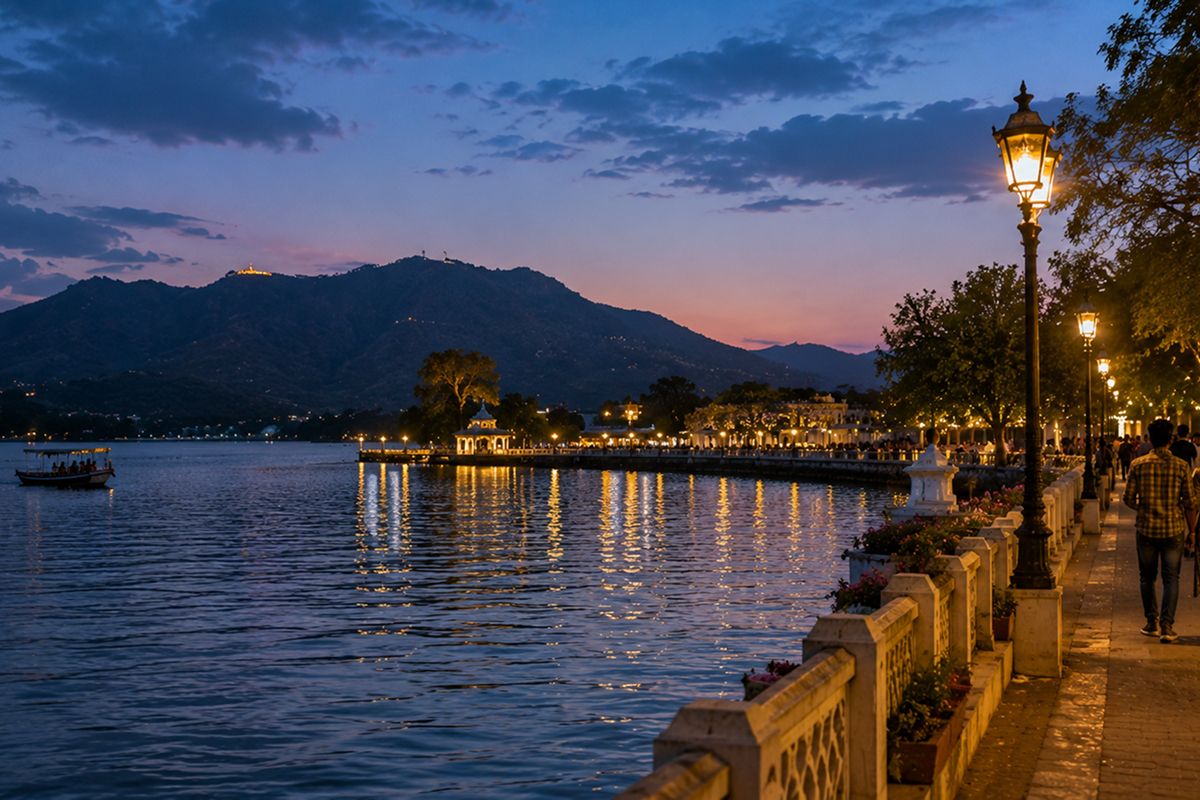
Evening Stroll Along Fateh Sagar Lake
Fateh Sagar is a quieter, more local lake than Pichola, and the tree-lined promenade along its eastern shore is where Udaipuris come to unwind at the end of the day. Stalls sell fresh corn-on-the-cob coated in lemon and spice, sugarcane juice, and Rajasthani snacks. Small motorboats cross to Nehru Island in the lake's centre, which has a garden and café. This is the side of the city most visitors never see - unhurried, unhurried, and genuinely local.
Duration: 1.5 to 2 hoursBest: October to March, 5:00 PM to 7:30 PM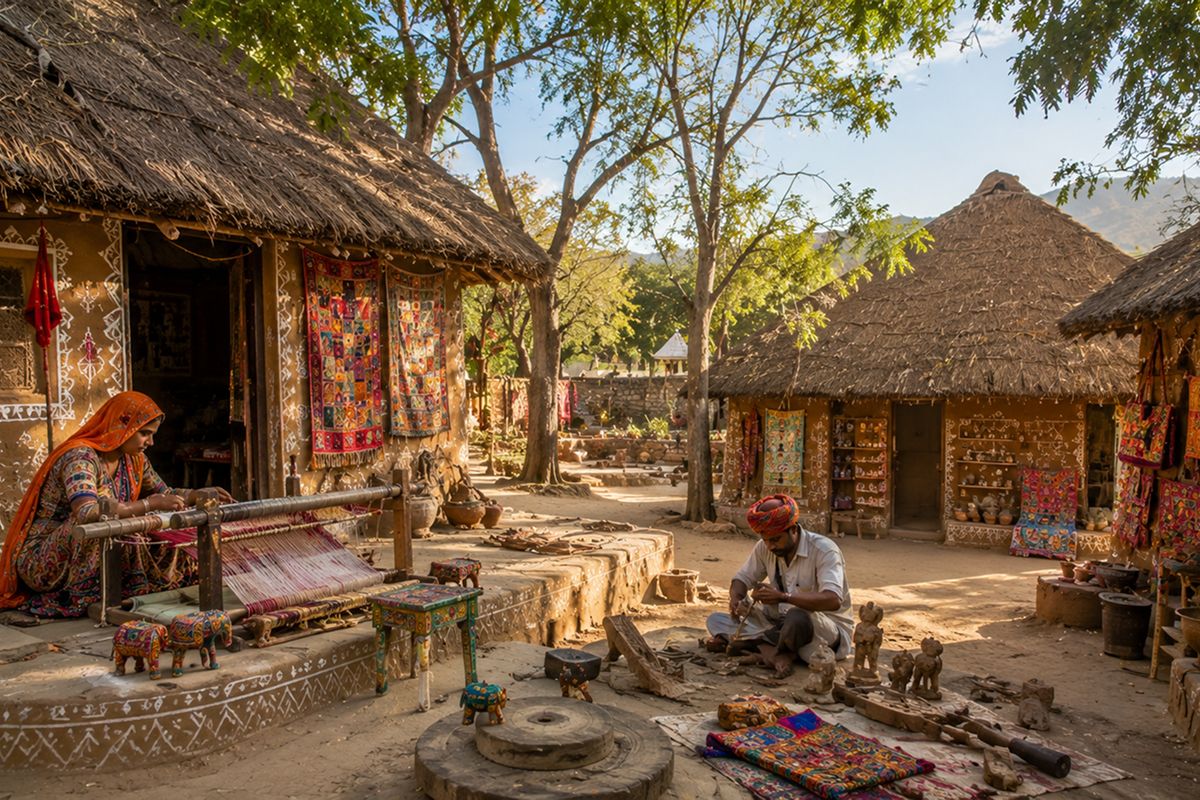
Explore Shilpgram Craft Village
Shilpgram is a living crafts museum built on the outskirts of Udaipur to preserve and showcase the traditional arts of Rajasthan and neighbouring states. Over thirty mud-and-thatch huts recreate the vernacular architecture of different tribal regions, and craftspeople - weavers, potters, puppet-makers, block printers, leather workers - demonstrate and sell their work inside them. During the annual Shilpgram Utsav festival each December, the entire complex transforms into one of Rajasthan's most vibrant craft fairs, drawing artisans from across western India.
Duration: 2 to 3 hoursBest: October to March; December for the Shilpgram Utsav festival; open 11:00 AM to 7:00 PM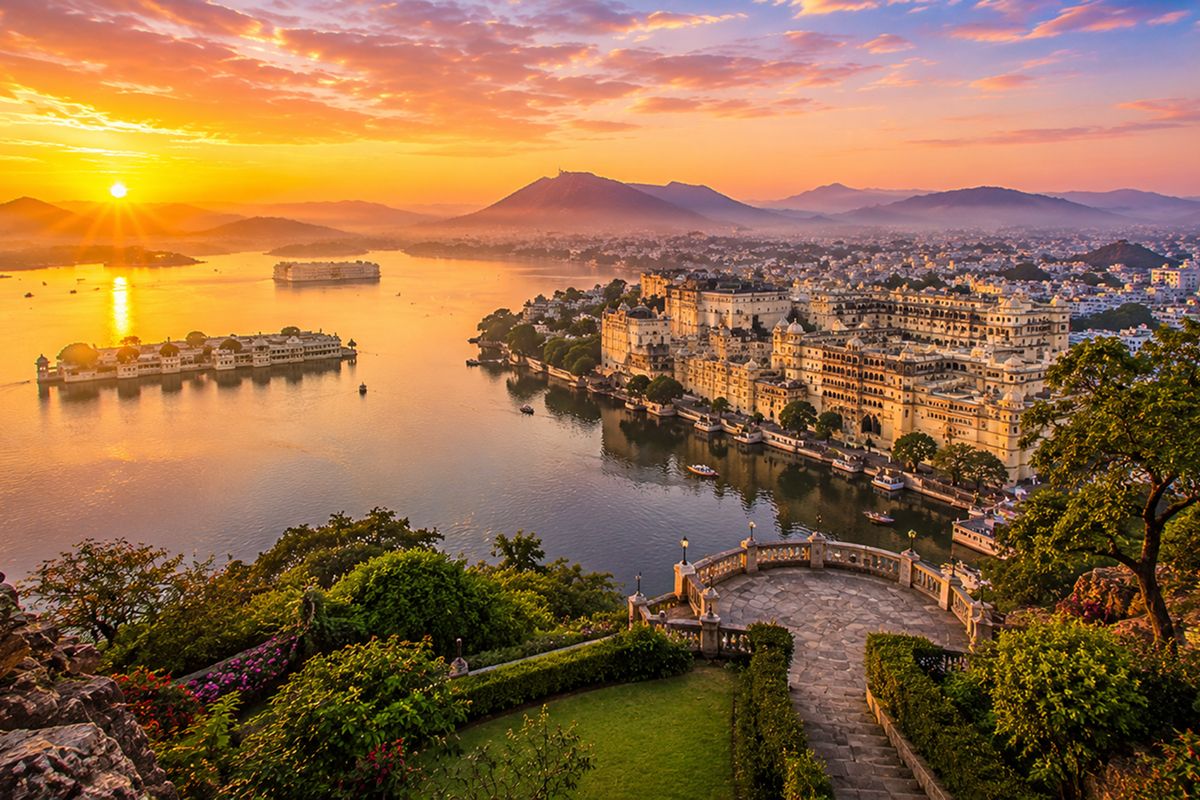
Dudh Talai Garden Viewpoint (Machimagra Hill)
Photo TipThis elevated garden south of the City Palace gives you the widest unobstructed angle on both the palace and Lake Pichola in a single frame. Arrive 15 minutes before sunrise and set up along the garden's northern terrace railing. The lake is perfectly still before boats start moving, giving clean reflections. A wide-angle lens (16-24mm equivalent) captures the full sweep. Shoot RAW to preserve the full dynamic range between the dark water and the glowing palace facade.
Best: Sunrise, 6:15 AM to 7:30 AM, October to March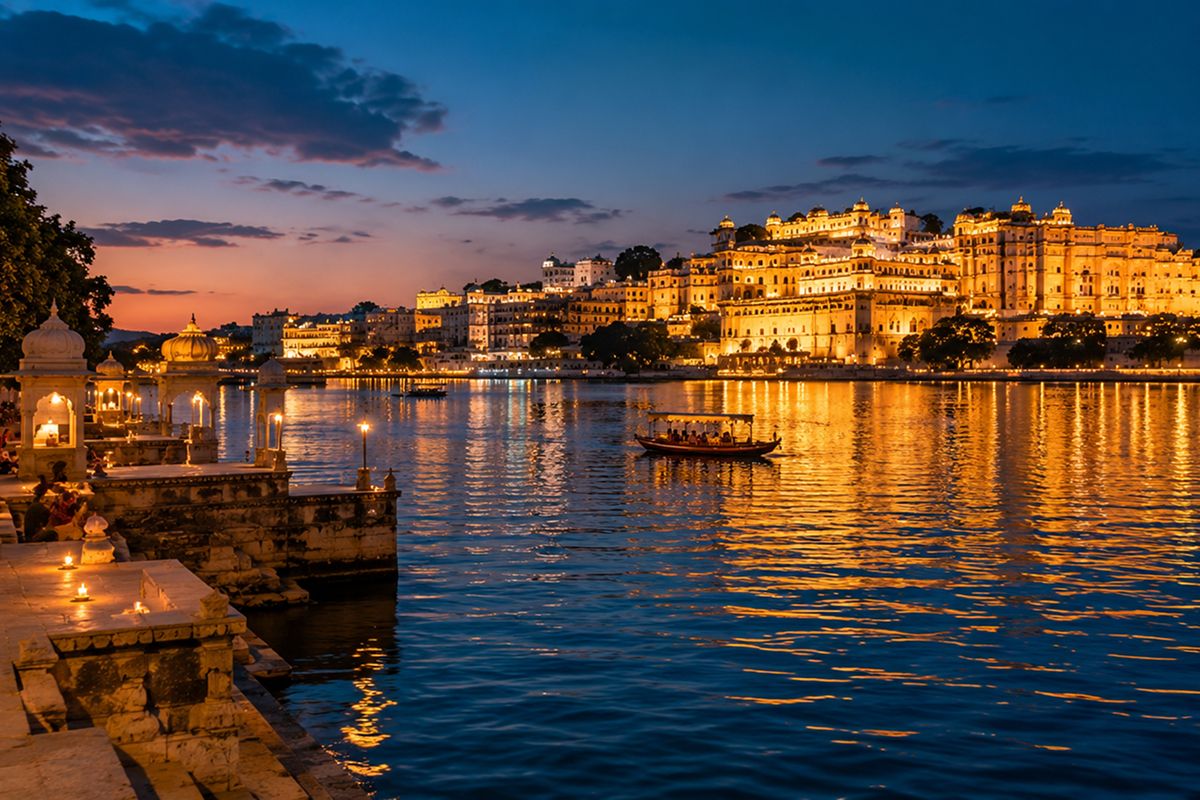
Ambrai Ghat
Photo TipAmbrai Ghat is the single best ground-level vantage point for shooting the City Palace at dusk. Position yourself on the ghat steps facing east. As the sky shifts from gold to deep blue, the illuminated palace reflects in the water and every boat crossing the frame adds a living element to the shot. A tripod is essential once the light drops. The restaurant tables at the ghat edge are also excellent shooting positions if you arrive before they fill up.
Best: Blue hour and golden hour - 30 minutes before and after sunset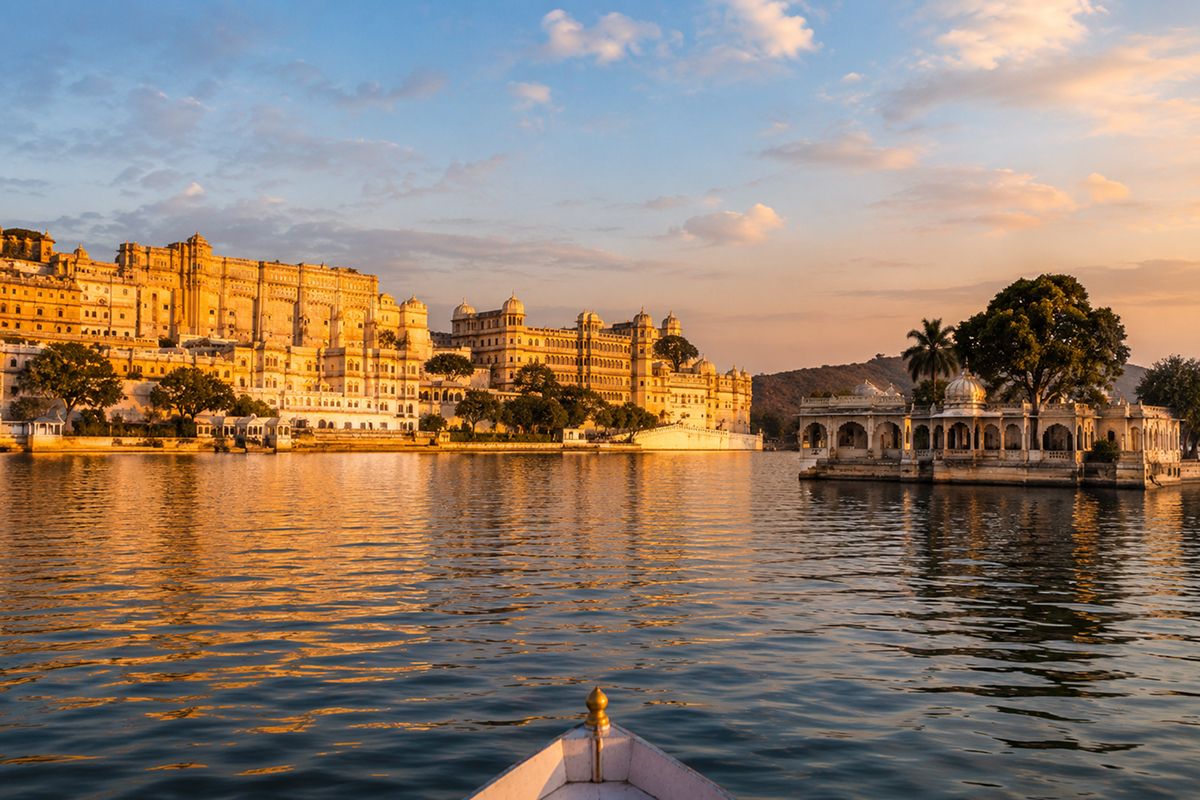
Lake Pichola - Boat Midpoint
Photo TipThe most compelling shots of both the City Palace and Jag Mandir together come from the middle of the lake - not from the shore. Charter a private wooden rowboat (cheaper than the official tourist boat) and ask the boatman to hold position midlake. A standard 50mm lens compresses the distance between the palace towers and the island palace beautifully. Mornings give you mist and empty water; evenings give you colour and reflections.
Best: Early morning, 6:30 AM to 8:00 AM; late afternoon, 4:30 PM to 6:00 PM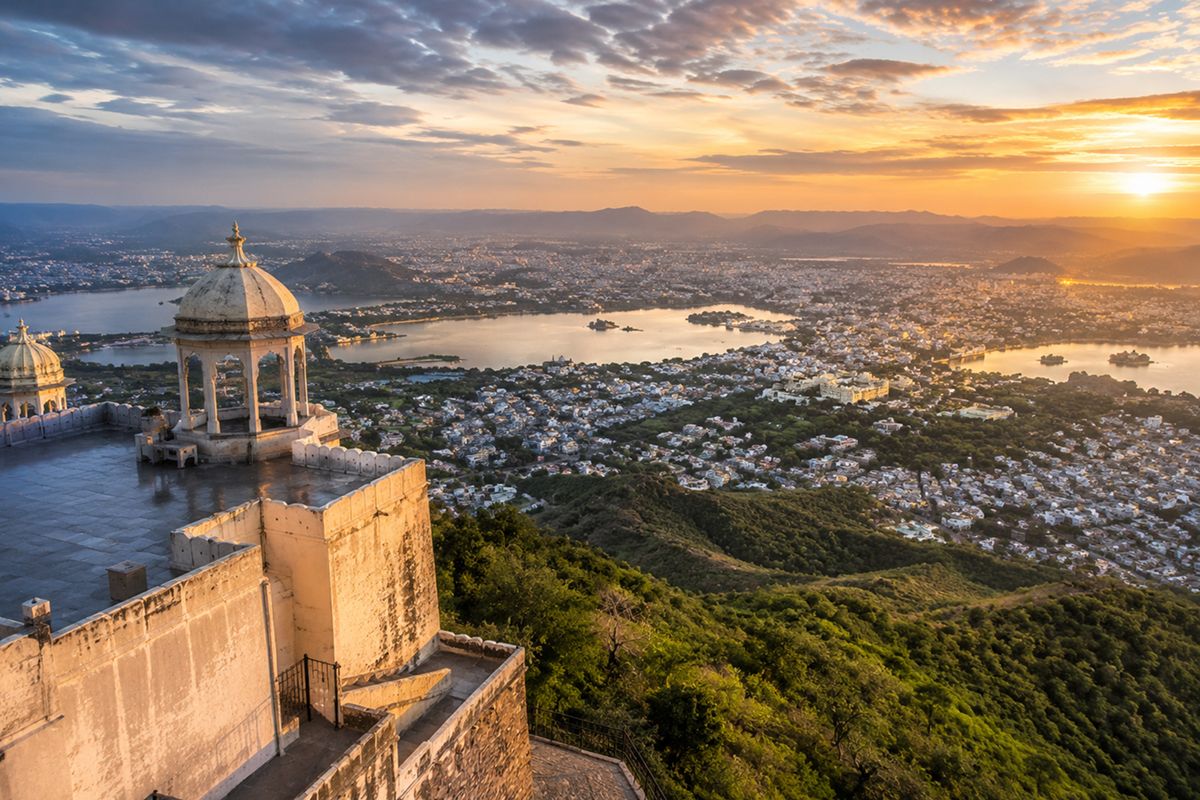
Sajjangarh (Monsoon Palace) Rooftop
Photo TipThe Sajjangarh rooftop terrace faces west and southwest, giving you the widest elevated view available in Udaipur. A 35mm or 50mm lens frames the city-and-lakes panorama well; a wide-angle makes the foreground battlements visible. The most dramatic shots come in September after a monsoon shower, when the hills are vivid green and clouds stack up behind the city. In winter, the haze that builds up by mid-morning clears again by late afternoon - plan your visit accordingly.
Best: One hour before sunset; also excellent just after monsoon rains for dramatic cloudy skies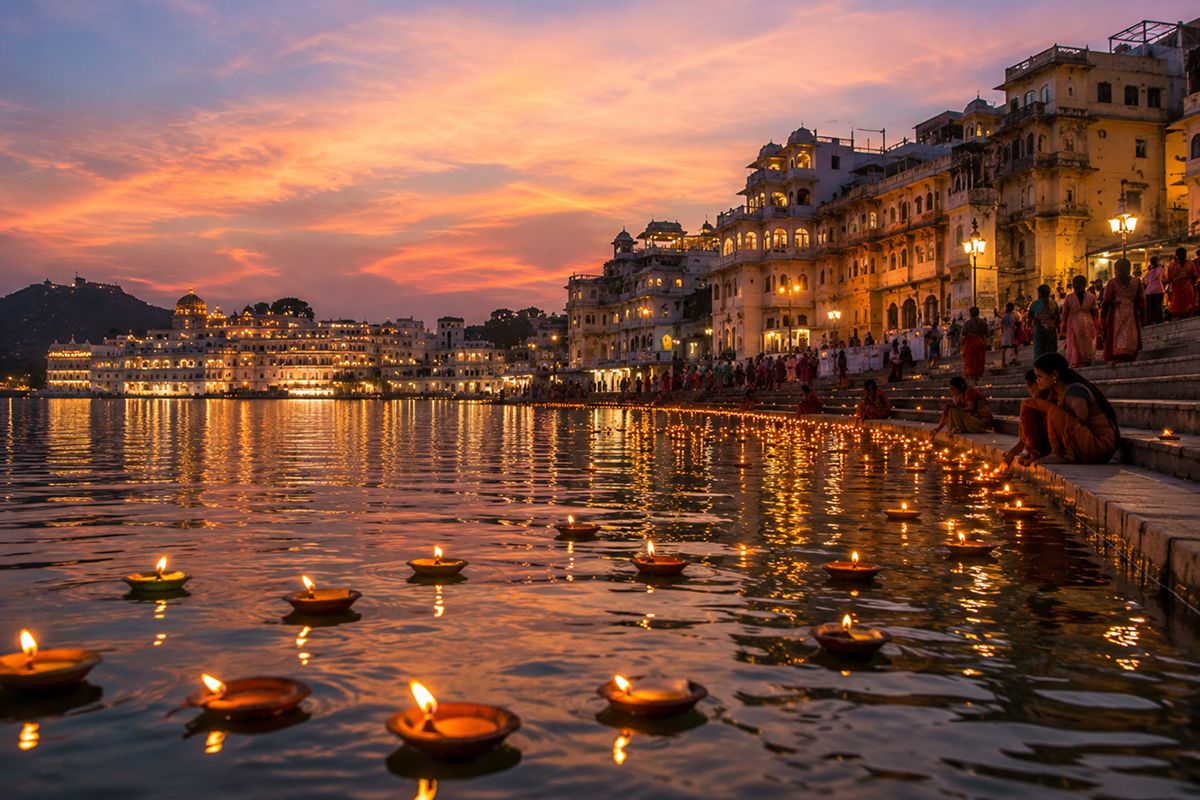
Gangaur Ghat at Lamp-Floating Hour
Photo TipThe small earthen lamps placed on the water at Gangaur Ghat each evening create a rarely photographed scene: warm candlelight on dark water with the pale palace visible in the background. Use a fast lens (f/1.8 or wider) and push your ISO to 800-1600 to keep shutter speed above 1/60 to freeze the flame flicker. The best position is on the ghat steps closest to the water, shooting flat along the surface to elongate the lamp reflections.
Best: Dusk, 6:00 PM to 7:30 PM, October to March; most atmospheric during festival days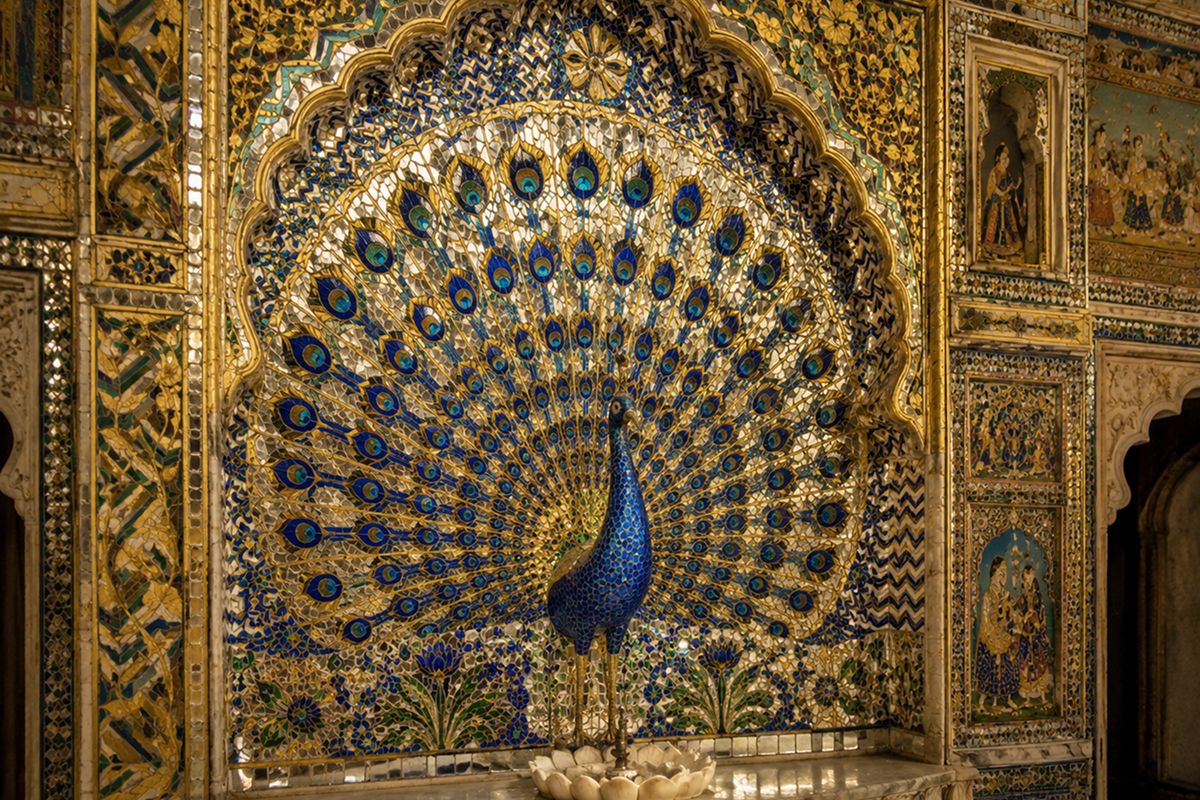
City Palace - Mor Chowk
Photo TipThe three stained-glass peacocks of Mor Chowk are among the most intricate decorative works in Rajasthan. The glass panels are backlit by natural light only for a brief window around mid-morning when the sun reaches the right angle. Position yourself close and slightly off-centre to get the depth of the individual glass tessera rather than a flat shot of the whole panel. A macro or close-focus lens reveals the colour gradients invisible from a distance.
Best: 10:00 AM to 12:00 PM on a clear day when diffused light enters the courtyard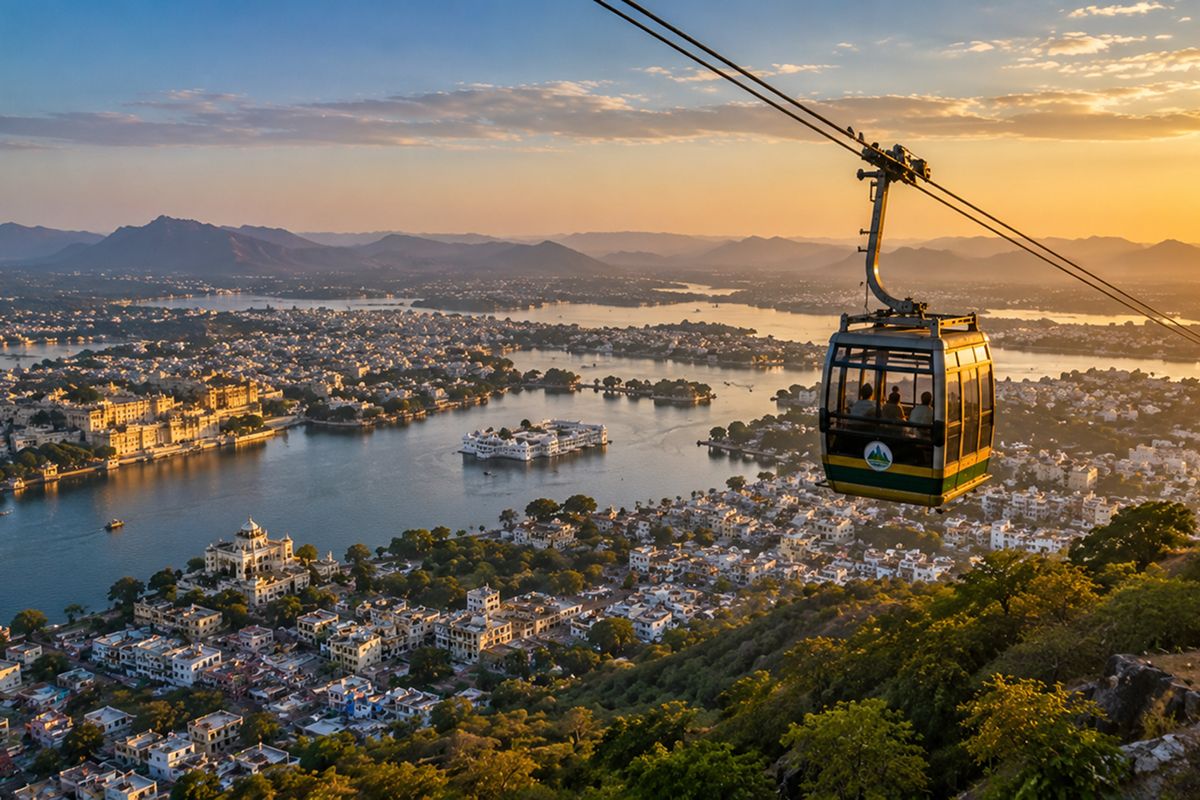
Karni Mata Ropeway Top Station
Photo TipThe Karni Mata ropeway delivers you to a hilltop on the western edge of the old city in about 3 minutes, and the top station terrace offers a slightly different angle on the city than Sajjangarh - you are lower and closer, which means the individual buildings of the old city and the Pichola-Fateh Sagar axis are both visible and readable in a single wide frame. The cable cars themselves make an interesting compositional element when shot from the terrace as they cross the hill.
Best: One hour before sunset; early morning for clearest air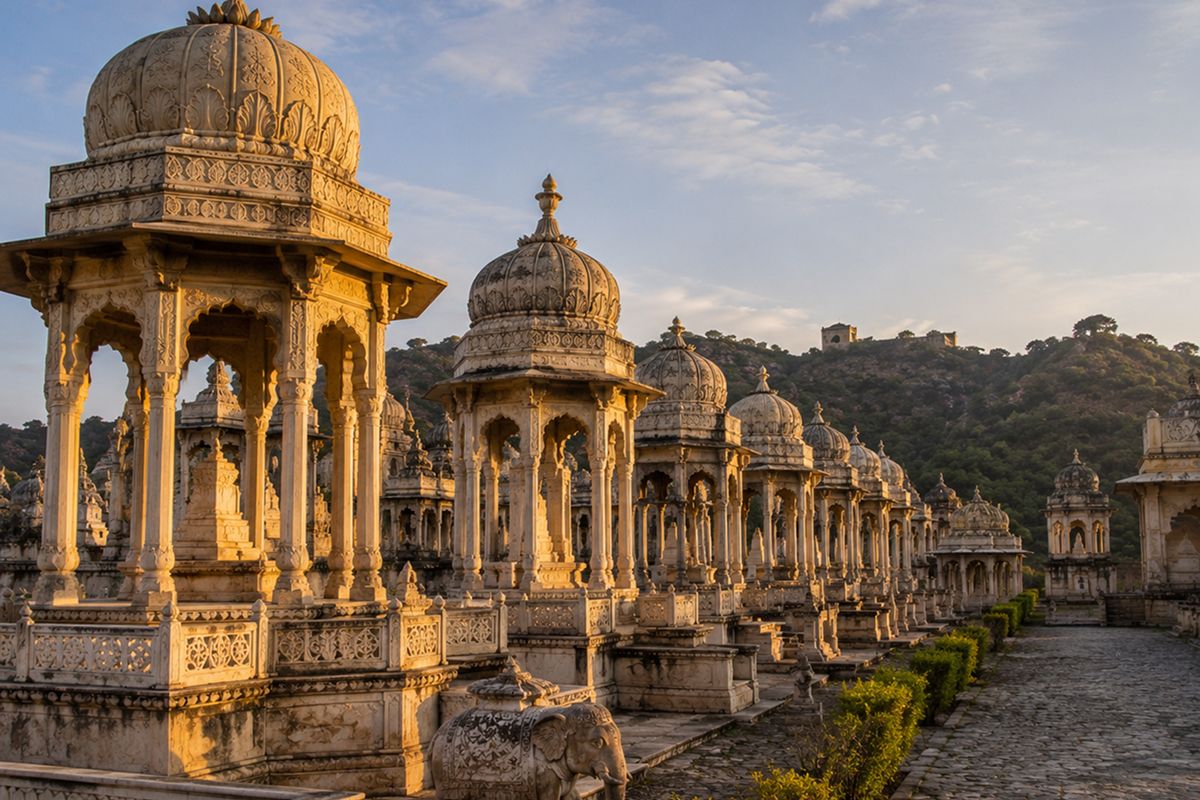
Ahar Cenotaphs (Ahar Mahasati)
Photo TipThe 250 cenotaphs of the Mewar royal family stand on the eastern edge of the city and are visited by almost no tourists - which makes them an extraordinary photographic find. The cenotaphs' chhatri rooflines repeat endlessly in all directions, and in raking early or late light the stone carving on individual structures catches shadow in a way that mid-day sun completely flattens. Shoot from low, at stone level, with a moderate telephoto (85-135mm) to compress the repeated archways into an architectural study.
Best: Early morning, 7:00 AM to 9:00 AM; late afternoon, 4:30 PM to 6:00 PM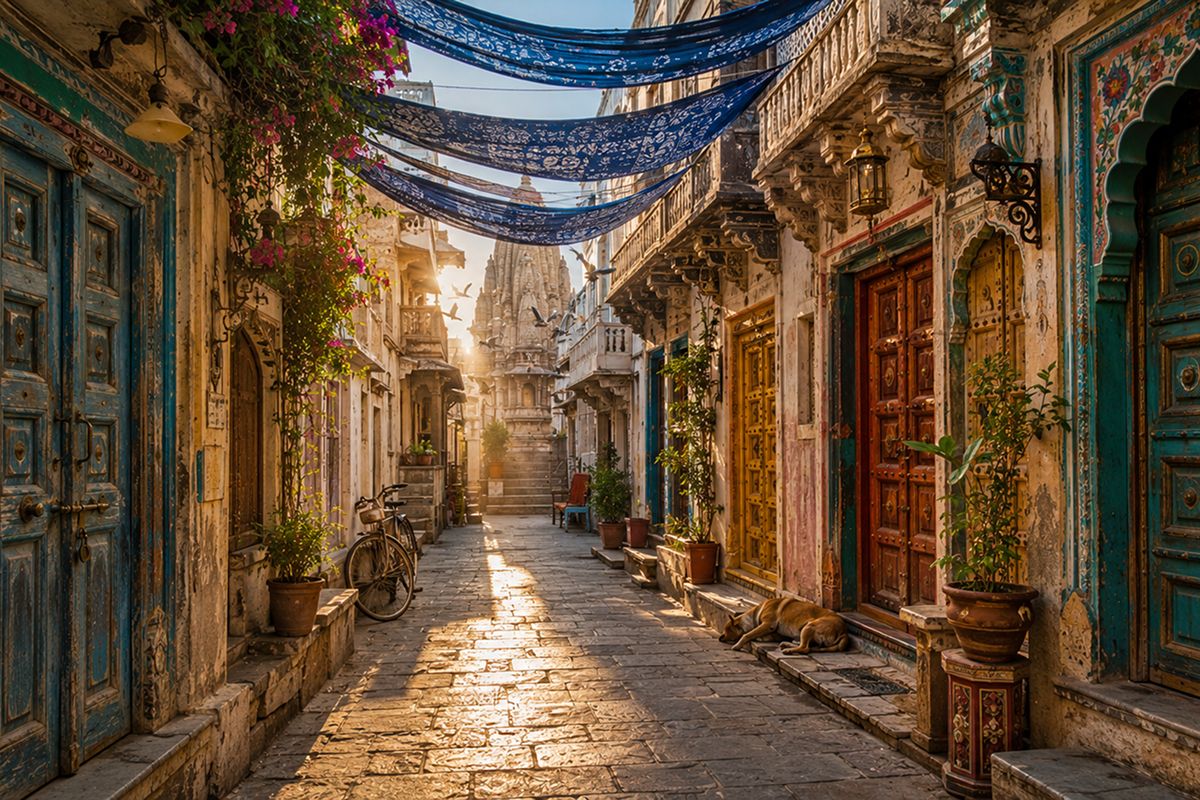
Old City Lanes - Mewad Chowk to Jagdish Temple
Photo TipThe narrow stone lanes between Mewad Chowk and Jagdish Temple offer the most layered street photography in Udaipur - indigo-dyed cloth hanging from upper windows, temple flower sellers arranging marigolds, painted doorways in blue and ochre, the occasional cow navigating the lane with practiced indifference. A 35mm lens gives you enough width to capture context without distorting the proportions. The early morning dhobi dhol (laundry wash) activity around the ghats adds dynamic working scenes unavailable later in the day.
Best: Early morning, 7:00 AM to 9:00 AM, when shopkeepers set up and the lanes are not yet crowded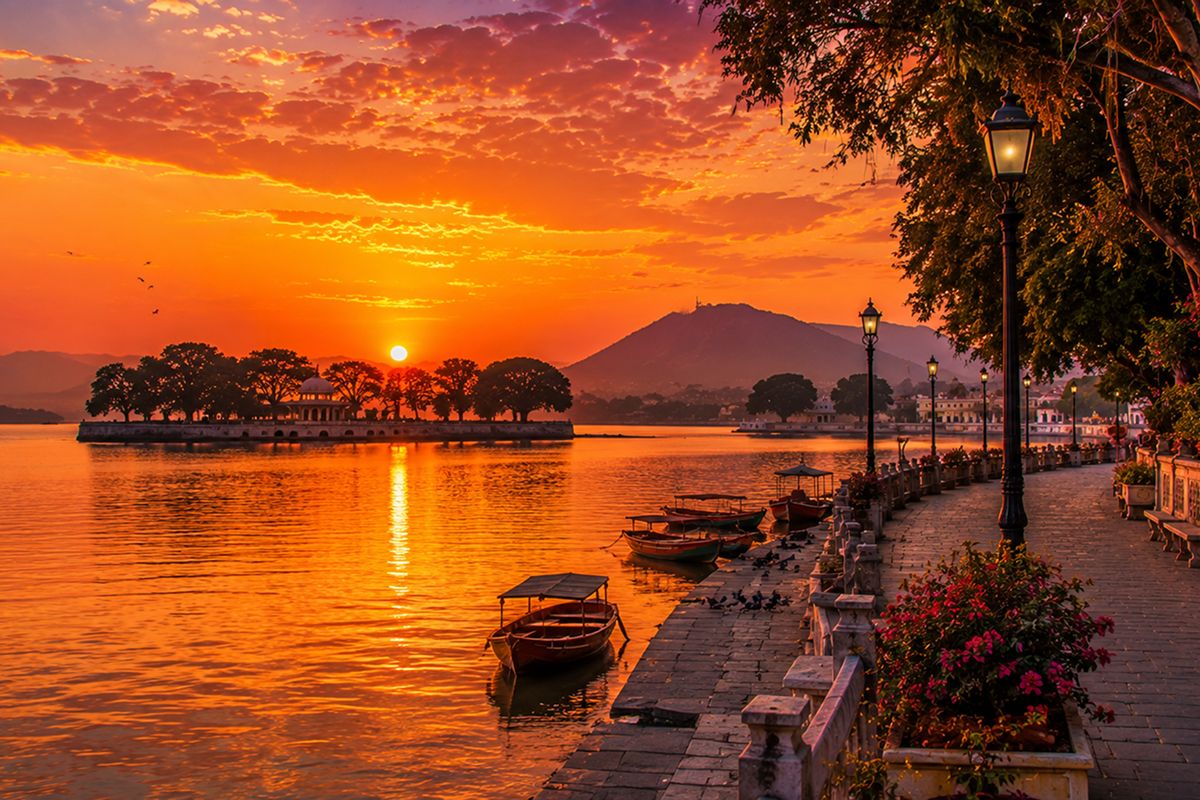
Fateh Sagar Lake - Sunset from the Eastern Shore
Photo TipFateh Sagar's broad, open expanse faces directly west, making its eastern promenade one of the cleanest sunset locations in the city. The absence of buildings on the far shore means the entire sky is visible in the frame, and the flat water doubles the colour. Local fishermen casting lines from the bank and the silhouettes of Nehru Island's trees against the sky make this a more textured composition than the monument-focused shots at Pichola. A graduated ND filter prevents the sky from blowing out while keeping foreground detail.
Best: Sunset, October to March; best in November to January when the western sky turns deep orange
Best Time To Visit
October to March is Udaipur at its absolute best. Temperatures hold between 10°C and 28°C - warm enough to explore all day without discomfort and cool enough for long evenings along the ghats. The lakes are full from the monsoon, the festival calendar is packed (Diwali, Kartik Purnima lamps on the lake, Shilpgram Utsav in December, and the Mewar Festival in March or April), and the light is extraordinary for photography throughout the day. This is when to come if you have flexibility.
April to June is the off-season, and it shows in both the crowds and the prices - hotel rates can drop by half compared to peak season. The main sights are far quieter, and early mornings (before 9 AM) and evenings (after 5 PM) remain comfortable for sightseeing. The downside is honest: afternoon temperatures in May and June regularly reach 40°C to 42°C, making any outdoor activity between 11 AM and 4 PM genuinely taxing. Lake levels also drop noticeably by June.
The monsoon (July to September) brings the Aravalli hills back to deep green and refills the lakes dramatically - sometimes to overflowing. The city's stone architecture looks its most theatrical against stormy skies, and prices fall to their annual low. Heavy rain in July and August can disrupt boat rides and close Sajjangarh on bad days, and roads to Kumbhalgarh may be difficult. September is a genuine sweet spot: the rains have eased, the lakes are full, the hills are still green, and prices have not yet risen to peak levels.
- October
- November
- December
- January
- February
- March
- ❄️
Winter Season
Pros / HighlightsOctober to March delivers perfect sightseeing weather with temperatures between 10°C and 28°C. The lakes are full from the monsoon, creating the iconic reflections that make Udaipur's photography so compelling. The festival calendar is richest in this window - Diwali, Kartik Purnima, Shilpgram Utsav in December, and the Mewar Festival in spring. Light is superb throughout the day.Cons / Trade-offsPeak season means peak prices. Heritage lakefront hotels can charge two to three times their off-season rates between November and February. December and the Diwali period book out months in advance. Boat ride queues at Bansi Ghat are long by mid-morning on weekends. - ☀️
Summer Season
Pros / HighlightsHotel rates drop significantly - sometimes by half - and the city's sights are far less crowded. Indoor attractions like the City Palace museum, Bagore ki Haveli, and the Vintage Car Museum are cool and comfortable. Budget travellers who plan around the heat get excellent value.Cons / Trade-offsAfternoon temperatures of 40°C to 42°C in May and June make outdoor sightseeing between 11 AM and 4 PM genuinely punishing. Lake levels drop by June, reducing the drama of the famous lakeside panoramas. Some rooftop restaurants close or limit hours in peak summer. - 🌧️
Monsoon Season
Pros / HighlightsThe Aravalli hills turn from brown to vivid green almost overnight, and the lakes refill dramatically - sometimes overflowing. The monsoon light on the white marble and sandstone architecture is extraordinary. Prices are at their annual low, and the city feels calm and unusually atmospheric in the rain.Cons / Trade-offsHeavy rain in July and August can be sudden and disruptive. Boat rides on Lake Pichola may be cancelled on rough-weather days. The road to Sajjangarh closes when conditions are unsafe. Humidity is high from late July through August, and some areas of the old city flood briefly after very heavy rain.
Yatray Smart Advice
Plan your trip for October to February for the full Udaipur experience - full lakes, ideal temperatures, and a festival calendar that gives you something special most weeks. If budget is a primary consideration, September offers a rare combination: monsoon-full lakes, green surrounding hills, manageable heat, and prices that have not yet risen to peak-season levels.
Recommended Places To Stay
 Budget
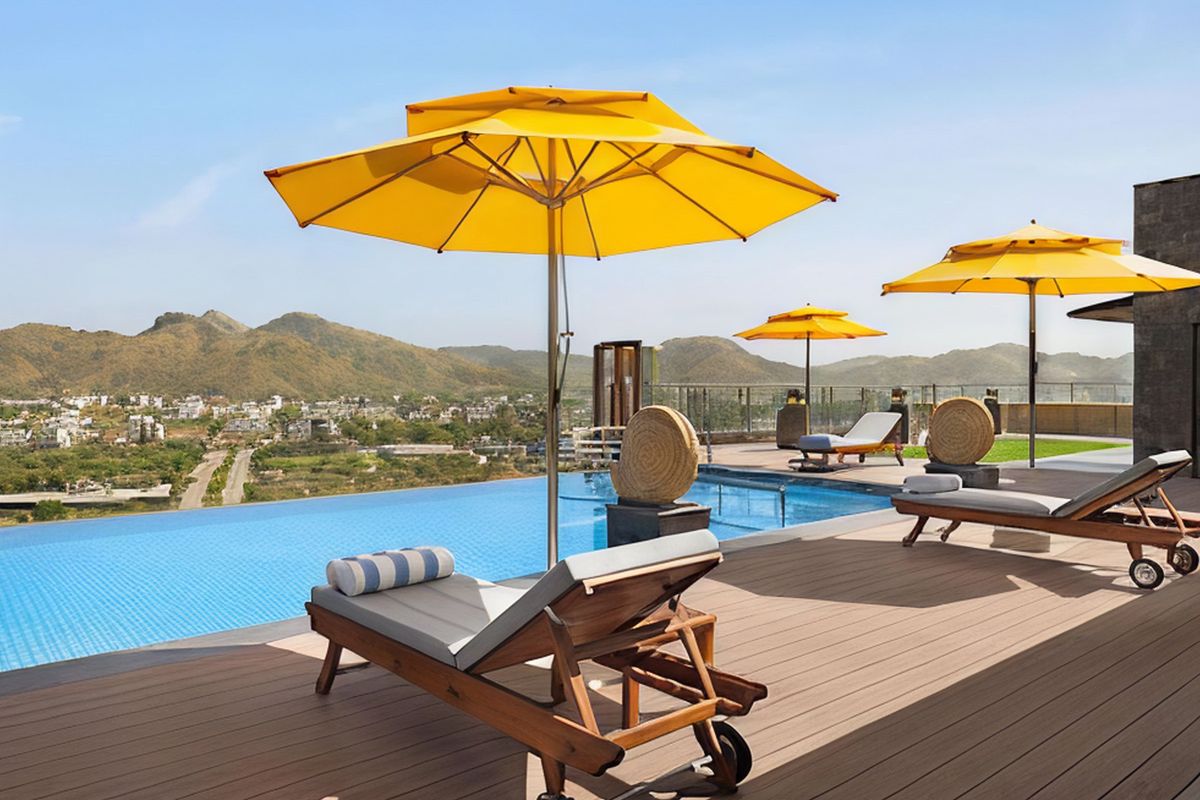
Howard Johnson by Wyndham Udaipur
Fateh Sagar Lake area
Best ForBudget travellers and families who want reliable international-brand standards, in-house dining, and easy access to Fateh Sagar Lake without overspending
Estimated Budget₹2,500 to ₹5,000 per night
per night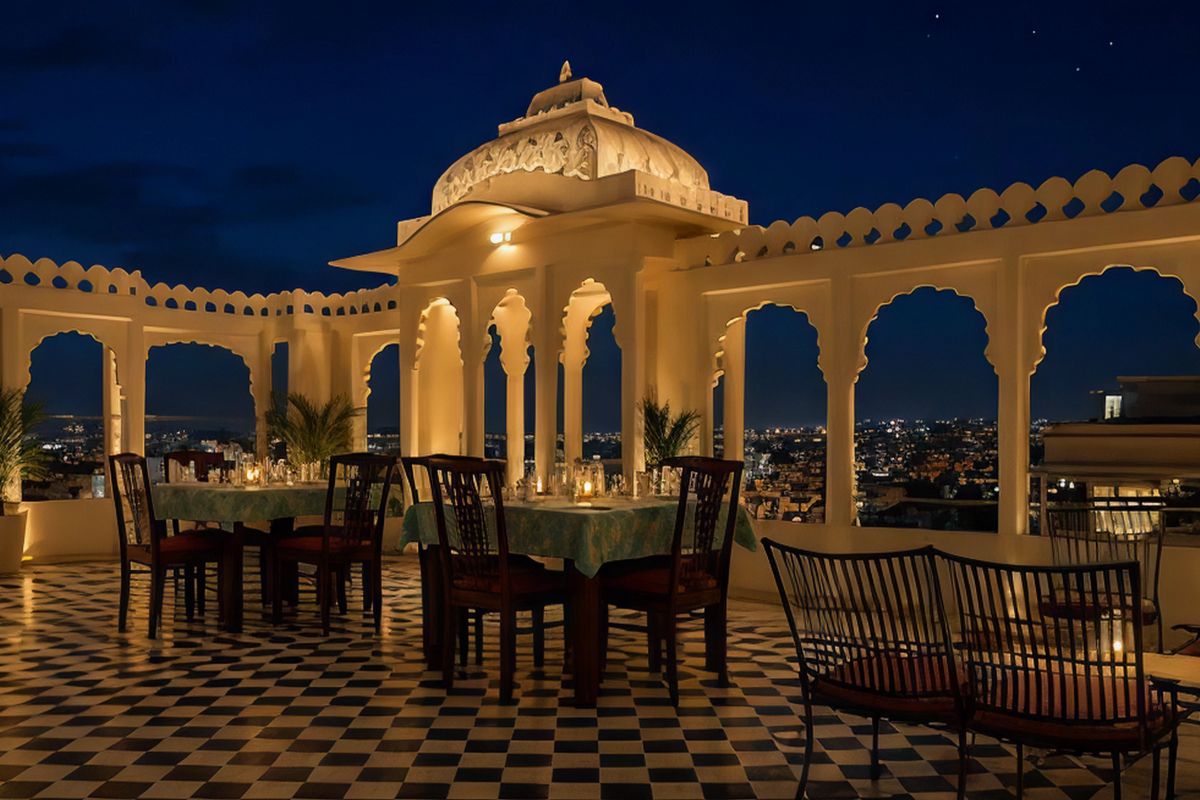 Mid-Range
Amar Kothi
Rani Road, near Fateh Sagar Lake
Best ForCouples and families looking for heritage character, a pool, and a peaceful garden setting without paying premium-hotel rates
Estimated Budget₹2,800 to ₹5,500 per night
per night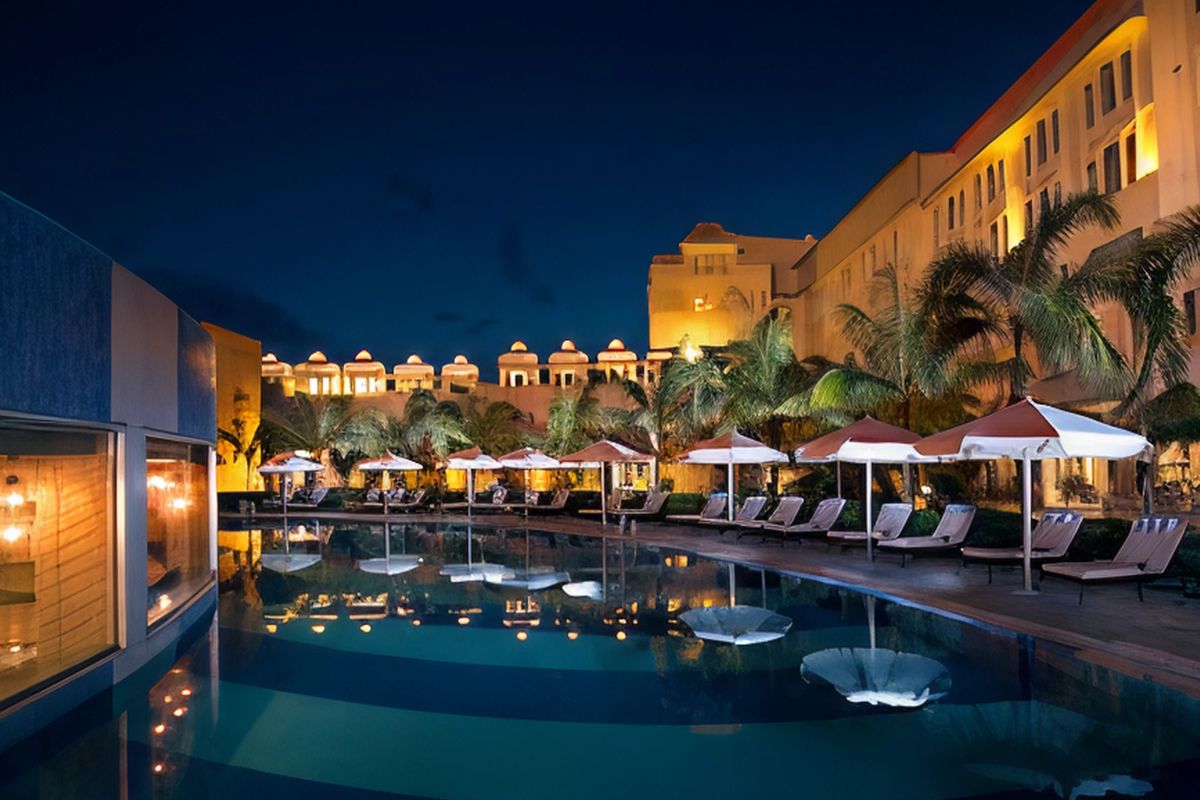 Premium
Radisson Blu Palace Resort & Spa Udaipur
Fateh Sagar Lake, Paschim Marg
Best ForFamilies, leisure couples, and business guests who want a full-service resort with a large pool, spa, multiple restaurants, and a lakeside setting
Estimated Budget₹10,000 to ₹20,000 per night
per night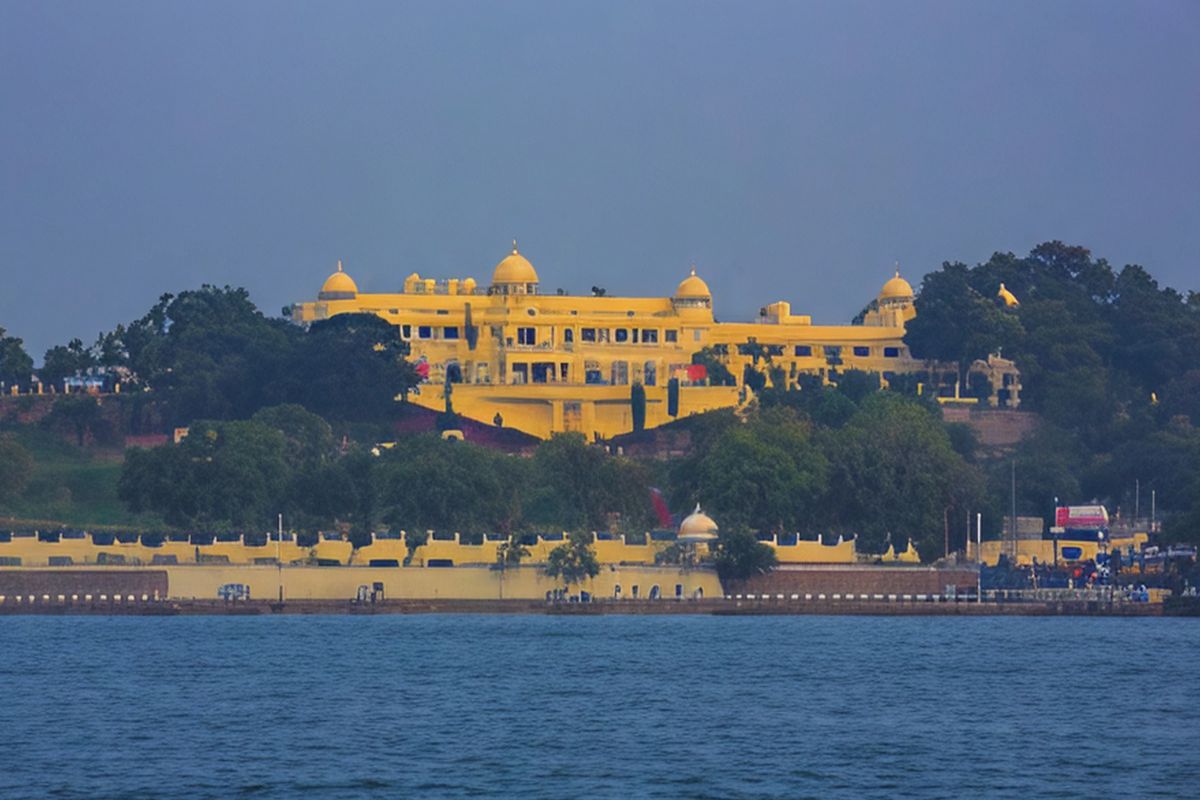 Luxury Heritage
The Lalit Laxmi Vilas Palace Udaipur
Fateh Sagar Road, Alkapuri
Best ForHoneymooners and heritage travellers who want palace architecture, expansive manicured grounds, a large pool, and full resort facilities at a more accessible luxury price point than the ultra-tier properties
Estimated Budget₹18,000 to ₹45,000 per night
per night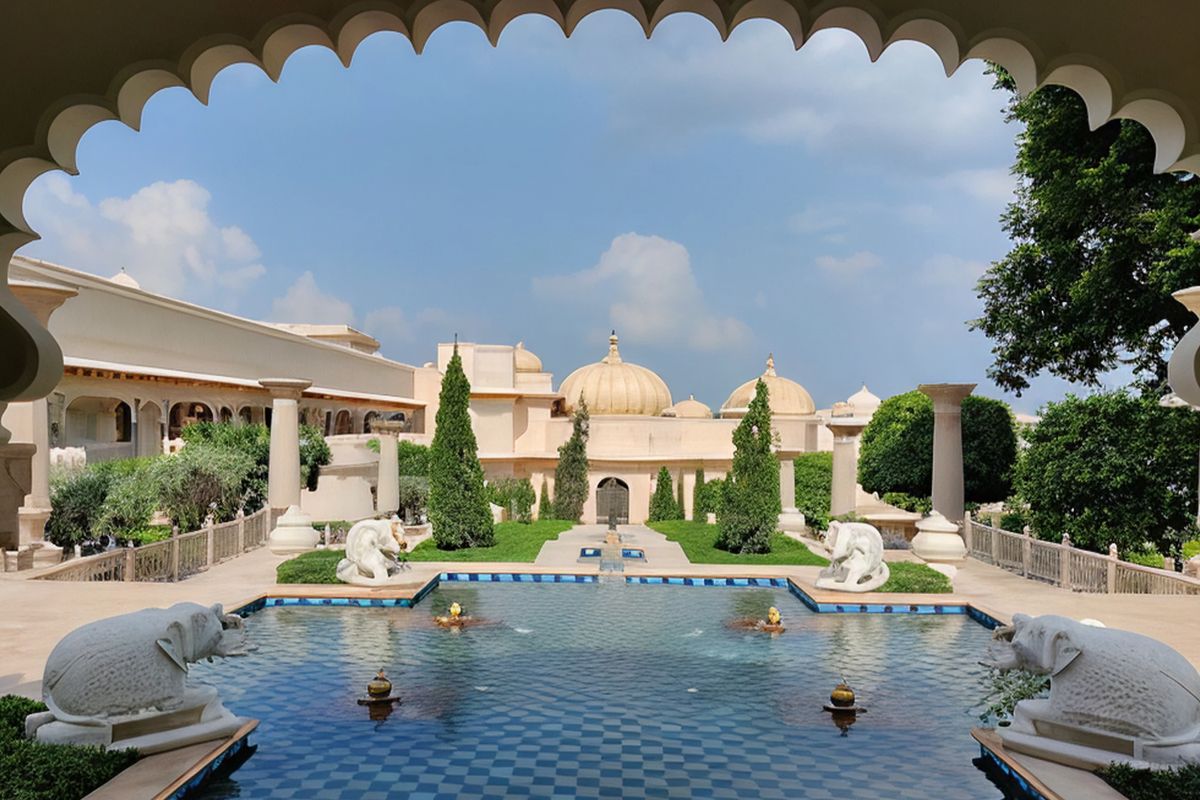 Luxury Heritage
The Oberoi Udaivilas
Lake Pichola, Haridashi Tekri
Best ForLuxury travellers and honeymooners who want the finest unobstructed Lake Pichola views in Udaipur, butler service, a private boat jetty, and the most awarded hospitality experience in the city
Estimated Budget₹60,000 to ₹1,50,000 per night depending on room category and season
per night
Udaipur doesn't just ask to be seen - it asks to be felt. Every ghat, every ripple on Lake Pichola, every marble pillar at dusk holds centuries of Mewar pride quietly waiting for you.
— Yatray Editorial TeamVegetarian Food Guide
Must-Try Specialties
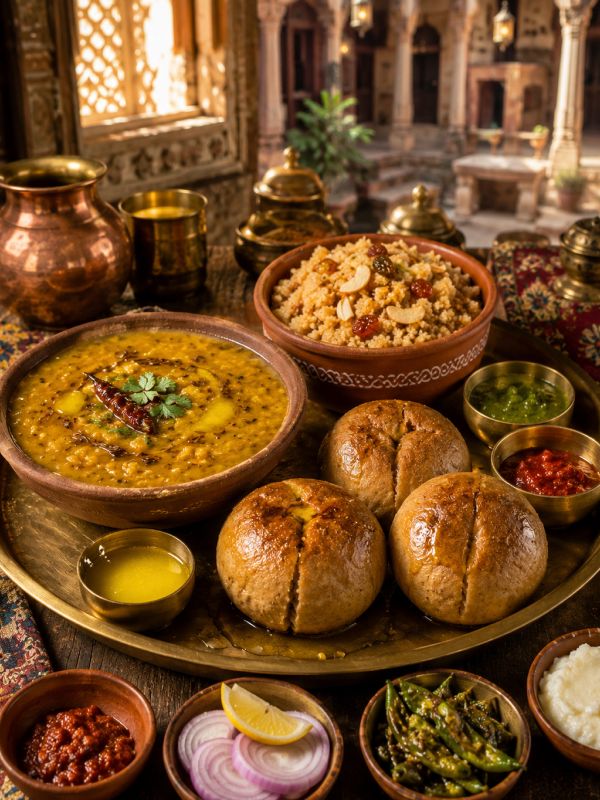
Dal Baati Churma
The defining dish of Rajasthani cuisine - hard wheat balls (baati) baked over a wood fire until golden, broken open and drenched in pure ghee, served alongside thick spiced dal and coarsely ground sweetened churma made from the same dough fried with jaggery and cardamom. Every Udaipur dhaba does a version, but the best are made in the traditional clay oven (chulha) and served with an extra ladle of ghee on the house.
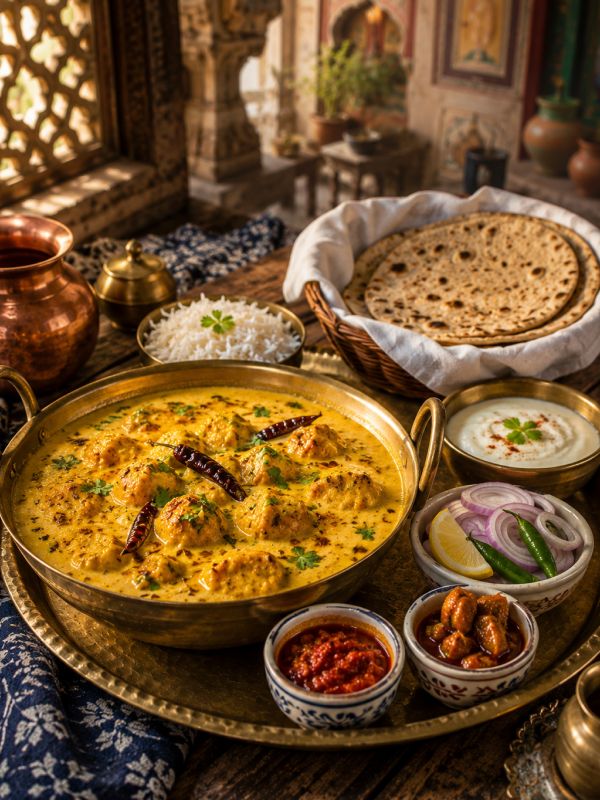
Gatte ki Sabzi
Chickpea flour (besan) cylinders simmered in a tangy, spiced yoghurt-and-tomato gravy that is unmistakably Rajasthani in character. The gattas are dense and satisfying, and the gravy has a sharpness from dried red chillies and ground coriander that deepens with time. It is best eaten with bajra roti or plain rice rather than wheat roti, which softens the textural contrast.
Ker Sangri
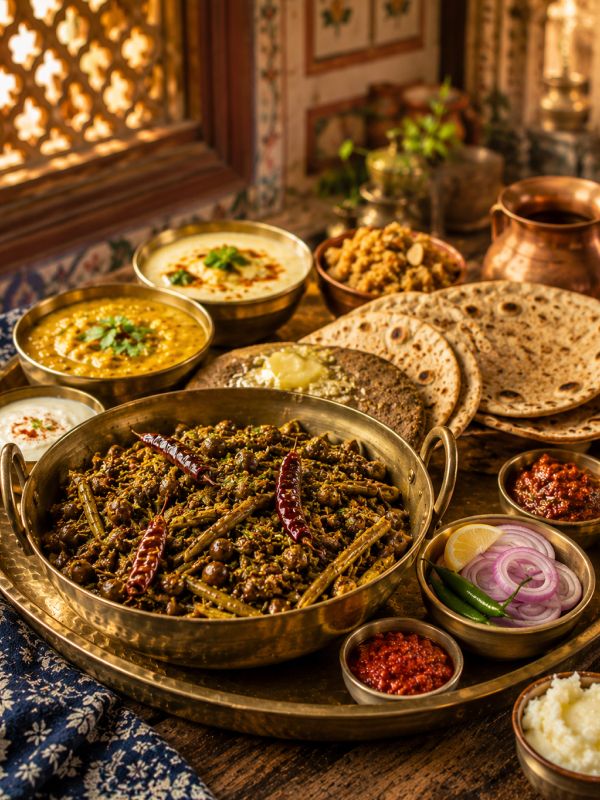
A desert vegetable preparation unique to Rajasthan, made from dried ker berries and sangri beans cooked with dried red chillies, dried mango powder, and mustard seeds. The ingredients look unpromising but the flavour is complex - sour, spicy, and faintly sweet simultaneously. It is served as an accompaniment alongside a thali and is one of those dishes that takes a single bite to become completely hooked on.
Mawa Kachori
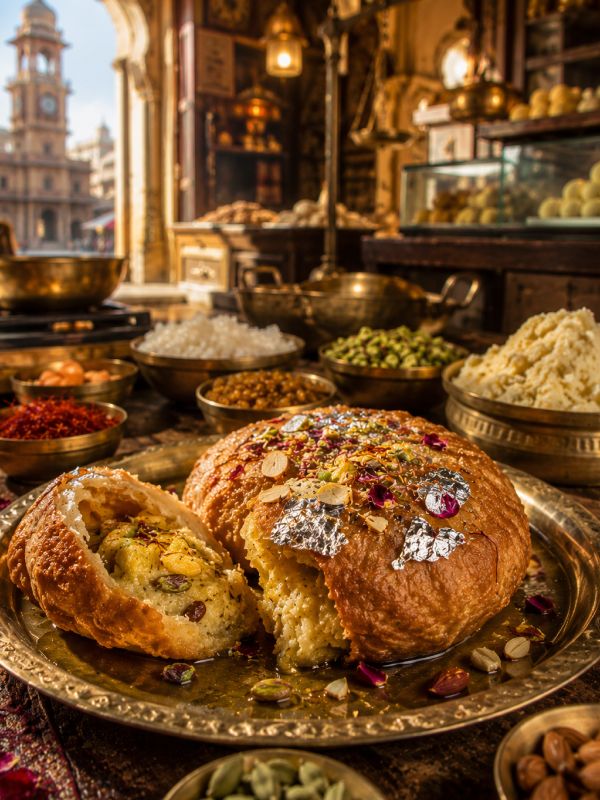
Udaipur's most celebrated street sweet - a deep-fried flaky pastry shell stuffed with a rich filling of reduced milk (mawa) cooked with sugar, saffron, cardamom, and mixed dry fruits, then drenched in sugar syrup and garnished with silver leaf. It is best from the specialist kachori shops near Ghanta Ghar (the clock tower) in the early morning, when the shells are still warm and the mawa filling is at its most fragrant.
Rajasthani Thali
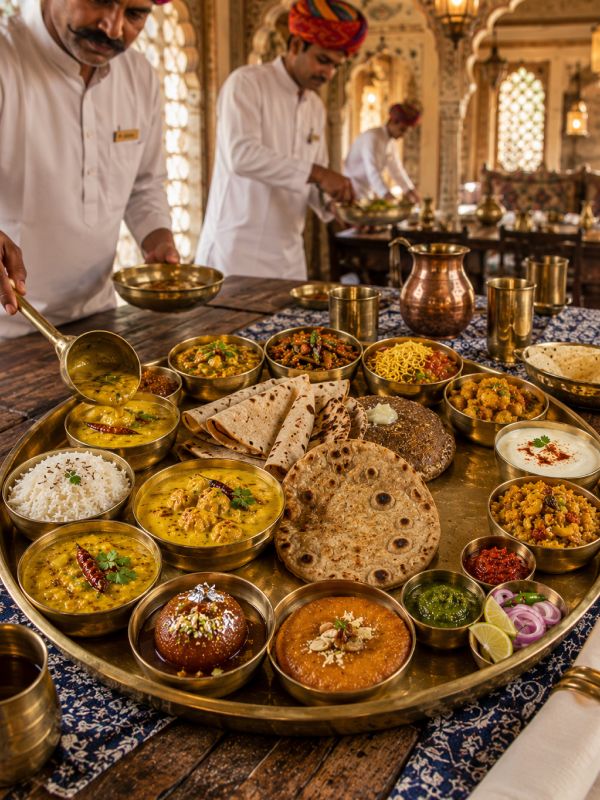
A full Rajasthani thali at a good Udaipur restaurant fills the table with twelve to sixteen small bowls: dal, sabzi, gatte, ker sangri, kadhi, churma, rice, bajra roti, wheat roti, papad, pickle, and something sweet. The servers refill every bowl unbidden and the meal is priced for the whole experience rather than individual portions. The thali at Natraj Dining Hall is considered a benchmark by Udaipuris themselves.
Bajra Roti with Lahsun Chutney
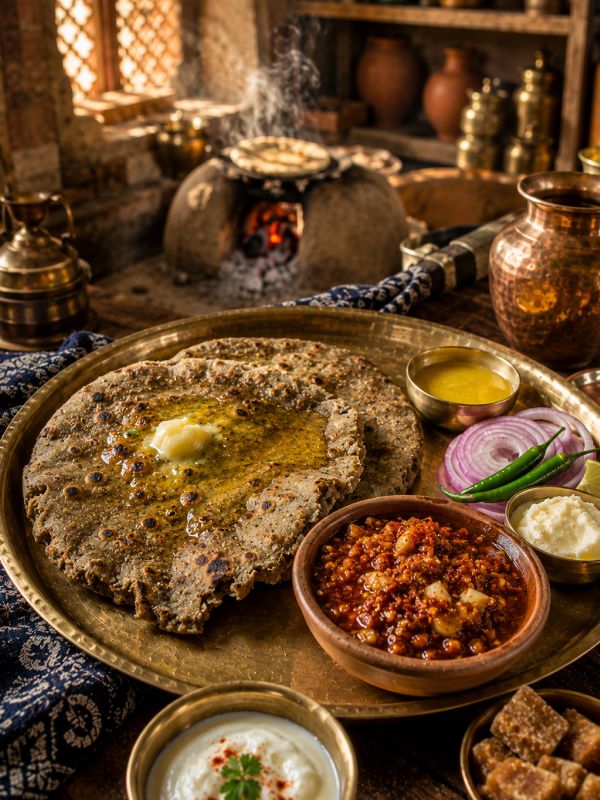
Flatbread made from pearl millet (bajra) flour, cooked directly on an open flame until charred at the edges and served with a fiery roasted garlic and red chilli chutney alongside pure ghee. Bajra is the grain of rural Rajasthan - more nutritious than wheat and with a rich, slightly nutty flavour that wheat roti simply does not have. Many restaurants serve it only in winter, when bajra is traditionally most consumed.
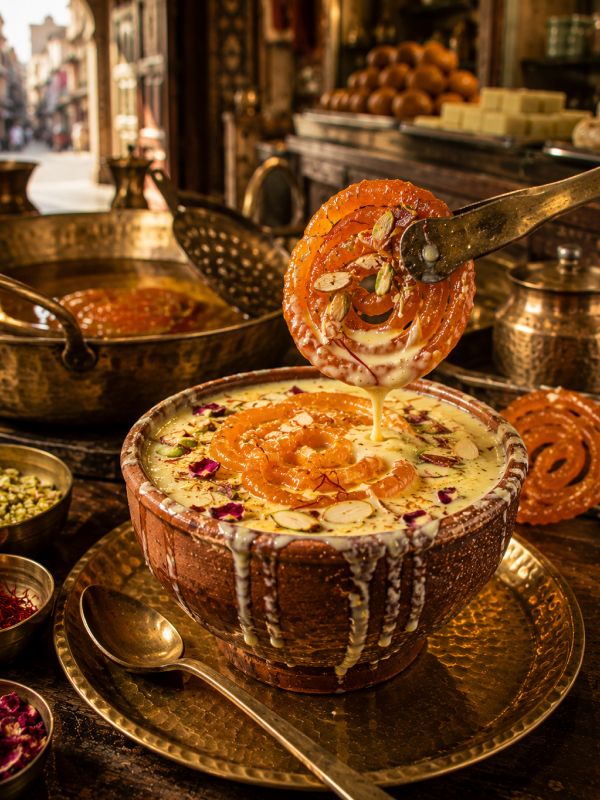
Doodh Jalebi
Fresh jalebis - spiral-shaped deep-fried batter soaked in sugar syrup - served submerged in warm, thick, saffron-and-cardamom-scented full-fat milk. The milk softens the crisp edges while the jalebi slowly dissolves the sugar syrup into the milk, creating something that is simultaneously a sweet, a drink, and a dessert. Found at select halwai shops in the old city, usually in the morning only.
Curated Restaurants
 Jain Option
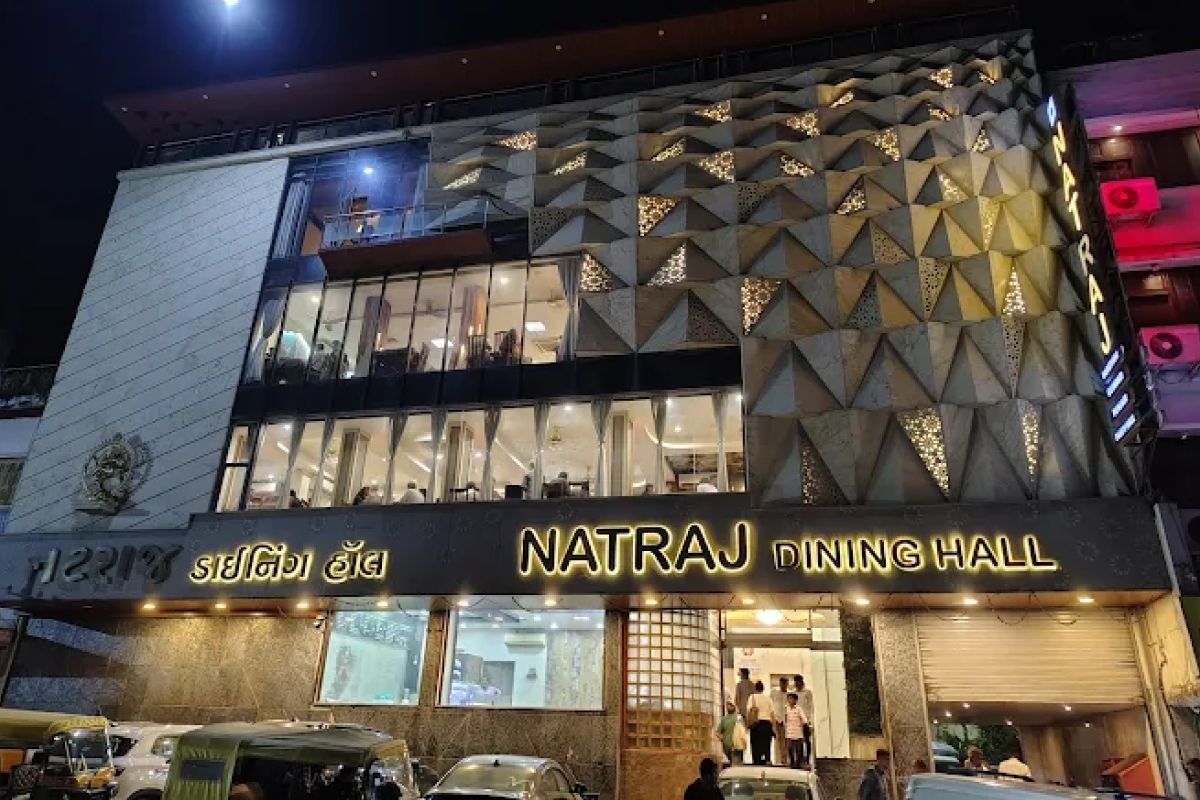
Natraj Dining Hall
Traditional Rajasthani, Pure Vegetarian Thali
Natraj is where Udaipuris themselves go for a proper Rajasthani thali on special occasions - which makes it the most honest recommendation on this list. The thali is served on a round tray with unlimited refills of dal, sabzi, kadhi, churma, and rotis, and the kitchen has been consistent for decades. No lake view, no Instagram aesthetic - just very good, very honest food served without fuss in a clean, well-lit dining room.
Must Try: Traditional Rajasthani Thali, Gatte ki Sabzi
Timing: 11:00 AM to 3:30 PM, 6:30 PM to 10:30 PM
Average Cost: ₹180 to ₹250 per person for a full thali
Location: Bapu Bazar, near Town Hall
Family Dining Choice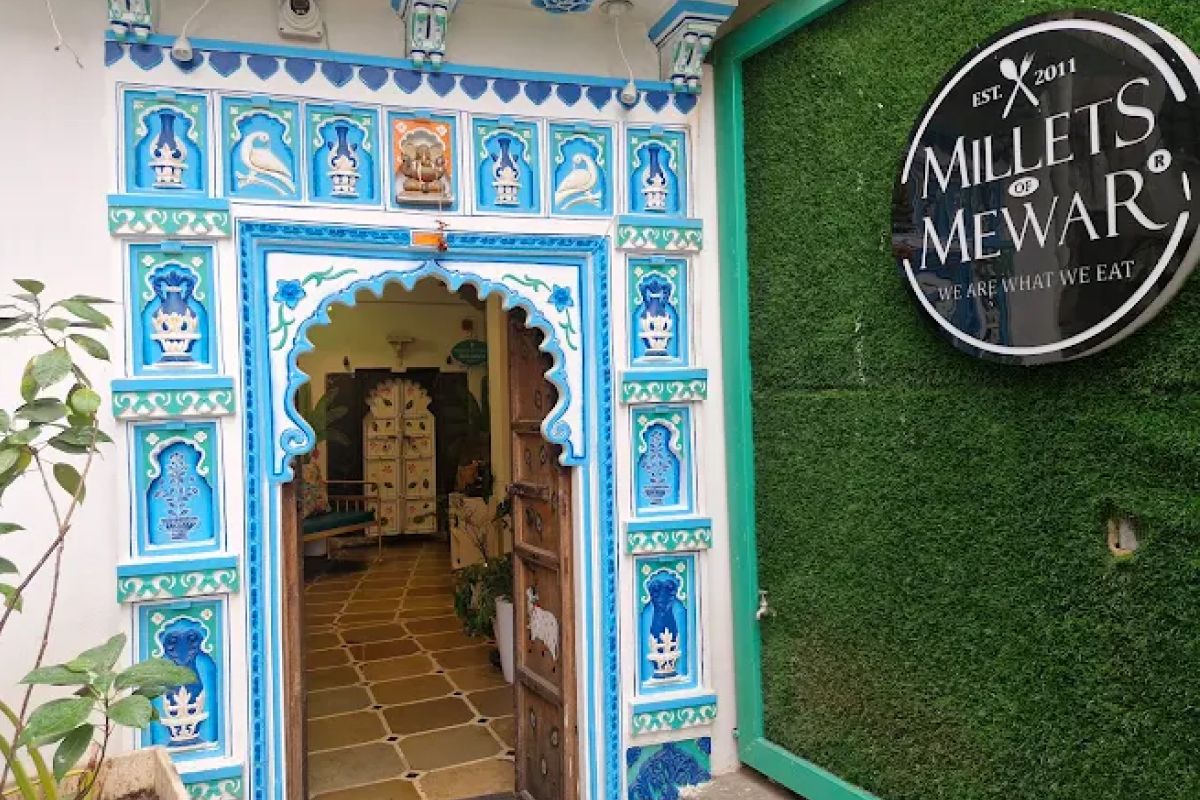
Millets of Mewar
Creative Vegetarian, Millet-Forward, Contemporary Rajasthani
Millets of Mewar is one of the most interesting restaurants in Udaipur - a thoughtful project built around Rajasthan's traditional millet crops (bajra, jowar, ragi) and their place in the local diet. The menu reads like a love letter to forgotten grains: bajra pizzas, ragi pancakes, jowar pasta alongside proper Rajasthani recipes like ker sangri and gatte, all made without maida or refined flour. The terrace setting near Fateh Sagar is calm and unpretentious.
Must Try: Millet Pizza, Bajra Ker Sangri, Ragi Pancake
Timing: 10:30 AM to 11:00 PM
Average Cost: ₹300 to ₹500 per person
Location: Fateh Sagar Outer Ring Road
Family Dining Choice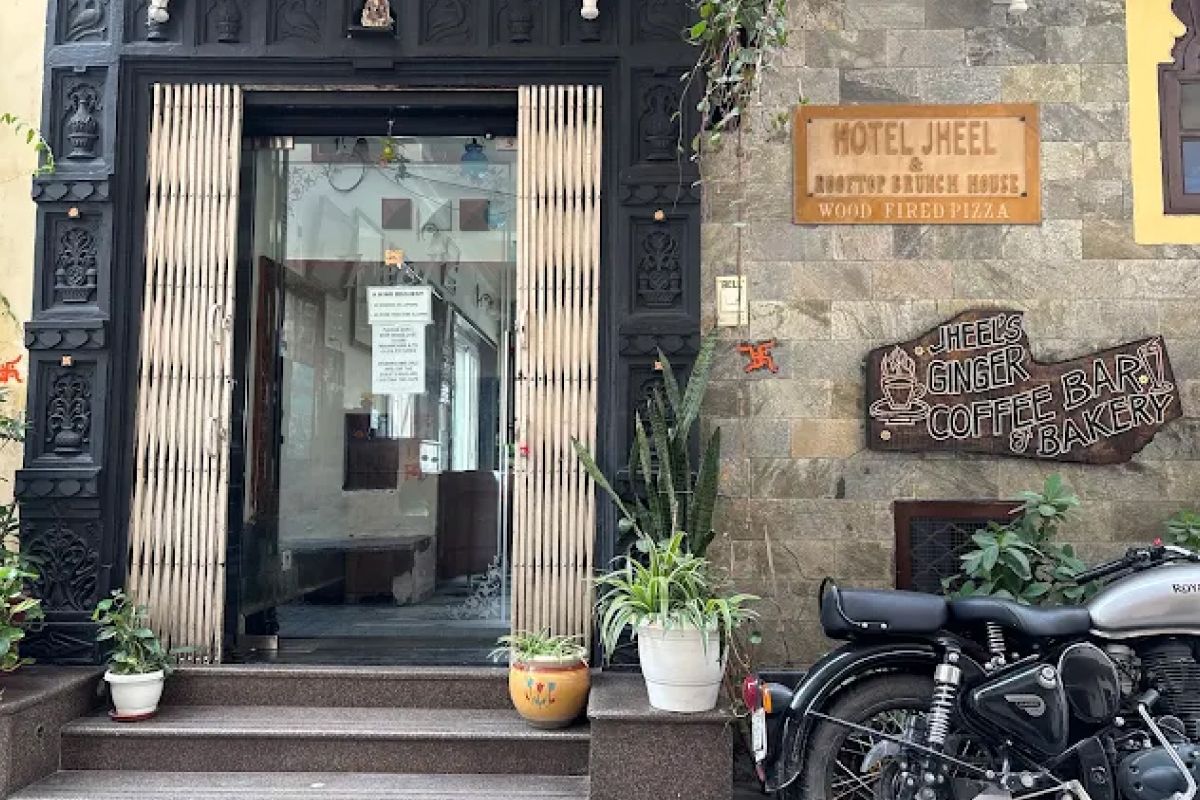 Jain Option
Jheel's Ginger Coffee Bar and Restaurant
Pure Vegetarian, Multi-Cuisine, Café Style
Jheel's has been a consistent recommendation for vegetarian travellers in Udaipur for years, combining a genuinely warm welcome with a menu that covers Rajasthani comfort food, South Indian breakfast dishes, and simple café fare without losing quality across any of them. The rooftop tables look across the old city toward the lake and the setting is comfortable enough to make it a natural base for a lazy morning with coffee and a book.
Must Try: Wood-Fired Pizza, Ginger Special Coffee, Paneer Tikka
Timing: 8:00 AM to 10:00 PM
Average Cost: ₹200 to ₹400 per person
Location: Gangaur Ghat, Old City
Family Dining Choice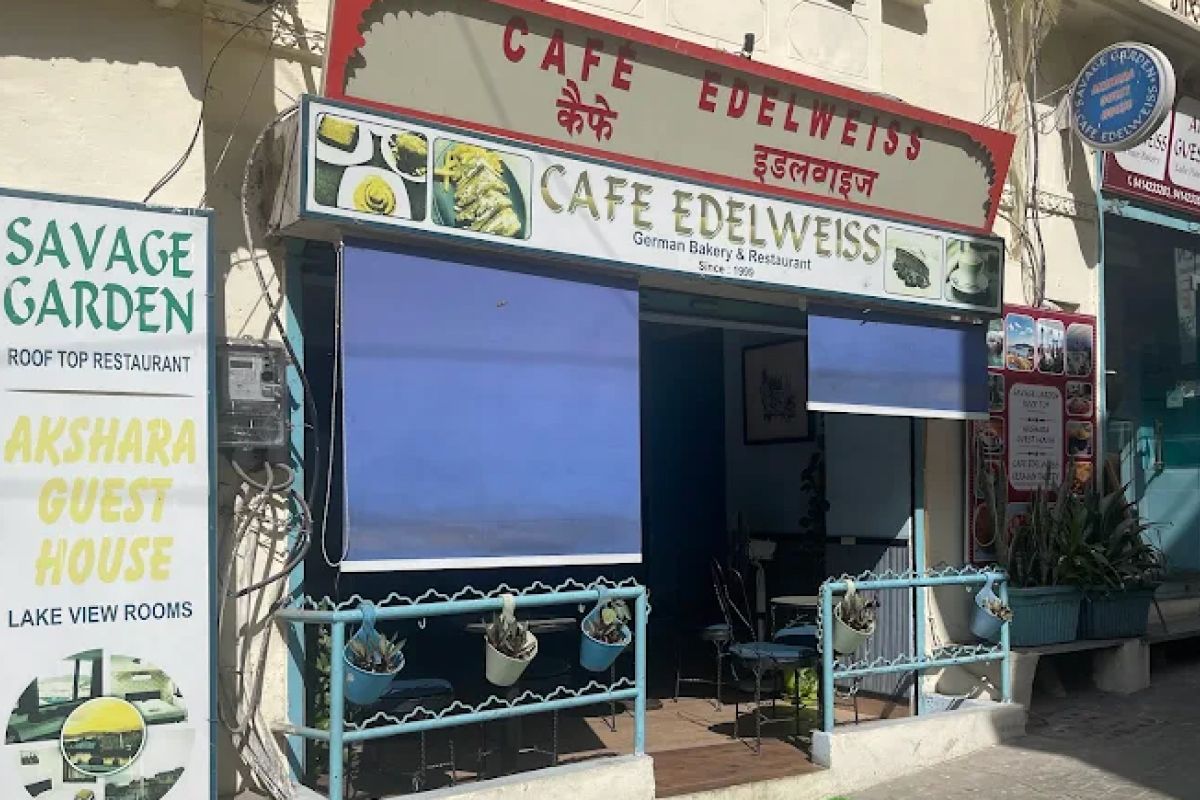
Café Edelweiss
Pure Vegetarian Bakery Café, Continental, Breakfast
Run by a Udaipur family with a genuine interest in baking, Café Edelweiss produces some of the best bread, croissants, and cakes in the city - an unusual find in a town that skews almost entirely toward Indian food. The menu also includes freshly made salads, granola bowls, and strong filter coffee. It is a calmer, lighter option than the thali-heavy local restaurants, and works particularly well for a slow morning before a long day of sightseeing.
Must Try: Apple Crumble, Fresh Croissants, Filter Coffee
Timing: 7:30 AM to 9:30 PM
Average Cost: ₹200 to ₹400 per person
Location: Chandpole, Old City
Family Dining Choice
Jain Food Availability
Udaipur's strong Jain community means that Jain-friendly food (without onion, garlic, green chillies, root vegetables, and sometimes without potatoes during paryushan) is genuinely easy to find. Natraj Dining Hall prepares a fully Jain-compliant thali on request without prior notice. Most traditional Rajasthani dhabas in the old city will accommodate a Jain version of their menu if you specify your requirements clearly at the time of ordering. The Millets of Mewar menu can also be adapted for most Jain dietary requirements with advance notice.
👨👩👧👦 Family Dining Notes
Udaipur is an exceptionally family-friendly city for vegetarian dining. The full Rajasthani thali at Natraj Dining Hall is ideal for families with children - the unlimited-refill format, the variety of small dishes, and the non-spicy options within the thali mean even cautious young eaters find something they enjoy. Jheel's Ginger Coffee Bar has a broad enough menu to satisfy divergent tastes within a family group. Most old city restaurants have rooftop or open-air seating with enough space and informality to make families with young children comfortable.
Suggested Itinerary
2-Day Escape
- Day 1
Morning
Begin with a sunrise boat ride on Lake Pichola (book the 6:30 AM slot through your hotel the previous evening). The City Palace turns from grey stone to warm gold as the sun clears the hills - this single hour is worth the early start. After breakfast at a rooftop café near Jagdish Temple, enter the City Palace complex at 9:30 AM. Allow three full hours for the museum, Mor Chowk, and the lake-view terraces. Take the boat from the City Palace jetty across to Jag Mandir island for lunch at the Darikhana garden café.
Afternoon
Return from Jag Mandir by 2:30 PM. Visit Bagore ki Haveli for its museum of Rajasthani royal costume and lifestyle (open until 5:30 PM), then walk the ghats from Gangaur Ghat to Ambrai Ghat as the afternoon light softens. Browse the miniature painting studios and textile shops along the lane behind Jagdish Temple - many studios will let you watch work in progress without any obligation to buy.
Evening
Return to your hotel to freshen up, then head back to the City Palace for the Mewar Sound and Light Show (tickets from the box office; usually 7:00 PM and 8:00 PM shows). Dinner on a rooftop overlooking Lake Pichola - book a table with a lake-facing seat in advance.
- Day 2
Morning
Start at Saheliyon ki Bari at 8:00 AM before the day-tripper groups arrive - the garden's marble fountains and lotus pools are at their most peaceful in the early morning. Then take a taxi up to Sajjangarh Monsoon Palace for city and lake panoramas (open from 9:00 AM). Stop at Shilpgram Craft Village on the way back (opens at 11:00 AM) to browse traditional Rajasthani crafts and watch artisans at work.
Afternoon
Lunch in the Fateh Sagar area. Visit the Vintage Car Museum nearby (open 9:00 AM to 5:00 PM), where Maharana Bhopal Singh's personal automobile collection is displayed - the cars are spectacular and the museum is rarely crowded. End the afternoon with a leisurely walk or rented cycle ride along the Fateh Sagar promenade.
Evening
Take a motorboat to Nehru Island in Fateh Sagar Lake for the last of the sunset light. Dinner at Natraj Dining Hall for an authentic Rajasthani thali - this is where locals eat on special occasions, not where tourists are taken, and the food reflects that.
3-Day In-Depth Experience
- Day 1
Morning
Sunrise boat ride on Lake Pichola at 6:30 AM. After breakfast, enter the City Palace at 9:30 AM and spend three hours working through the museum, the Mor Chowk peacock panels, and the upper terrace lake views. Rent the audio guide at the entrance - it transforms each room from a decorative space into a story. Lunch inside the palace complex or at a restaurant near Jagdish Temple.
Afternoon
Take the afternoon boat from the City Palace jetty to Jag Mandir island. Spend 90 minutes in the island palace's gardens, elephant-lined entry, and lakeside Darikhana café. Return by late afternoon and walk the ghats - Gangaur Ghat to Ambrai Ghat - as the city catches the last hour of soft light.
Evening
Attend the Bagore ki Haveli folk performance at 7:00 PM (buy tickets at the haveli entrance from 5:00 PM). Dinner in the Ambrai Ghat area with an unobstructed view of the illuminated City Palace across the water.
- Day 2
Morning
Early visit to Saheliyon ki Bari at 8:00 AM. Take a taxi up to Sajjangarh Monsoon Palace by 9:30 AM for the full city panorama. On the return drive, stop at Shilpgram Craft Village for an hour - December visitors will find the Shilpgram Utsav festival in full swing.
Afternoon
Lunch near Fateh Sagar. Visit the Vintage Car Museum and, if time allows, the Pratap Gaurav Kendra heritage park nearby. Afternoon stroll or cycle along the Fateh Sagar promenade, ending with a short motorboat ride to Nehru Island garden.
Evening
Mewar Sound and Light Show at the City Palace (7:00 PM). Rooftop dinner with a lake view - book a table early in the day.
- Day 3
Morning
Morning excursion to Eklingji Temple, 22 km north of Udaipur - the presiding deity of the Mewar royal family and one of the most spiritually significant temple complexes in Rajasthan. The main shrines date to the eighth century and the carving work is remarkable. Return to Udaipur by noon.
Afternoon
Half-day miniature painting workshop in an old city studio (book the previous evening). After the session, explore Hathi Pol bazaar and Bada Bazaar for Rajasthani textiles, silver jewellery, and block-printed fabrics. Visit the Ahar Cenotaphs on the eastern edge of the old city - 250 royal cenotaphs of the Mewar kings, largely unvisited by tourists and genuinely moving in their scale and detail.
Evening
Sundowner from the Karni Mata ropeway top or from your hotel rooftop. Farewell dinner at Millets of Mewar for creative vegetarian cooking built around traditional Rajasthani grains and old recipes - a fitting last meal in the city.
Travel Tips
Booking & Finance
- Pre-book your Lake Pichola boat ride through your hotel to avoid queues at Bansi Ghat, especially on weekends in peak season.
- The Mewar Sound and Light Show sells out on Friday and Saturday evenings - purchase tickets at the City Palace box office by 5 PM.
Transport & Getting Around
- Wear comfortable flat-soled shoes throughout. The lanes of the old city are uneven stone, and the City Palace floors are polished marble that can be slippery.
- The Vintage Car Museum is best on weekdays - weekend visits coincide with school excursion groups and the galleries fill up quickly.
- Sajjangarh hilltop is reached by a steep road that is impractical to walk. Take a taxi or auto-rickshaw up; the drive takes about 15 minutes from the old city.
- Download an offline map of Udaipur before you arrive. The old city's lanes are not always labelled, and GPS signal can be patchy near the City Palace.
- If you plan day trips to Kumbhalgarh or Ranakpur, hire a local driver rather than renting a self-drive car - the Aravalli hill roads are narrow and winding.
Photography Guidelines
- Book lake-view hotel rooms at least six to eight weeks in advance for the October to February peak season - the best rooms disappear early.
- Sunrise (6:30 to 7:30 AM) and the hour before local sunset are the two best photography windows of the day. Plan at least one sightseeing activity around each.
- When shopping for miniature paintings, visit at least three studios before buying and watch each artist work. A genuine hand-painted piece will show brushwork under a magnifying glass; a printed reproduction will not.
- Most heritage hotels in the old city have rooftop restaurants with lake views. Even if you are not a guest, call ahead and ask if non-residents can dine - many will say yes.
- The best view of the Taj Lake Palace hotel (the floating white palace visible from the shore) is free - stand on any ghat facing west across Lake Pichola at midday or sunset.
Weather & packing
- Avoid boat rides on Lake Pichola if a rain warning is in effect in July and August. Lake conditions can deteriorate quickly in heavy monsoon weather.
- Pack a light jacket or shawl for evenings between November and January. Temperatures drop to 10°C to 12°C after dark and can feel genuinely cold after a warm afternoon.
Food & Water Safety
- Carry sufficient cash. Many boat operators, small restaurants in the old city, and ghat-side snack stalls do not accept cards or UPI.
- Udaipur tap water is not safe to drink. Use sealed bottled water or a travel filter throughout your stay.
- Rajasthani thali lunches (served 11:30 AM to 3 PM at most dhabas) offer the best value for food in the city. Arrive before the noon rush for faster service.
- Carry a reusable water bottle and use filtered water refill stations where available to reduce plastic waste.
- Jain-friendly food (without onion, garlic, or root vegetables) is widely available in Udaipur. Ask the kitchen directly - most restaurants are happy to accommodate.
Culture & Etiquette
- Agree on the auto-rickshaw fare before getting in, or insist on the meter - a short ride from Jagdish Temple to Fateh Sagar should not cost more than ₹50 to ₹80.
- Dress modestly when visiting Eklingji Temple, Nathdwara, and other active religious sites - shoulders and knees should be covered.
- The old city is best explored on foot, especially the lanes north of Jagdish Temple - leave your hotel early and let the neighbourhood unfold at walking pace.
- The Gangaur Festival in March or April (dates follow the Hindu calendar) is one of Udaipur's most spectacular public celebrations. If your dates align, rearrange your itinerary to be in the old city for the main procession.
General Advice
- The City Palace audio guide is worth renting at the entrance - context turns each room from an ornate space into a chapter of history.
How To Reach
- By Air
- Maharana Pratap Airport (UDR) is 24 km from Udaipur's old city and receives direct flights from Delhi, Mumbai, Jaipur, Ahmedabad, Bengaluru, and Hyderabad. IndiGo, Air India, and SpiceJet are the primary carriers. Flight time is approximately 1 hour 20 minutes from Delhi and 1 hour 10 minutes from Mumbai. Pre-paid taxis, Ola, and Uber connect the airport to the city in 35 to 45 minutes depending on traffic.
- Nearest Airport: Maharana Pratap Airport (UDR), Dabok - 24 km from the old city
- By Rail
- Udaipur City Railway Station is about 3 km from the old city and connects the destination to major Indian cities. The Mewar Express (12963/12964) runs overnight between Hazrat Nizamuddin (Delhi) and Udaipur in approximately 12 hours. The Chetak Express links Mumbai to Udaipur in roughly 17 hours. Trains from Jaipur take 7 to 8 hours on the fastest services. Auto-rickshaws and taxis wait outside the station at all hours.
- Nearest Station: Udaipur City Railway Station - 3 km from Jagdish Temple
- By Road
- Udaipur lies on National Highway 48 and is well-connected by state highways from across Rajasthan and Gujarat. Jaipur is 395 km away (5 to 6 hours); Jodhpur is 265 km (4 hours); Ahmedabad is 260 km (4 hours); Mount Abu is 185 km (3.5 hours). RSRTC runs regular bus services from Jaipur, Jodhpur, Ajmer, and Ahmedabad. Private Volvo sleeper coaches from these cities are comfortable and reasonably priced.
Route & Transit Tips
- Book your airport taxi in advance or use Ola/Uber - prepaid queue taxis at the airport can be slow during peak season arrivals.
- The overnight Mewar Express from Delhi is one of the most comfortable and economical ways to arrive; book 2AC or 3AC berths at least three to four weeks ahead in peak season.
- If driving from Ahmedabad, the journey on NH48 is smooth and takes about four hours in normal traffic.
- Within the old city, auto-rickshaws are the easiest option for short hops; agree the fare before getting in or ask for the meter.
Yatray Travel Partner
Plan Your Journey With Yatray
Let our experts craft a tailored travel experience for you. From securing domestic flight connections and train tickets to booking premium stays and private cabs with professional drivers — let us handle all the details.
Usually replies within a few hours.
Nearby Destinations
- Kumbhalgarh85 km, approximately 2 hours by road
Kumbhalgarh Fort sits on a ridge of the Aravallis and is ringed by the second-longest continuous wall in the world after the Great Wall of China - 36 km of ramparts snaking across the hills. The drive from Udaipur through the wildlife sanctuary and tribal villages is as rewarding as the fort itself. Most visitors combine Kumbhalgarh with nearby Ranakpur temples into a single day trip, though both sites deserve more time than that hurried formula allows.
- Ranakpur Jain Temples100 km, approximately 2.5 hours by road
The fifteenth-century Chaturmukha Dharana Vihara at Ranakpur is considered one of the finest Jain temples in the world. The complex contains 1,444 intricately carved marble pillars - no two identical - supporting domed ceilings of extraordinary detail. The setting, deep in an Aravalli valley surrounded by forest, adds a spiritual quality entirely absent from busier temple towns. Combine with Kumbhalgarh on a full day out from Udaipur.
- Chittorgarh115 km, approximately 2.5 hours by road
Chittorgarh Fort - the largest fort complex in India by area - sits on a 180-metre sandstone plateau and contains seven gates, four palaces, nineteen temples, and the famous 37-metre Vijay Stambha (Tower of Victory). This was the original Mewar capital before Udaipur was founded, and its history of three devastating sieges and multiple acts of Jauhar makes it one of the most emotionally significant heritage sites in Rajasthan. A half-day is the minimum; a full day is better.
- Nathdwara48 km, approximately 1 hour by road
Nathdwara is home to the Shrinathji Temple, one of the most important Vaishnav pilgrimage sites in India, dedicated to the child form of Lord Krishna. The town is also the birthplace of Pichwai painting - the intricate devotional cloth paintings displayed behind the Shrinathji idol, which are among the most celebrated textile art forms in the country. A morning visit pairs well with the return via scenic NH27.
- Mount Abu165 km, approximately 3.5 hours by road
Mount Abu is Rajasthan's only hill station, sitting at 1,220 metres on the southern spur of the Aravallis and straddling the border with Gujarat. The Dilwara Jain Temples here - especially the Vimal Vasahi and Luna Vasahi temples - contain marble carving of such impossible delicacy that they are widely considered the finest examples of Jain temple architecture in existence. The cooler temperatures and forested setting make it a natural complement to Udaipur's lakeside warmth.
- Jodhpur265 km, approximately 4 hours by road
The Blue City earns its name - the indigo-painted old quarter beneath the towering Mehrangarh Fort is one of the most dramatic urban landscapes in Rajasthan. Mehrangarh itself is arguably the finest fort in the state, with room-size carved jharokha windows and a museum that spans eight centuries of Marwar history. Jodhpur is best reached from Udaipur by road via Pali, passing through quiet Rajasthani countryside that itself justifies the drive.
- Bijaipur85 km, approximately 2 hours by road
Bijaipur is a small heritage village in the Mewar countryside, home to Bijaipur Castle - a sixteenth-century fort converted into a boutique heritage stay. Staying a night here breaks the journey between Udaipur and Chittorgarh beautifully, and the surrounding villages offer a slower, more rural look at Rajasthani life that the city itself cannot provide. Guided village walks, bullock cart rides, and farm visits are available through the castle.
- Eklingji and Nagda22 km, approximately 35 minutes by road
The Eklingji Temple complex, 22 km north of Udaipur, has been the presiding deity of the Mewar royal family since the eighth century. The intricately carved main shrine is set within a walled compound of over a hundred smaller temples. Just 2 km further, the ruins of Nagda contain two beautifully carved tenth-century temples - Sas Bahu (Mother-in-Law and Daughter-in-Law) - set beside a quiet tank. This is a half-morning excursion best combined with the scenic drive north along the NH27.
Frequently Asked Questions
October to March is the best time to visit Udaipur. Temperatures in this window range from 10°C at night to 28°C in the afternoon, the lakes are full from the monsoon, and the festival calendar is at its richest. November to February is peak season, so book accommodation well in advance. September is an underrated shoulder month - the lakes are still full and green from monsoon, the hills are beautiful, and prices have not yet risen to peak levels.
Three days is the ideal minimum for Udaipur. This gives you enough time to cover the City Palace, Lake Pichola boat rides, Jag Mandir, Bagore ki Haveli, Sajjangarh, Saheliyon ki Bari, Fateh Sagar, and one or two day trips to Eklingji or Nathdwara. Two days is possible but will feel rushed. Four days allows you to add Kumbhalgarh Fort and Ranakpur Jain Temples without compromising the city itself.
Udaipur is widely considered one of the safer cities in Rajasthan for solo female travellers. The old city is compact and walkable with many guesthouse owners and rooftop restaurants nearby. As with any Indian city, standard awareness applies: avoid poorly lit lanes after midnight, use app-based cabs rather than unmarked taxis after dark, and let your accommodation know your return time if you are out late. The tourist areas around the ghats and Jagdish Temple are busy and well-watched throughout the evening.
The City Palace complex, a boat ride on Lake Pichola to Jag Mandir island, Bagore ki Haveli, Sajjangarh (Monsoon Palace), Saheliyon ki Bari garden, Fateh Sagar Lake, and the lanes of the old city around Jagdish Temple are the essential Udaipur experiences. For day trips, Kumbhalgarh Fort and Ranakpur Jain Temples are among the finest heritage sites in Rajasthan and both are within 2.5 hours of the city.
Udaipur has a strongly Jain and Vaishnav character, which means pure vegetarian food dominates the dining scene. The vast majority of dhabas, traditional restaurants, and home-style eateries in the old city are fully vegetarian. Some restaurants in tourist areas do serve non-vegetarian food, but you will never struggle to find excellent, deeply flavourful vegetarian meals - from full Rajasthani thalis to Jain-friendly cooking and contemporary vegetarian cafés.
The most comfortable option from Delhi is the overnight Mewar Express train (12963), which departs Hazrat Nizamuddin station in the evening and arrives in Udaipur the next morning in approximately 12 hours - book 2AC or 3AC class. The flight from Delhi takes about 1 hour 20 minutes and several airlines operate direct services to Maharana Pratap Airport (UDR). Volvo bus services from Delhi take 12 to 14 hours and are best for budget travellers comfortable with overnight road travel.
The fastest option from Mumbai is a direct flight to Maharana Pratap Airport (UDR), which takes approximately 1 hour 10 minutes - multiple airlines fly this route. The Chetak Express (12995) connects Mumbai Central to Udaipur by train in roughly 17 hours, making it a viable overnight journey if you are comfortable in sleeper class. By road, the journey is approximately 650 km and takes around 10 to 12 hours - practical for those driving through Gujarat.
Entry fees at the City Palace Museum (Manek Chowk) are approximately ₹250 to ₹300 for Indian nationals and ₹500 to ₹600 for international visitors - these prices are updated periodically, so check the official City Palace website or the box office on arrival for current rates. The audio guide costs an additional ₹150 approximately and is strongly recommended. The Mewar Sound and Light Show has a separate ticket, typically ₹150 to ₹250 per person.
Yes. Official boat rides on Lake Pichola depart from Bansi Ghat and from the jetty inside the City Palace. The standard one-hour circuit covers the lake and passes both Jag Mandir and the Taj Lake Palace (Jag Niwas). A separate boat is needed to land on and explore Jag Mandir island - tickets are available at the ghat. Private rowboats for sunrise rides can be arranged through most hotels in the old city. Boat services may be suspended during heavy monsoon weather.
Jag Mandir is a seventeenth-century palace built on an island in the centre of Lake Pichola. Maharana Karan Singh began its construction and it was completed by Maharana Jagat Singh I in 1652. The island is said to have sheltered the Mughal prince Khurram (later Shah Jahan) during his rebellion against his father, and the architecture here is thought to have inspired elements of the Taj Mahal. Boats to Jag Mandir depart from Bansi Ghat - buy a combined boat-and-entry ticket at the ghat counter.
Yes, without reservation. The panoramic view of Udaipur's chain of lakes and the surrounding Aravalli hills from the Sajjangarh rooftop terrace is one of the most arresting in Rajasthan. The palace itself is partially restored and not as elaborate as the City Palace, but the journey up through the Sajjangarh Wildlife Sanctuary and the view at the top more than compensate. Arrive 45 minutes before sunset for the full light-change effect. A taxi or auto-rickshaw is necessary - the hill road is too steep to walk in comfort.
The four strongest day trips from Udaipur are: Kumbhalgarh Fort (85 km, 2 hours) for its extraordinary hilltop ramparts; Ranakpur Jain Temples (100 km, 2.5 hours) for the finest carved marble temple complex in India; Eklingji and Nagda (22 km, 35 minutes) for sacred Mewar temples and tenth-century ruins; and Nathdwara (48 km, 1 hour) for the Shrinathji Temple and Pichwai textile art. Kumbhalgarh and Ranakpur are best combined into a single long day.
The old city is best explored on foot - it is compact and the lanes are not navigable by vehicle anyway. Auto-rickshaws are the standard mode of transport between the old city and sites like Fateh Sagar, Saheliyon ki Bari, and the Vintage Car Museum - agree the fare before getting in, or insist on the meter. Ola and Uber operate in Udaipur and are more transparent on pricing for longer trips to the airport, Sajjangarh, or Shilpgram. Cycle and electric scooter rentals are also available near Jagdish Temple for self-guided exploration.
Udaipur spans a wide budget range. At the budget end, guesthouses in the old city start from ₹700 to ₹1,200 per night, and a full Rajasthani thali lunch costs ₹150 to ₹250. Mid-range stays with lake views and private balconies run ₹3,000 to ₹7,000. The high end - lakefront heritage havelis and boutique hotels - starts from ₹8,000 and goes well above ₹30,000 for signature suites. Most major sights cost under ₹500 per person to enter. The city is manageable on any budget but rewards those who invest a little more in their accommodation, as the rooftop lake views are genuinely central to the Udaipur experience.
Udaipur is one of the best shopping cities in Rajasthan. Original miniature paintings from authentic studios are the signature purchase - watch the artist work before buying, and look for brushwork detail under a small magnifying glass to distinguish hand-painted originals from printed copies. Block-printed fabric and dupattas, silver jewellery with Mewar enamelwork, leather jootis (traditional Rajasthani shoes), Pichwai devotional paintings from studios near Jagdish Temple, and handmade paper products are all excellent buys. The Hathi Pol bazaar and Bada Bazaar are the main shopping streets in the old city.
Yatray Recommendation
Our Take, From Experience
Udaipur rewards a particular kind of traveller - one who is willing to slow down enough to let the city reveal itself at its own pace. If you arrive with a tightly packed itinerary and race from monument to monument ticking boxes, you will leave with photographs and a sense of having covered the ground. If you arrive with three or four days and the willingness to sit beside a lake in the early morning doing absolutely nothing, you will leave with something harder to describe but much more valuable.
Our strongest practical advice is this: book a room with a lake view and pay whatever premium it costs, even if it stretches your budget. In most Indian cities, your hotel is a place to sleep and little else. In Udaipur, the view from your window or rooftop is part of the experience in a way that is genuinely rare. Waking up to the City Palace turning gold across the water, or watching thunderclouds stack up over the Aravallis in monsoon, is something no guided tour can replicate.
For the City Palace, go on a weekday if your schedule allows and arrive when it opens at 9:30 AM. By 11 AM the tour groups arrive and the narrower gallery corridors become genuinely crowded. The palace is best understood with the audio guide - not because the rooms are poorly labelled, but because the audio guide tells you the stories behind the spaces, and stories are what make Mewar architecture meaningful rather than merely impressive.
If you have any interest in art - even passing interest - spend a morning in a miniature painting studio rather than just buying something from a shop. Sitting beside a master painter for two or three hours while they explain the pigment preparation, the squirrel-hair brushes, the compositional conventions borrowed from Persian court painting, and the way Mewar subjects differ from Mughal ones, will fundamentally change what you see when you look at these paintings in galleries and museums for the rest of your life.
On food: eat at Natraj Dining Hall at least once, even if thalis are not normally your preference. Order the full thali, accept every refill the server offers, and eat slowly. The Rajasthani thali at its best is not a restaurant meal - it is a form of hospitality expressed through food, and Natraj is one of the few places in the city where that original intent still shows through clearly. Save the rooftop lake-view restaurants for evenings, when the atmosphere earns the premium.
Finally, leave one evening unplanned. The best moments in Udaipur tend to happen when you have nowhere to be - a conversation with a chai shop owner who turns out to have strong opinions on the relative merits of Mewar and Mughal painting; a group of schoolchildren who insist on practising their English on you for twenty minutes in exchange for showing you a back lane to the lake that nobody else knows about; a sudden evening shower that empties the ghats and leaves the stone steps steaming and the palace glowing behind a curtain of rain. Udaipur gives generously, but only to those who are paying attention.
Your Journey Starts Here
Let us craft your perfect
Udaipur itinerary.
Share your dates, travel style, and budget — our concierge team will shape a calm, personalized journey.
Itinerary · Hotels · Flights · Transfers · Local guidance