Jaisalmer
The Golden City - Living Fort, Thar Desert Dunes, Royal Havelis & Folk Heritage
Jaisalmer is Rajasthan's legendary 'Golden City', renowned for its 12th-century living fort (Sonar Qila), exquisitely carved yellow sandstone havelis like Patwon Ki Haveli, historic Jain temples, peaceful Bada Bagh cenotaphs, and sweeping Thar Desert sand dunes at Sam and Khuri. It offers an immersive journey into desert heritage, camel safaris, and Rajasthani culture.
Overview
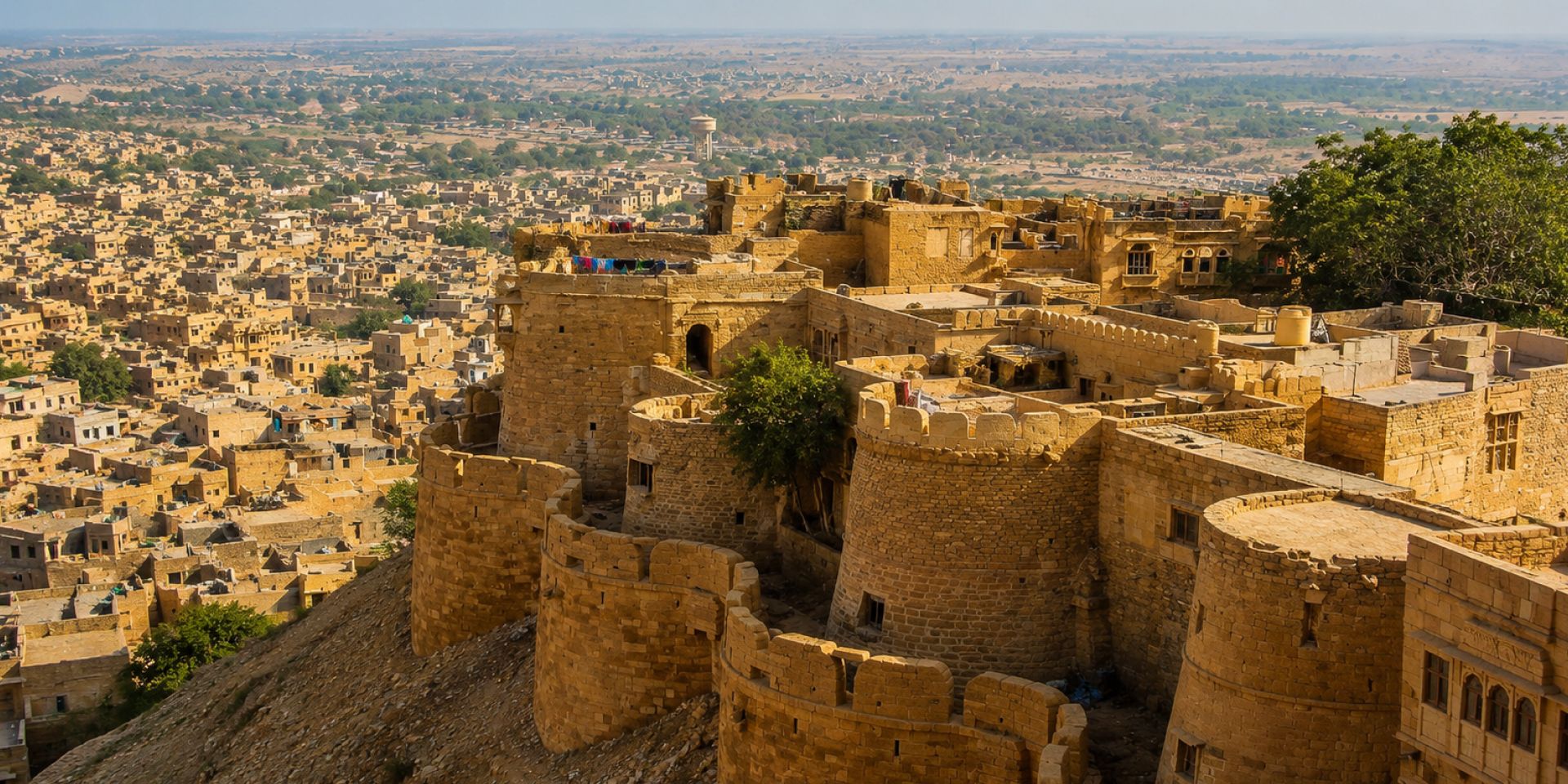
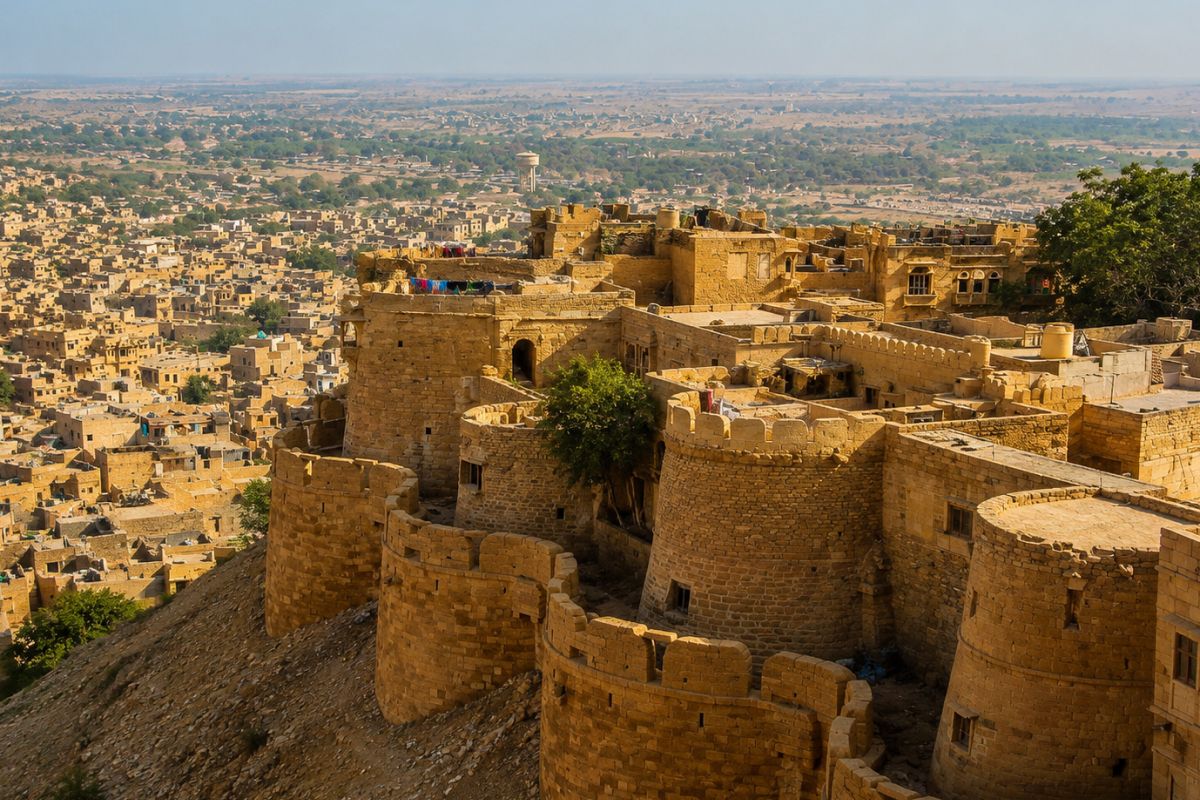
Founded in 1156 AD by Maharawal Jaisal of the Bhati Rajput clan, Jaisalmer stands as a golden jewel in the heart of the Great Indian Thar Desert. Perched high atop Trikuta Hill, the city is crowned by Jaisalmer Fort (Sonar Qila) - one of the very few functioning 'living forts' in the world. Constructed from local yellow sandstone without mortar, the fort's massive double ramparts and 99 bastions glow with an incandescent honey-gold hue under the desert sun, earning Jaisalmer its moniker as the Golden City.
Beyond its formidable fortress walls, Jaisalmer is celebrated for its extraordinary merchant architecture. Wealthy Jain and Marwari traders of the 18th and 19th centuries commissioned lavish multi-story mansions (havelis) such as Patwon Ki Haveli, Nathmal Ki Haveli, and Salim Singh Ki Haveli. Decorated with breathtaking filigree stone carvings, intricate jharokha balconies, and delicate lattice screens, these havelis showcase the apex of medieval Indian stonemasonry.
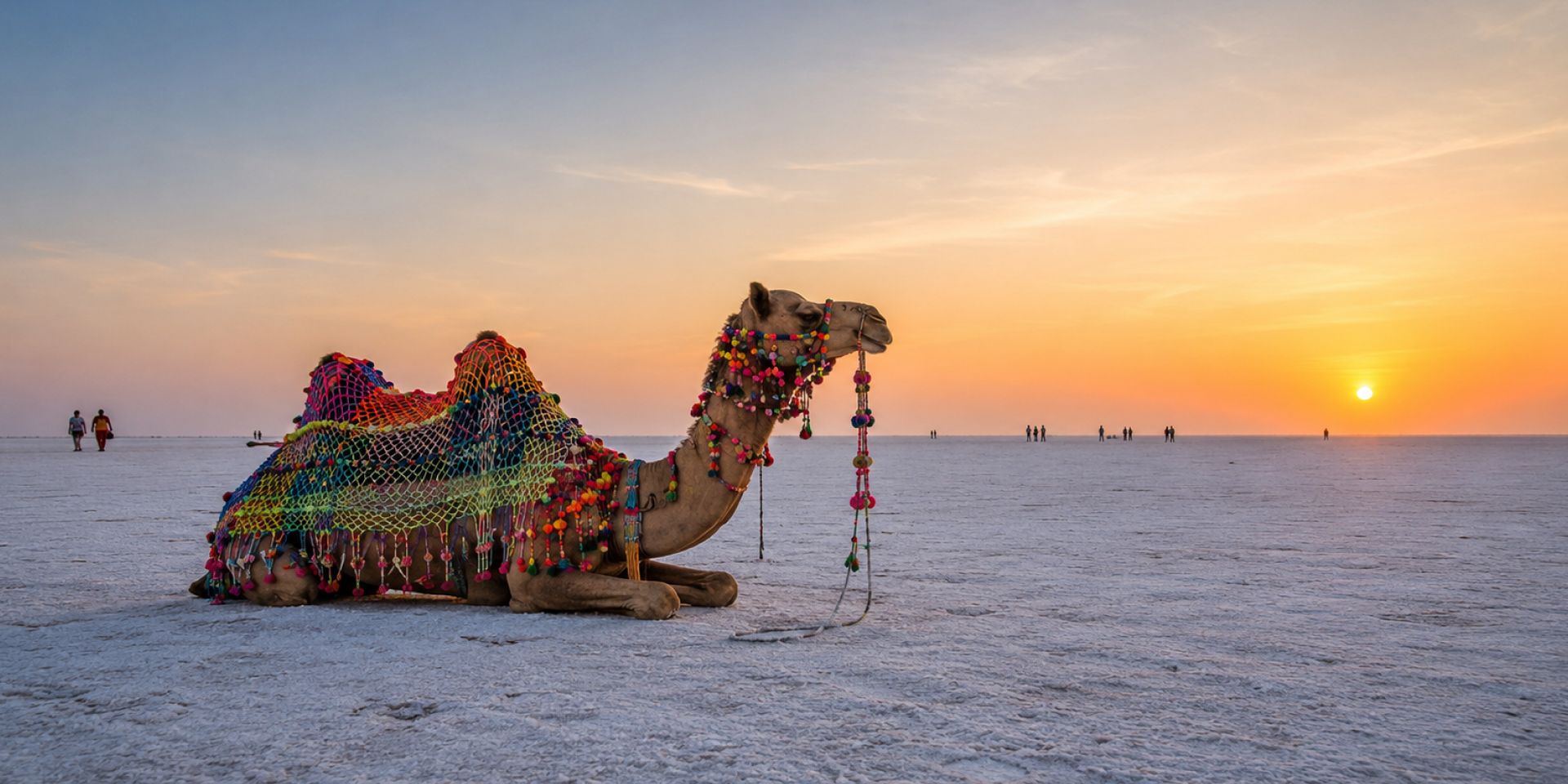
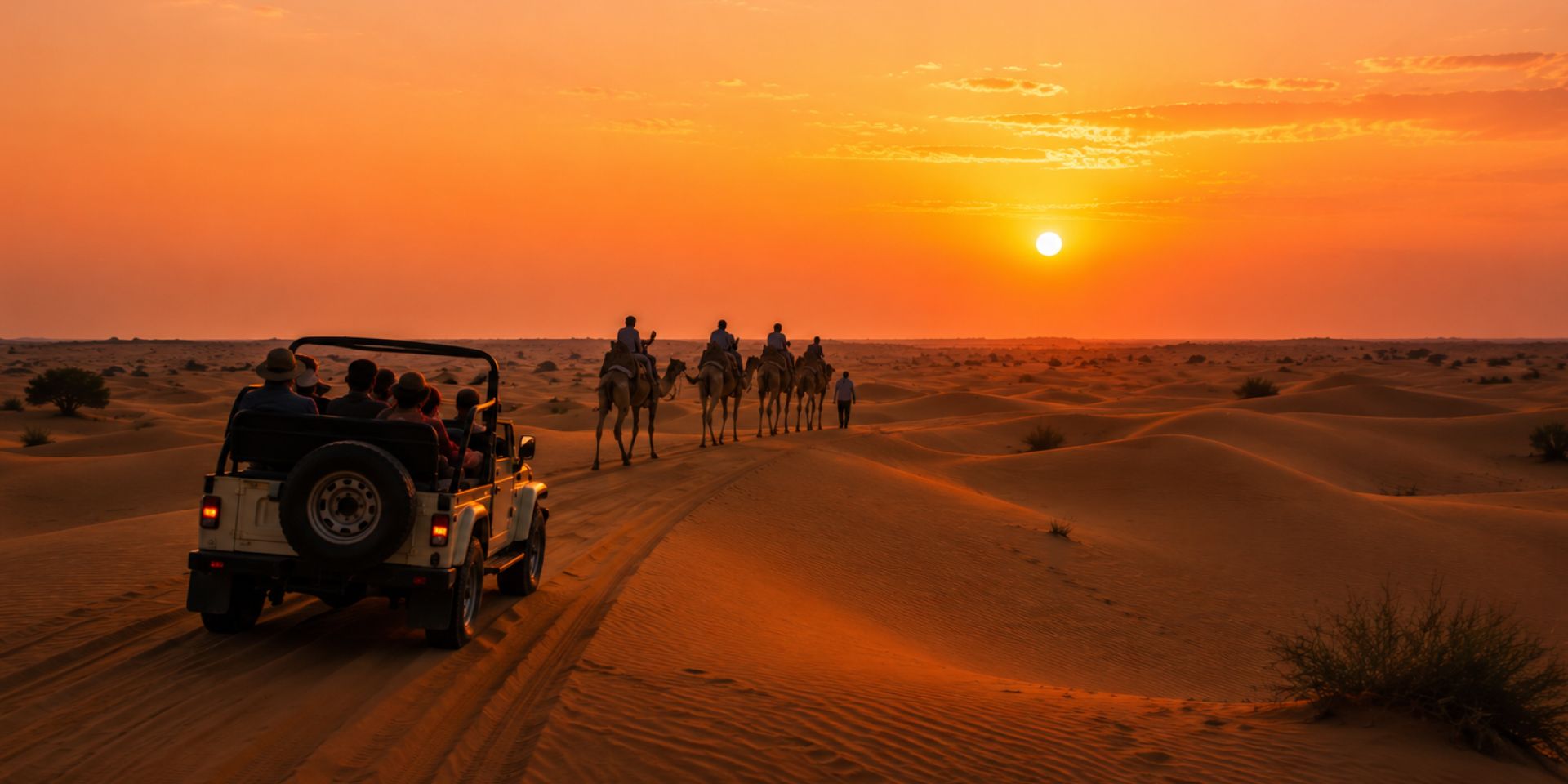
The Jaisalmer experience seamlessly extends into the vast expanse of the Thar Desert. From camel safaris and 4x4 jeep dune bashing at Sam and Khuri sand dunes to starlit cultural evenings featuring Langa and Manganiyar folk music, Jaisalmer captivates travelers with its blend of royal heritage, desert landscapes, authentic vegetarian culinary traditions, and warm Rajasthani hospitality.
Jaisalmer, Rajasthan
Map of Jaisalmer showing Jaisalmer Fort, Patwon Ki Haveli, Gadisar Lake, Bada Bagh, Kuldhara, and Sam Sand Dunes.
Why Visit
- 01
Living Sandstone Fortress
Step inside Sonar Qila, a 12th-century UNESCO World Heritage living fort where thousands of residents live amidst historic yellow sandstone lanes.
- 02
Intricate Merchant Havelis
Marvel at Patwon, Nathmal, and Salim Singh Ki Haveli featuring jaw-dropping yellow sandstone jharokhas and filigree stonemasonry.
- 03
Thar Desert Dunes & Safaris
Experience camel rides, thrilling 4x4 jeep dune bashing, and sunset panoramas over Sam and Khuri sand dunes.
- 04
Royal Cenotaphs & Lakes
Discover serene royal chhatris at Bada Bagh and Vyas Chhatri, and enjoy peaceful boat rides across 14th-century Gadisar Lake.
- 05
Desert Folk Music & Culture
Immerse yourself in soulful Langa and Manganiyar folk music, Kalbelia dance performances, and desert camp evenings under starry skies.
Must-Visit Places
The experiences that define your journey.
Jaisalmer Fort (Sonar Qila) & Fort Palace Museum
One of the very few functioning 'living forts' in the world, housing nearly one-fourth of Jaisalmer's Old City population within its double walls. Highlights include 99 bastions, 4 grand fort gates (Akhai Pol, Suraj Pol, Ganesh Pol, Hawa Pol), Raj Mahal (Fort Palace Museum), narrow winding lanes, traditional craft shops, and sweeping city viewpoints.
Photo TipCapture the fort's massive sandstone bastions and Suraj Pol gate from the lower entrance plaza during early golden hour light.
Duration: 2.5 to 3.5 hoursBest: 7:30 AM to 10:30 AM for quiet morning walks, or 4:30 PM to 6:30 PM for golden hour light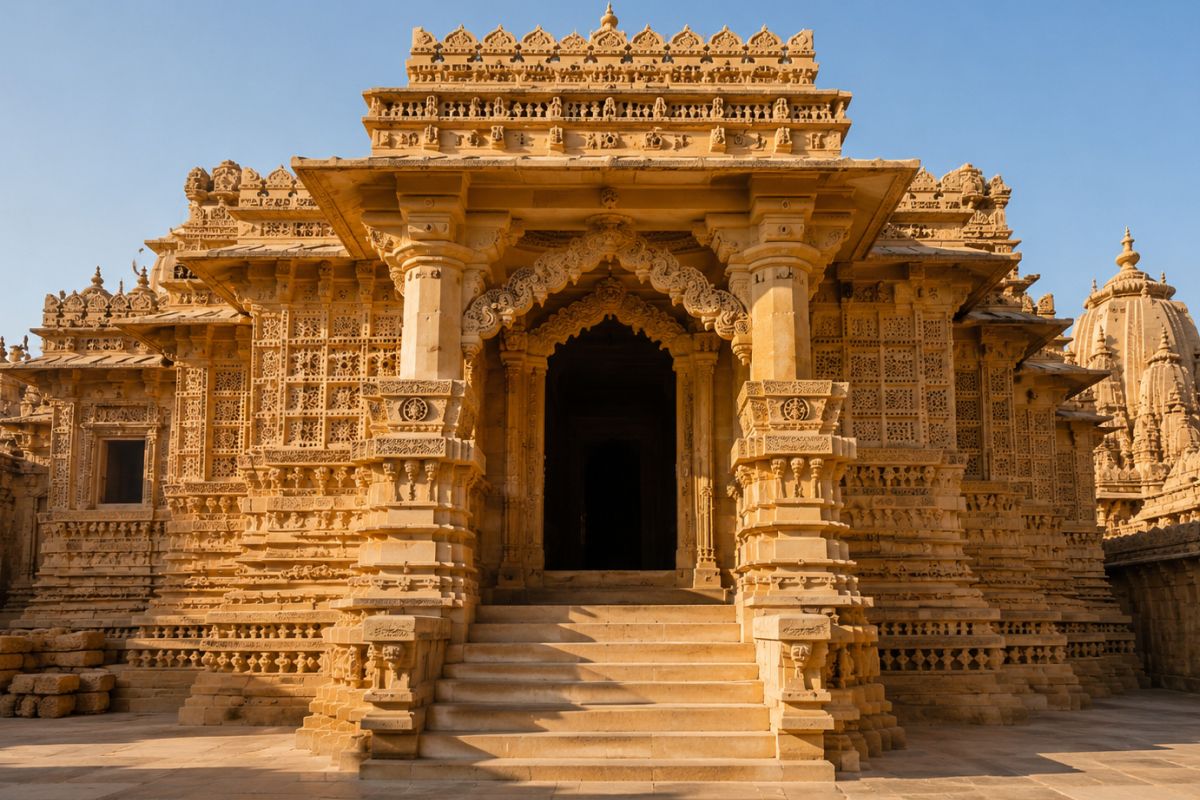
Historic Fort Jain Temples & Gyan Bhandar
Renowned worldwide for extraordinary stonemasonry. Features thousands of intricately carved figures, apsaras, floral filigree, and domed ceilings carved into soft sandstone without mortar. Houses the ancient Gyan Bhandar library containing rare palm-leaf manuscripts. Active place of worship requiring leather items to be deposited at entry.
Photo TipPhotograph the sunlight filtering through carved sandstone jharokhas onto the central temple dome courtyard.
Duration: 1 to 1.5 hoursBest: 8:00 AM to 12:00 PM (tourist visiting hours)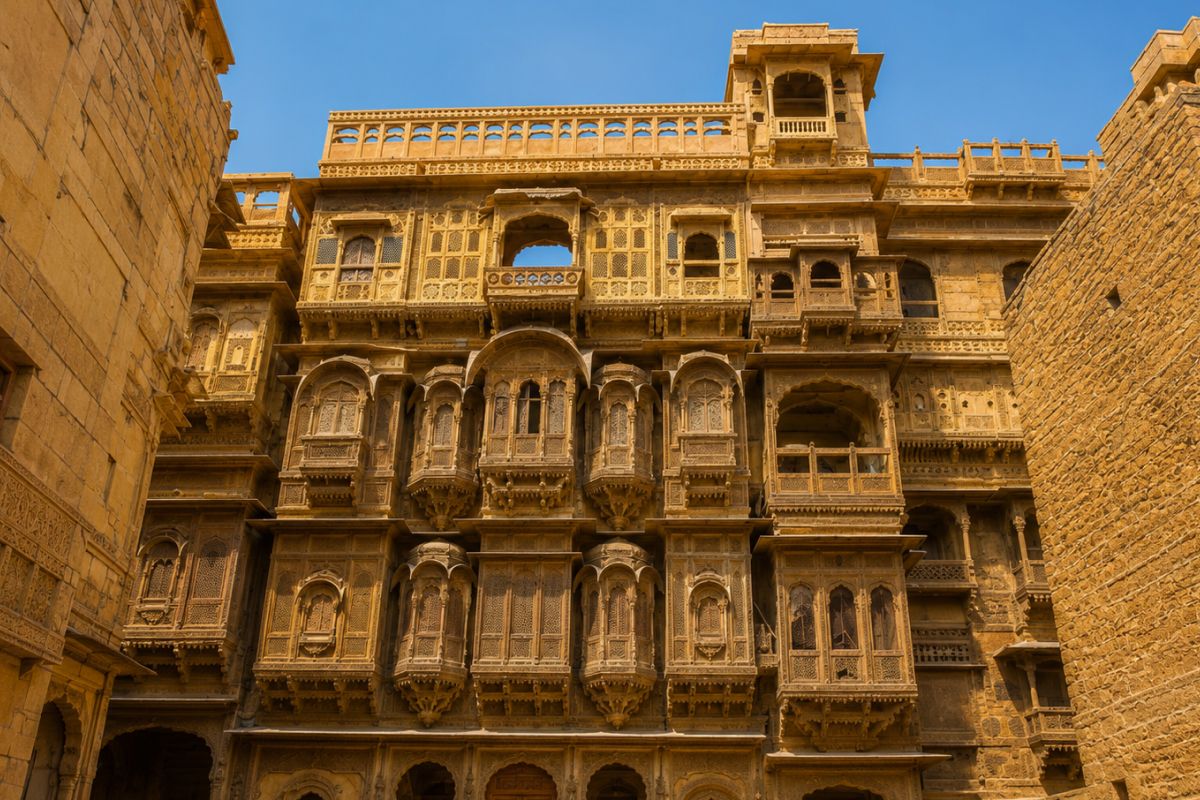
Patwon Ki Haveli (Cluster of Five Havelis)
Features five interconnected individual havelis boasting intricate yellow sandstone jharokhas (latticed balconies), carved archways, painted wall murals, and mirror-work chambers. The first haveli operates as a state museum displaying 19th-century merchant furniture, textiles, and artifacts.
Photo TipStand at the narrow street plaza facing east to capture the towering multi-tiered facade with over 60 carved jharokhas.
Duration: 1.5 to 2 hoursBest: 9:00 AM to 11:30 AM or 3:30 PM to 5:00 PM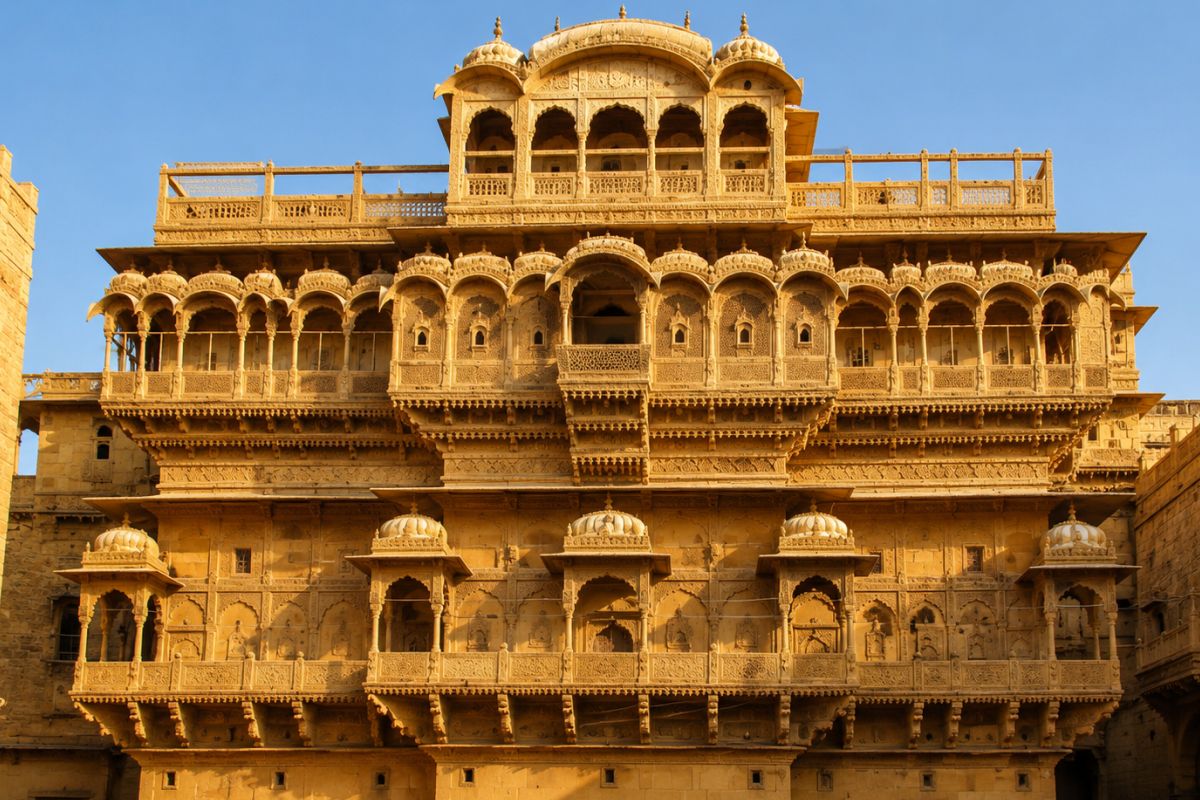
Nathmal Ki Haveli
Famous for its subtle architectural asymmetry - the two architect brothers built the left and right wings independently without consulting each other's drawings, resulting in non-identical yet harmoniously balanced stone carvings. Guarded by two life-sized yellow sandstone elephants at the entrance.
Photo TipFrame the life-sized carved stone elephants guarding the main entrance gate with the intricate latticed windows above.
Duration: 45 minutes to 1 hourBest: 9:30 AM to 12:30 PM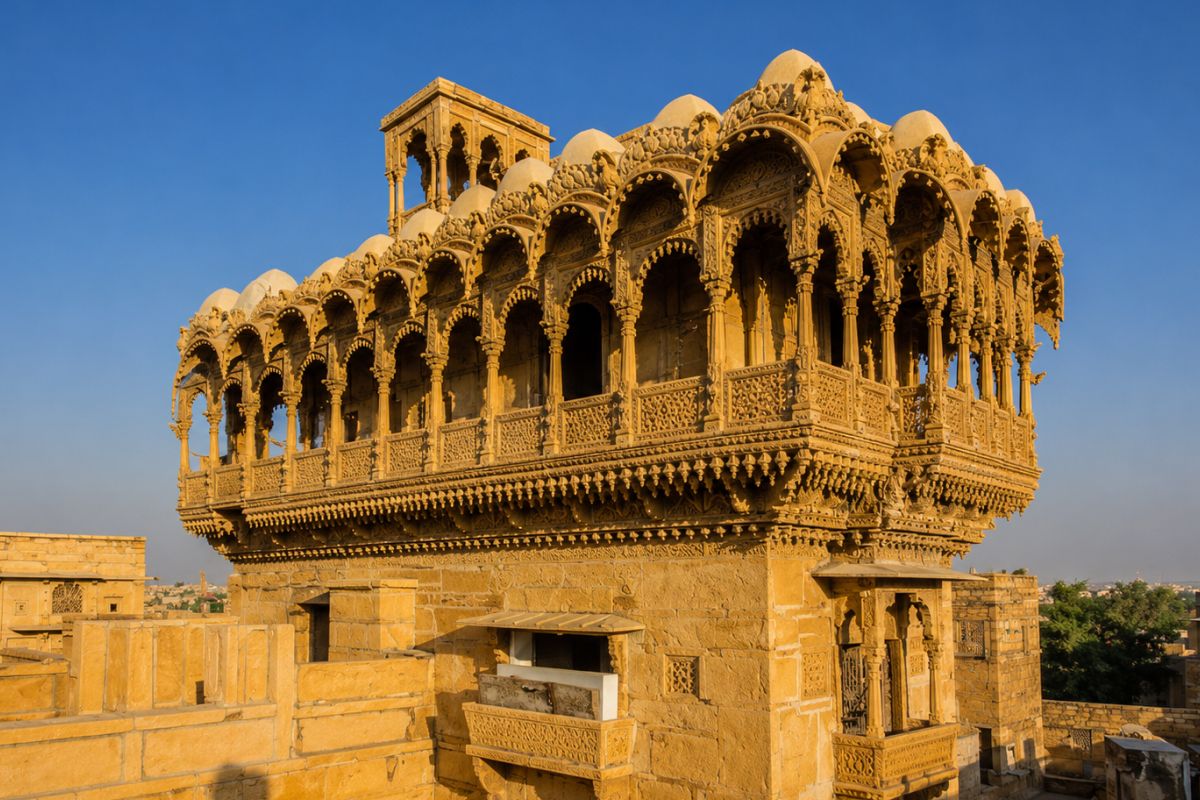
Salim Singh Ki Haveli (Moti Mahal)
Unique architectural design featuring a narrow ground floor expanding into an upper floor shaped like a dancing peacock (Moti Mahal) supported by 38 intricately carved balconies. Constructed using interlocking stone joints held together without iron or mortar.
Photo TipAngle your camera upwards from the narrow alleyway to capture the cantilevered peacock balcony arched over the street.
Duration: 45 minutes to 1 hourBest: 10:00 AM to 2:00 PM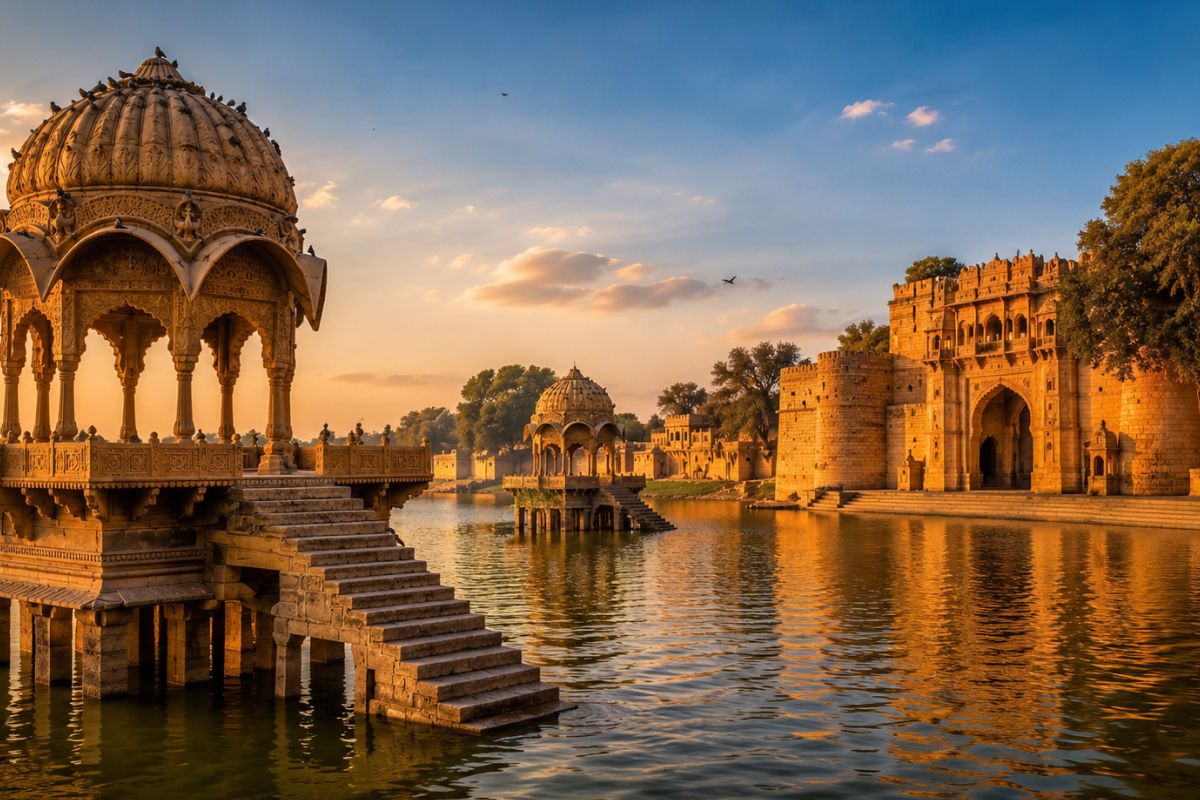
Gadisar Lake & Tilon Ki Pol Gateway
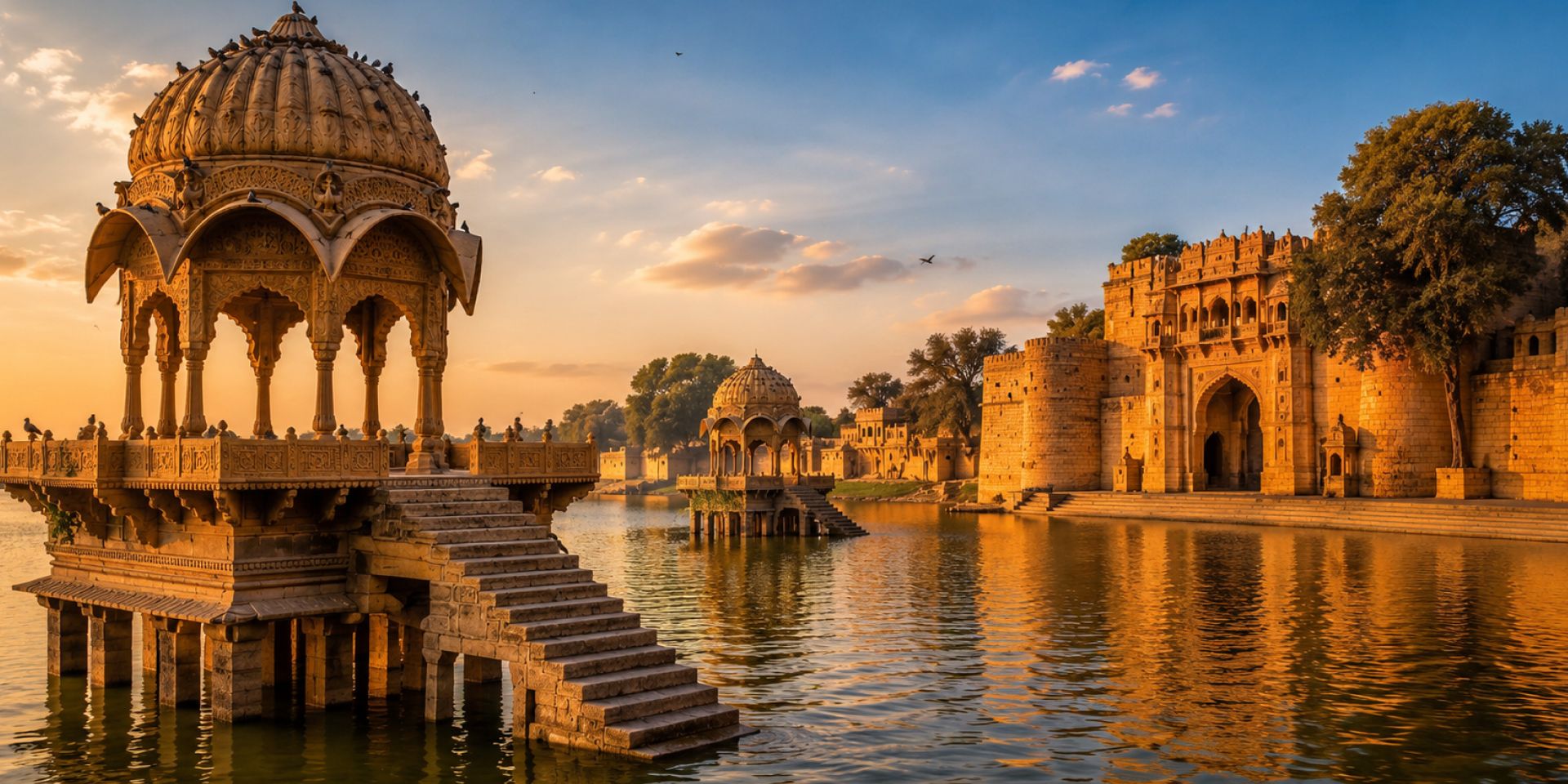
Surrounded by yellow sandstone chhatris, shrines, ghats, and the famous Tilon Ki Pol - a grand carved gateway built by a royal courtesan. Visitors can enjoy peaceful pedal or row boating on the calm waters while admiring winter migratory birds and catfish along the stone steps.
Photo TipCapture the reflection of the carved sandstone chhatris and Tilon Ki Pol gateway in the calm waters of Gadisar Lake during early morning light.
Duration: 1 to 1.5 hoursBest: 6:30 AM to 8:30 AM for sunrise light, or 5:00 PM to 6:30 PM for sunset boating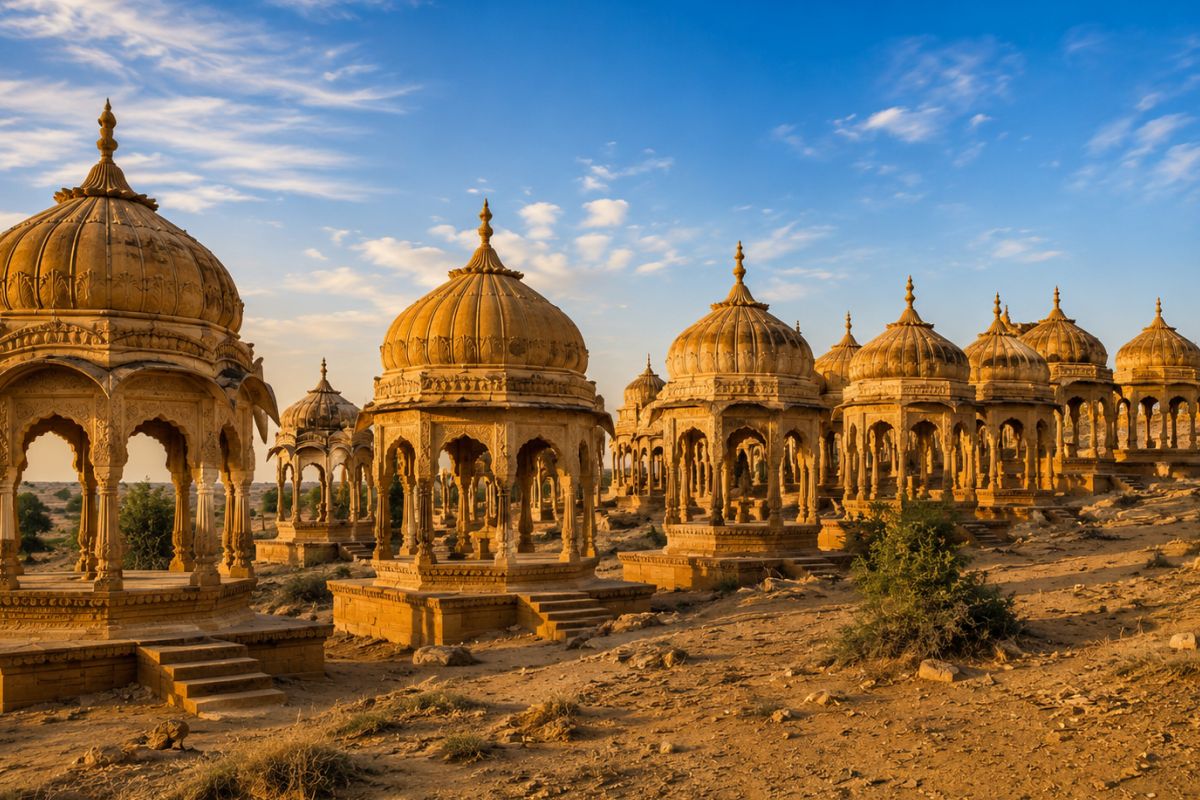
Bada Bagh Royal Cenotaphs
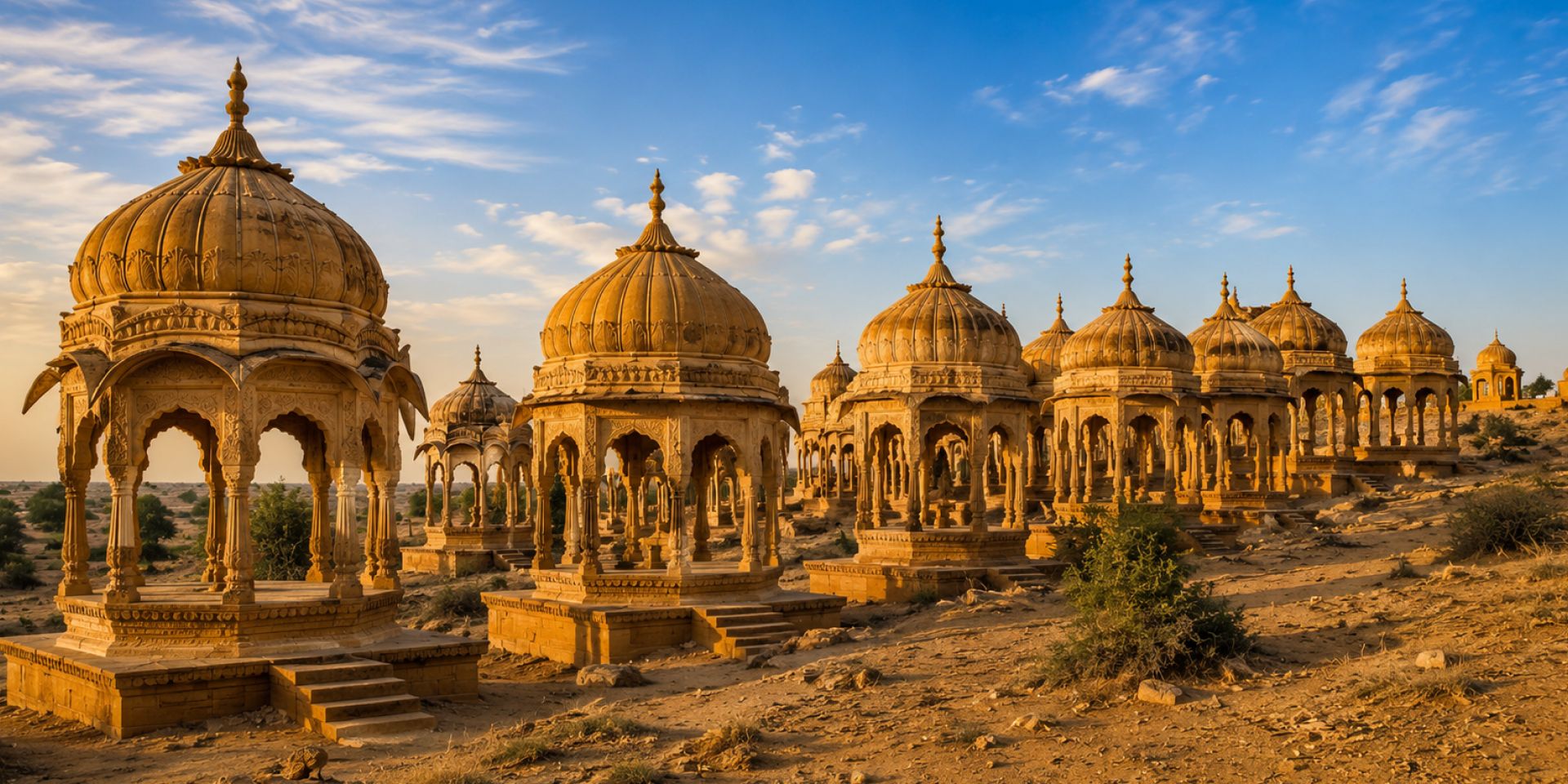
Founded by Maharawal Jai Singh II in the 16th century, Bada Bagh stands on a hill overlooking a green oasis and modern wind farm. Each cenotaph features beautifully carved marble plaques (goverdhan) recording the ruler's reign. The contrast between ancient royal chhatris and modern windmills creates a striking landscape.
Photo TipPosition yourself near the lower row of chhatris as the setting sun casts a warm golden glow across the carved sandstone domes and windmills.
Duration: 1.5 hoursBest: 4:30 PM to 6:30 PM for sunset golden hour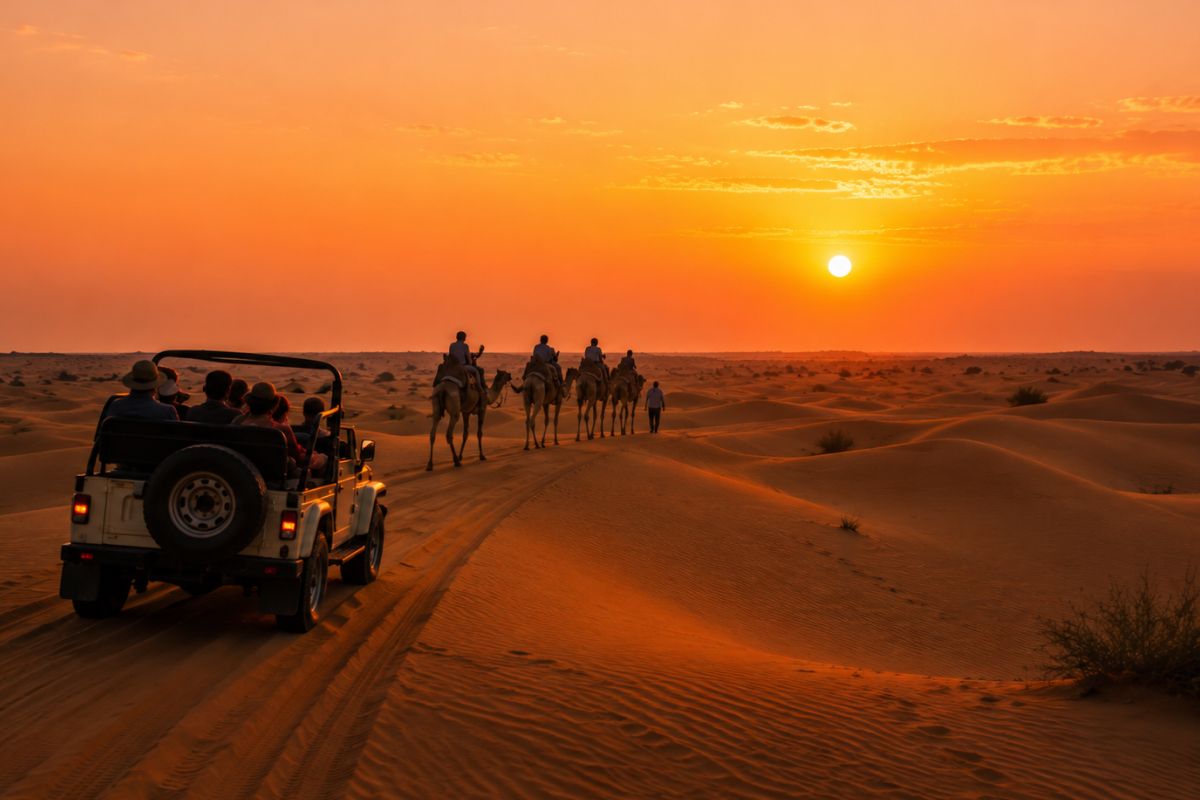
Sam Sand Dunes & Thar Desert Sunset
The ultimate desert adventure hub near Jaisalmer. Offers camel rides across golden ripples, thrilling 4x4 jeep dune bashing, quad biking, and dramatic desert sunsets. Evening desert camps nearby feature traditional Rajasthani folk music by Langa and Manganiyar musicians, Kalbelia dance, and star-gazing around campfires.
Photo TipCapture long shadows stretching across wind-rippled sand dunes with a camel caravan silhouetted against the setting desert sun.
Duration: 4 to 6 hours (or overnight desert camp stay)Best: 4:00 PM to 8:30 PM (afternoon dune safari through evening campfire cultural show)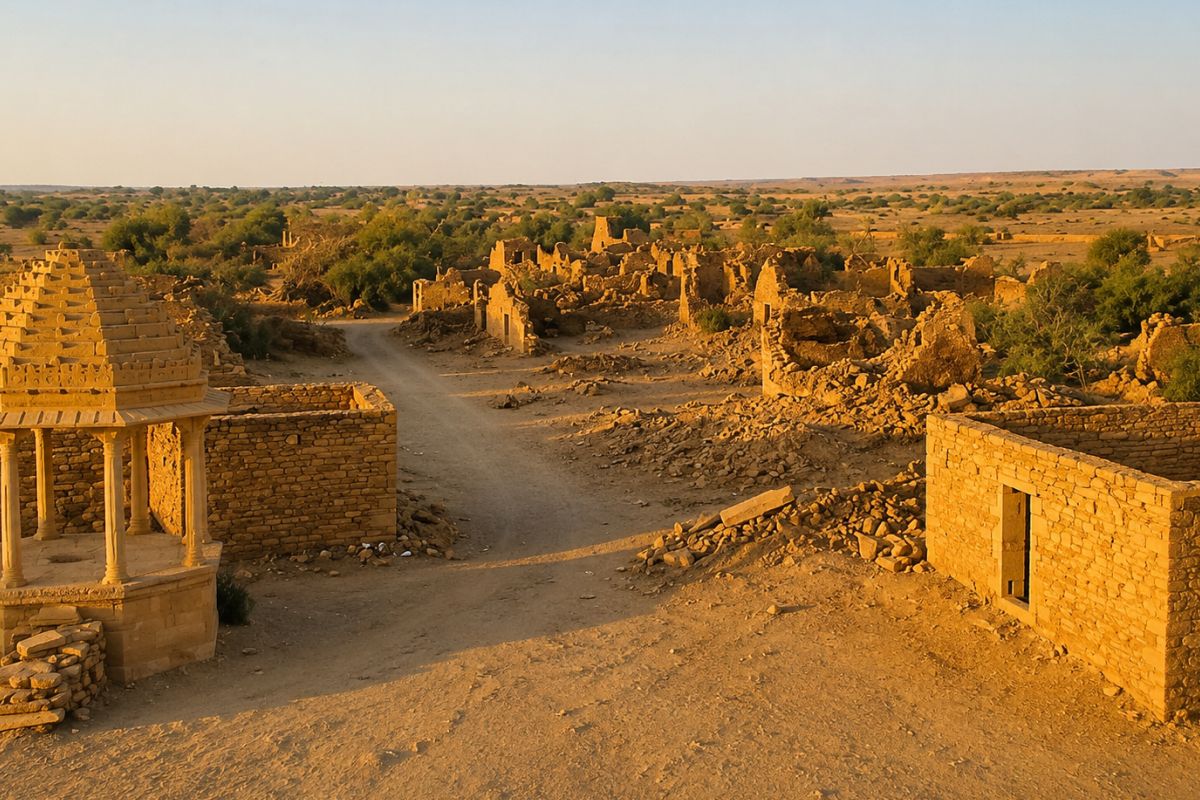
Kuldhara Abandoned Heritage Village
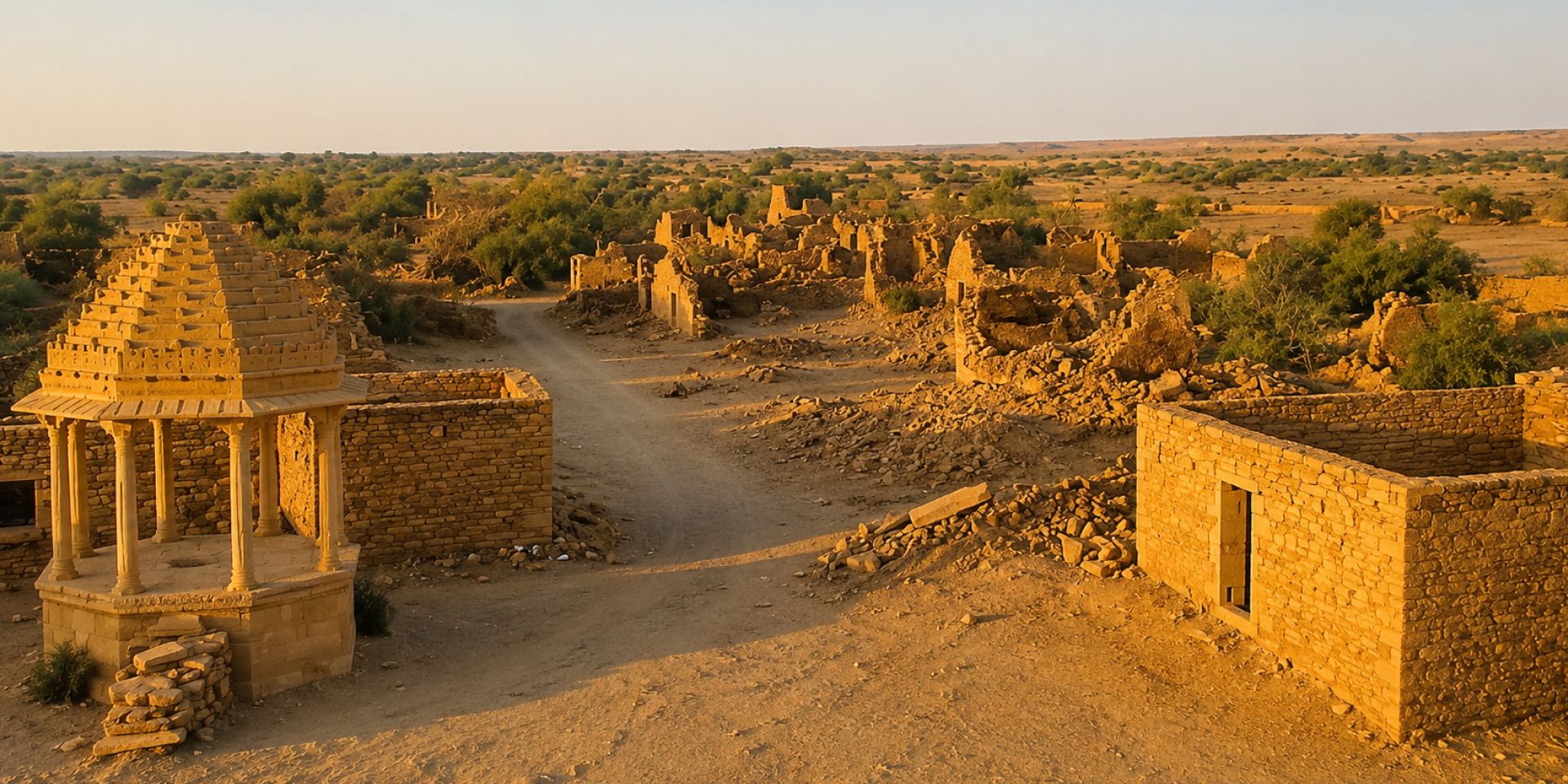
According to historical records, the village was abandoned overnight in the early 19th century when all 84 surrounding Paliwal Brahmin villages evacuated to protect their dignity and escape the exorbitant taxes and tyranny of minister Salim Singh. Today, the ASI-protected ruins feature roofless sandstone homes, street grids, and a restored temple.
Photo TipPhotograph the symmetrical grid of ruined sandstone house walls framing the central temple against the open desert horizon.
Duration: 1 to 1.5 hoursBest: 8:30 AM to 11:30 AM or 3:30 PM to 5:30 PM
Best Time To Visit
October to March is the absolute best time to visit Jaisalmer. Winter brings dry, pleasantly warm daytime weather (15°C to 25°C) ideal for exploring fort ramparts, walking city bazaars, and enjoying desert safaris. Nights are cool and crisp (5°C to 12°C), providing perfect campfire conditions at desert camps under clear starry skies. February also hosts the world-famous Jaisalmer Desert Festival (Maru Mahotsav).
April to June is extreme summer in the Thar Desert, with daytime temperatures soaring to 40°C–45°C. Outdoor sightseeing between 11:00 AM and 4:30 PM becomes uncomfortably hot, though hotel tariffs drop significantly for budget travelers seeking low-season rates.
July to September brings brief monsoon spells to Rajasthan. While Jaisalmer receives very minimal rainfall, the desert air grows humid and dramatic cloud formations create beautiful photography conditions over sand dunes and fort ramparts.
- October
- November
- December
- January
- February
- March

- ❄️
Winter Season
Pros / HighlightsPleasant daytime weather (15°C–25°C), cool starry nights (5°C–12°C), ideal conditions for camel safaris, desert camping, and attending the Maru Mahotsav festival.Cons / Trade-offsPeak tourist season with higher hotel tariffs and weekend crowds at Jaisalmer Fort and Sam Sand Dunes. - ☀️
Summer Season
Pros / HighlightsSubstantial hotel discounts and peaceful, crowd-free monument visits during early morning hours.Cons / Trade-offsExtreme desert heat (40°C–45°C) making outdoor fort exploration exhausting between 11:00 AM and 4:30 PM. - 🌧️
Monsoon Season
Pros / HighlightsMinimal rainfall with dramatic overcast skies, green patches in desert scrubland, and lower tourist traffic.Cons / Trade-offsIncreased humidity and occasional sand-laden desert winds.
Yatray Smart Advice
Plan your trip between October and March for comfortable fort exploration, enjoyable desert dune safaris, vibrant folk performances, and cool desert campfire nights.
Recommended Places To Stay
 Budget
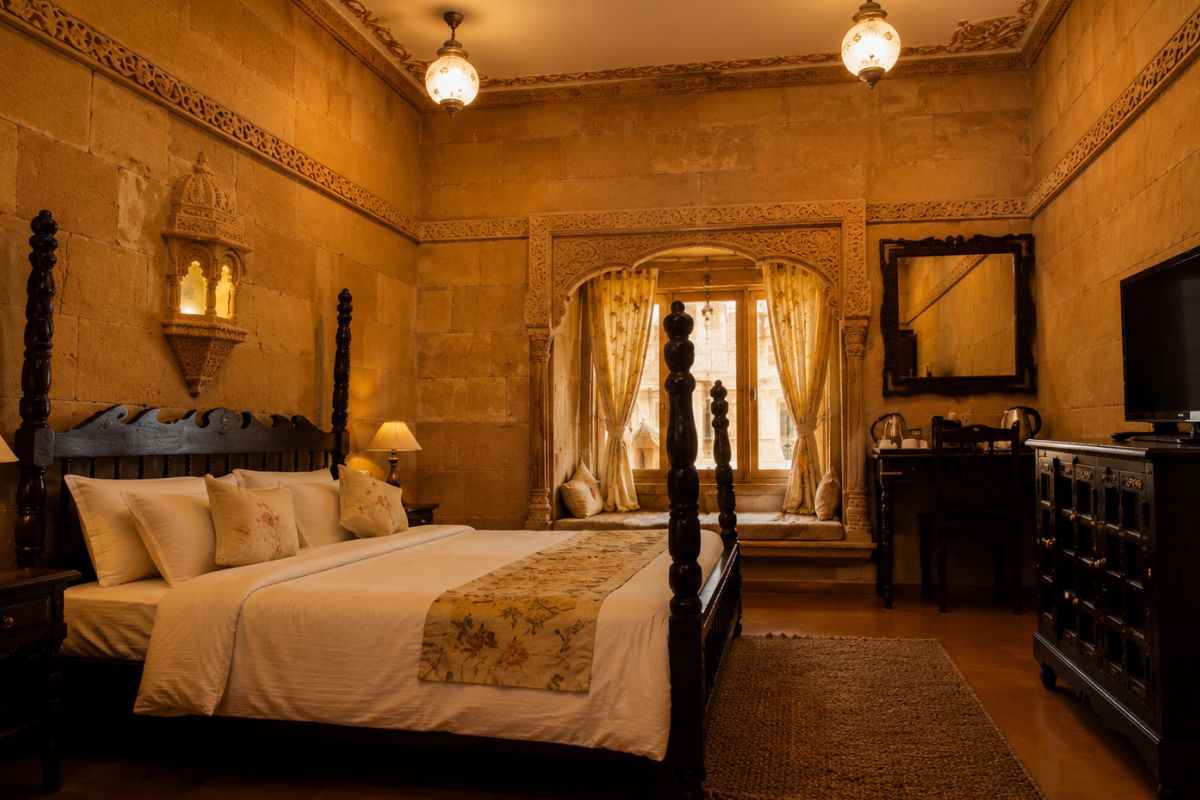
RTDC Hotel Moomal
Collectorate Circle, Jaisalmer
Best ForFamilies, tour groups, and budget travelers seeking clean state-run accommodation with spacious AC rooms, green lawns, pure veg restaurant, and travel desk
Estimated Budget₹1,800 to ₹3,500 per night
per night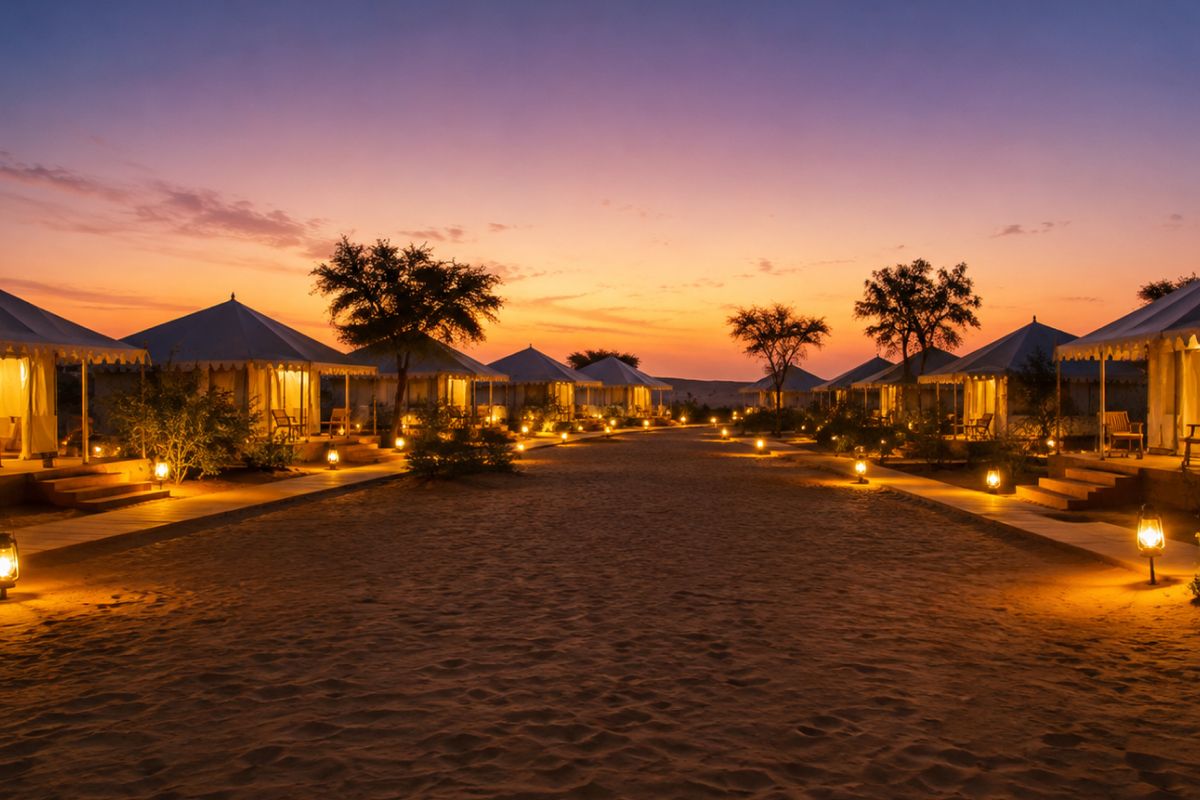 Mid-Range
Winds Desert Camp (Sam Sand Dunes)
Sam Sand Dunes, 45 km from Jaisalmer
Best ForFamilies, couples, and desert enthusiasts seeking a well-managed luxury camp at Sam Dunes with Swiss AC tents, camel safaris, and cultural evening shows
Estimated Budget₹4,500 to ₹8,500 per night
per night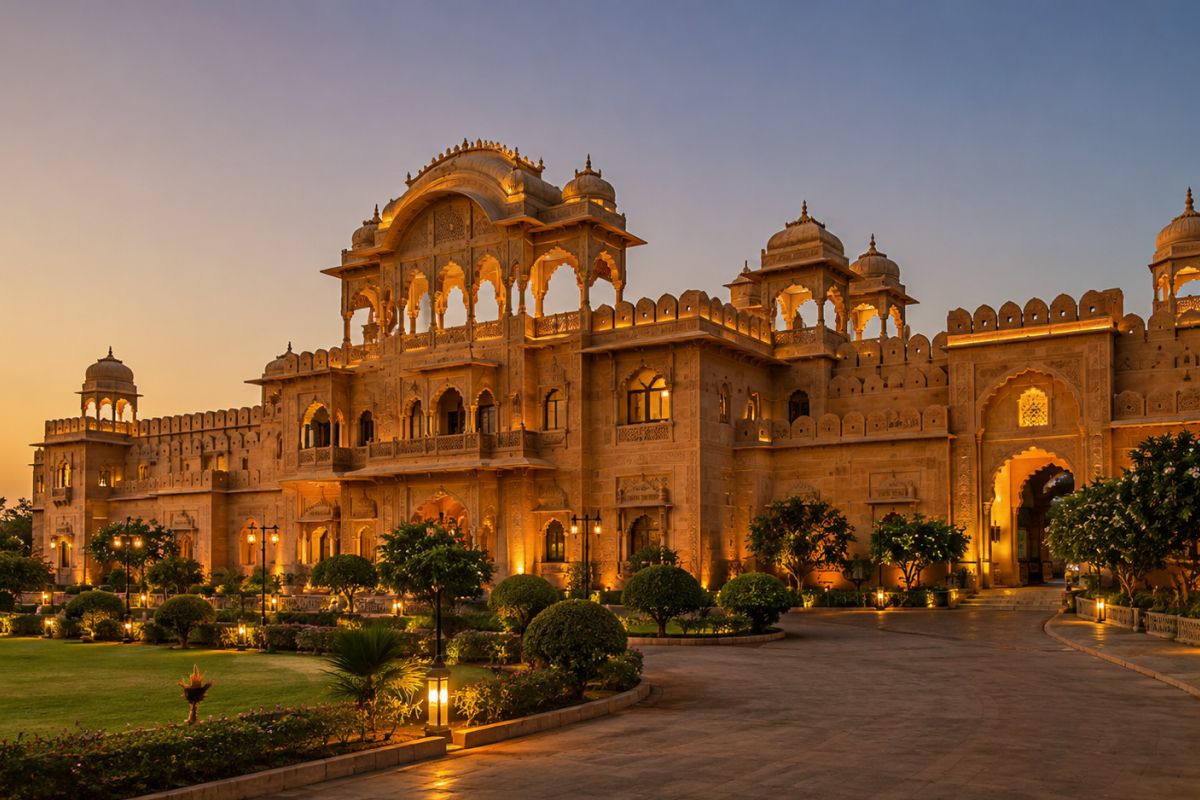 Premium
Fort Rajwada
1-Jethwai Road, Jaisalmer
Best ForLuxury travelers, families, and couples seeking a grand 5-star yellow sandstone heritage hotel set on 6 acres with carved jharokhas, pool, spa, and fine dining
Estimated Budget₹12,000 to ₹25,000 per night
per night
Rising like a golden mirage from the yellow sands of the Thar Desert, Jaisalmer mesmerizes with its living sandstone fortress, intricate merchant havelis, serene cenotaphs, and vibrant desert folk music.
— Yatray Editorial TeamVegetarian Food Guide
Must-Try Specialties
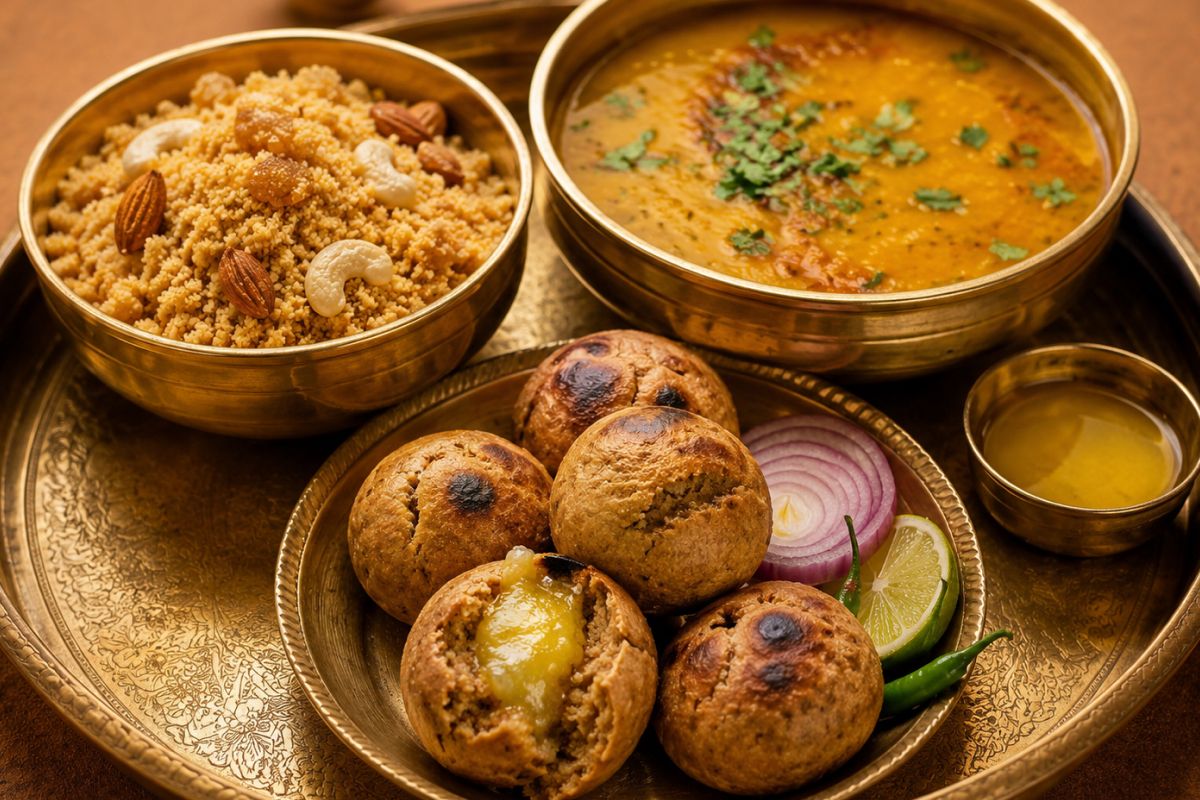
Authentic Dal Baati Churma
The quintessential Rajasthani royal meal of hard baked wheat balls crushed with melted desi ghee, served with five-lentil Panchmel dal and sweet crushed wheat churma.
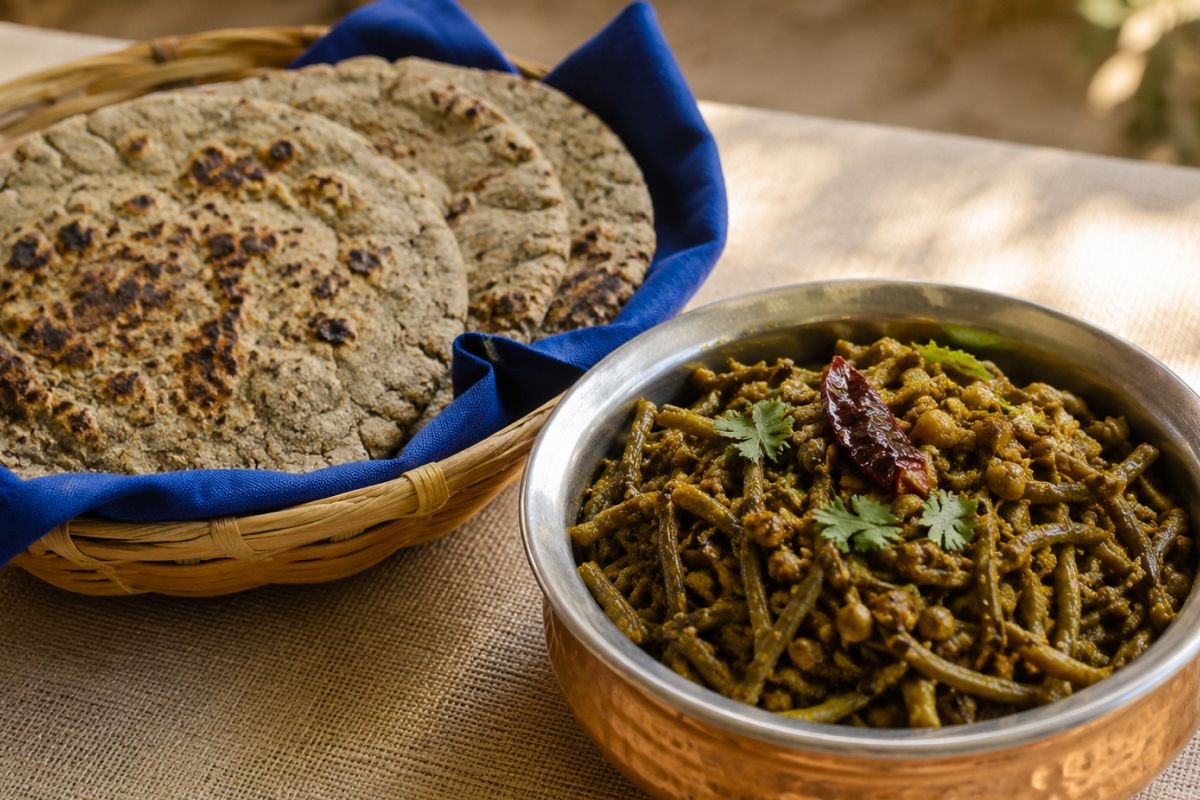
Ker Sangri & Bajre ki Roti
Signature Thar Desert delicacy made from dried wild caper berries (ker) and desert beans (sangri) sautéed with spices, served with hot millet rotis and fresh white butter.
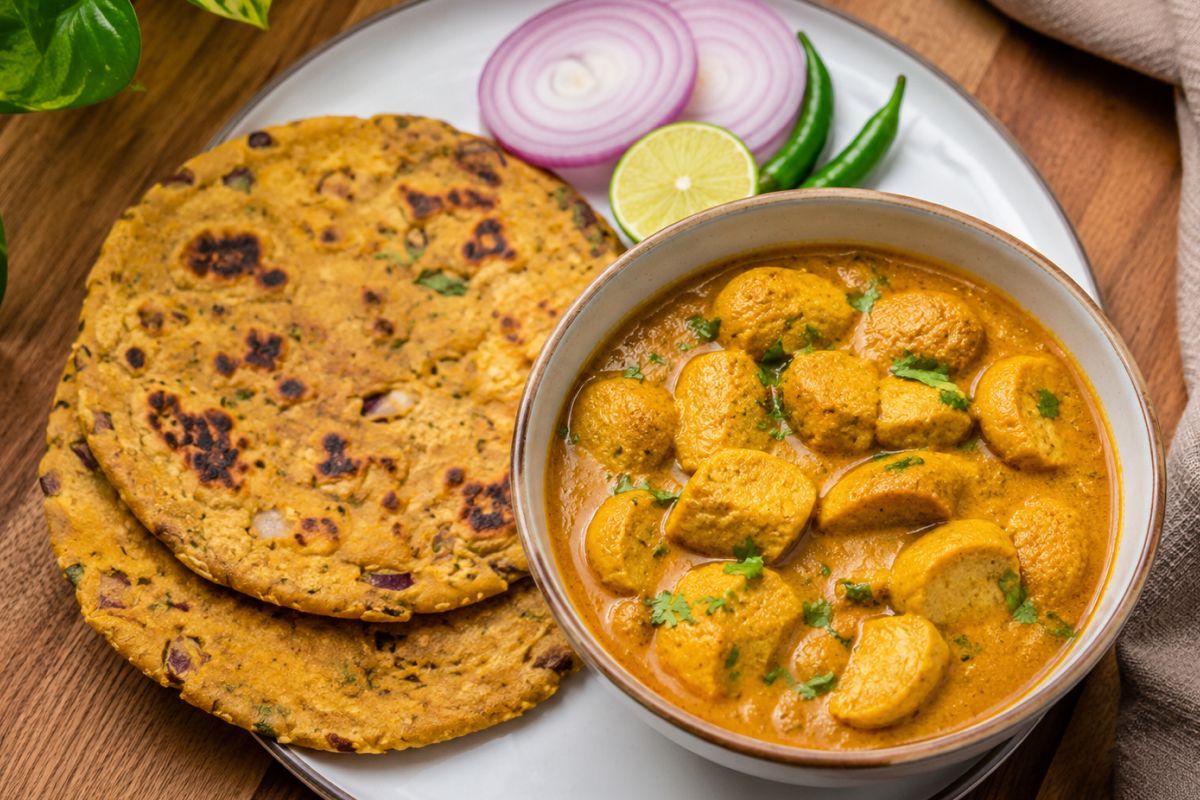
Gatte ki Sabzi & Missi Roti
Tender gram-flour dumplings simmered in a spiced tangy curd gravy, paired with hot mustard-seasoned missi rotis.
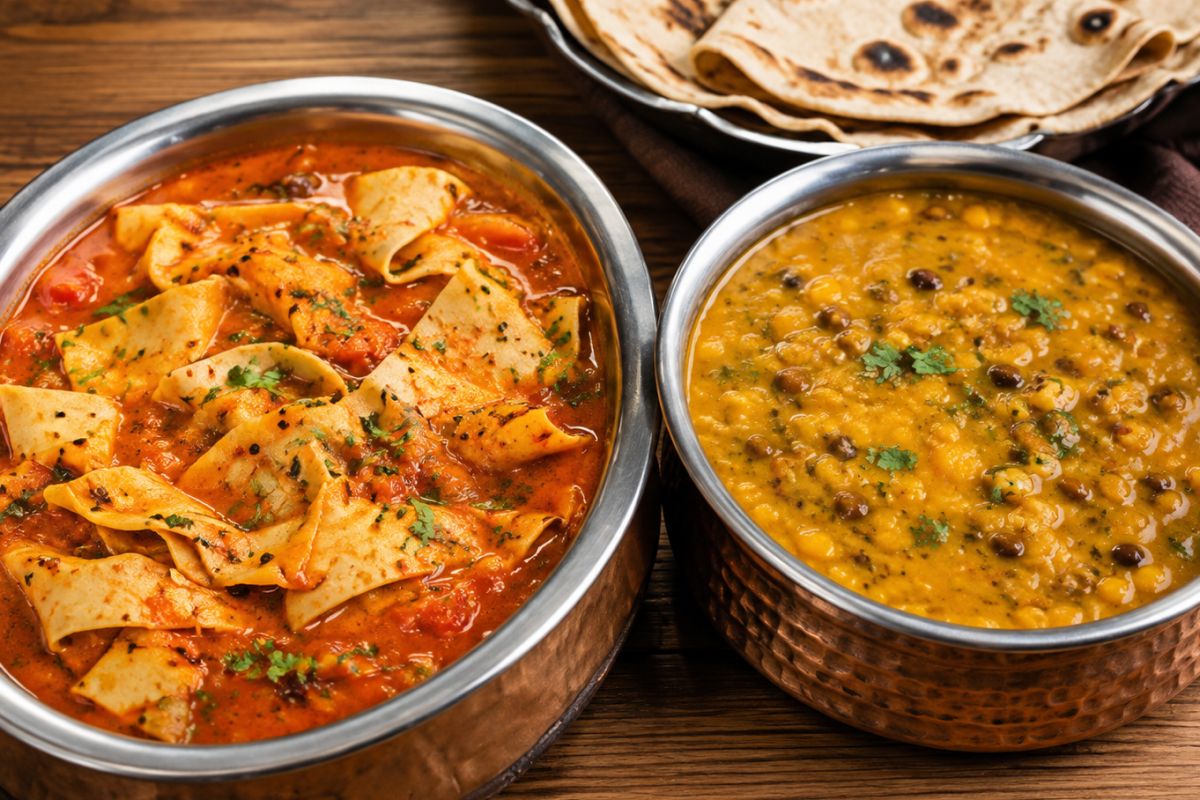
Papad ki Sabzi & Panchmel Dal
Traditional desert householder curry made by simmering roasted papads in a yogurt gravy, served alongside seasoned mixed lentils.
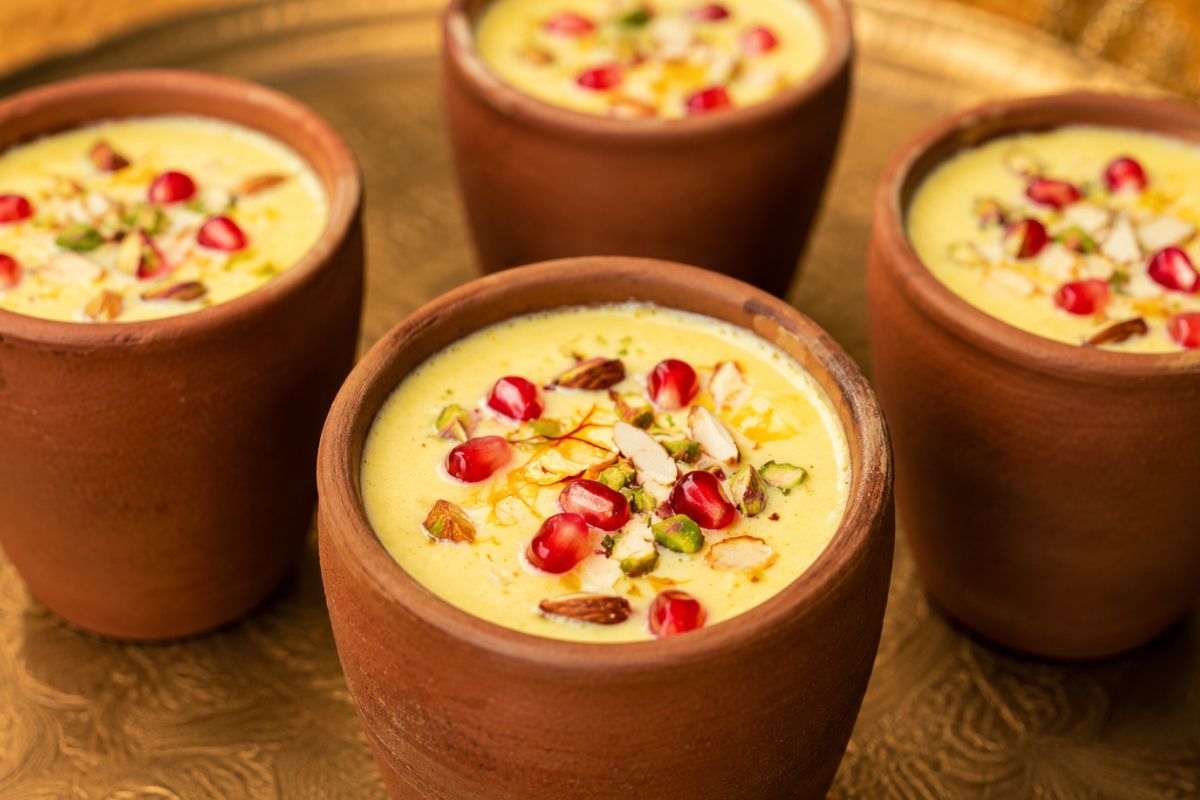
Jaisalmer Makhaniya Lassi
Thick, ultra-creamy yogurt drink flavored with saffron, cardamom, and rose water, topped with a rich dollop of mawa (dried milk) and chopped pistachios.
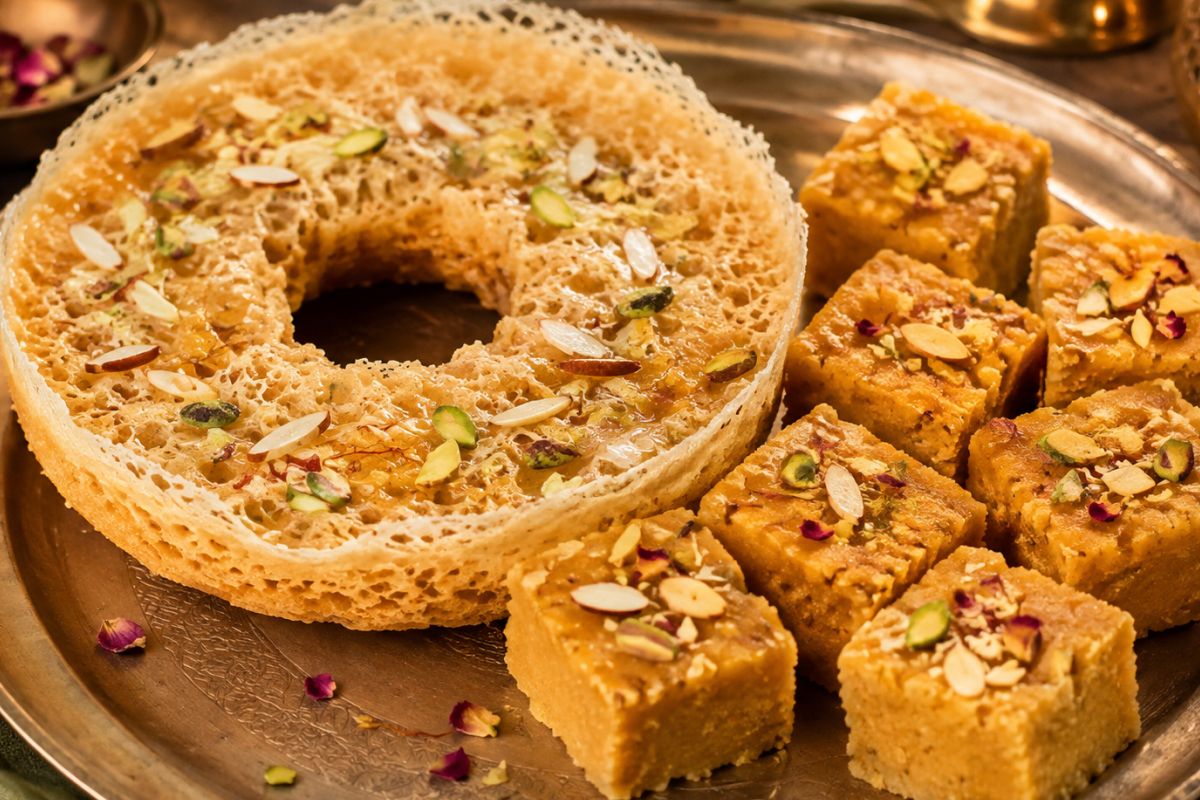
Desi Ghee Ghevar & Mohanthal
Honeycomb sweet soaked in sugar syrup and topped with rabri, alongside dense gram-flour mohanthal fudge infused with saffron.
Curated Restaurants
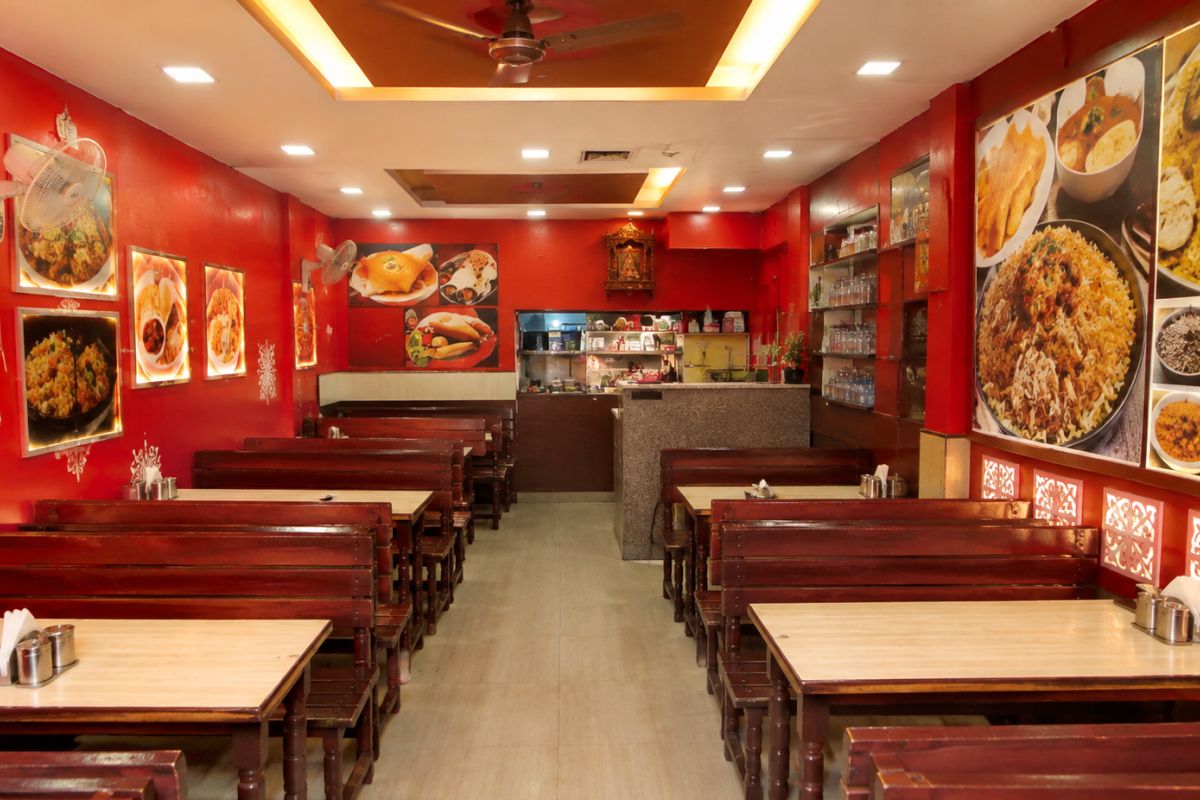 Jain Option
Chandan Shree Restaurant
Pure Vegetarian Rajasthani Thali & North Indian
Popular pure vegetarian institution near Hanuman Circle operating for decades, highly praised for authentic unlimited Rajasthani thalis and prompt service.
Must Try: Rajasthani Thali, Dal Baati Churma, Gatte ki Sabzi, Ker Sangri
Timing: 11:00 AM to 10:30 PM
Average Cost: ₹200 to ₹400 per person
Location: Near Hanuman Circle, Jaisalmer
Family Dining Choice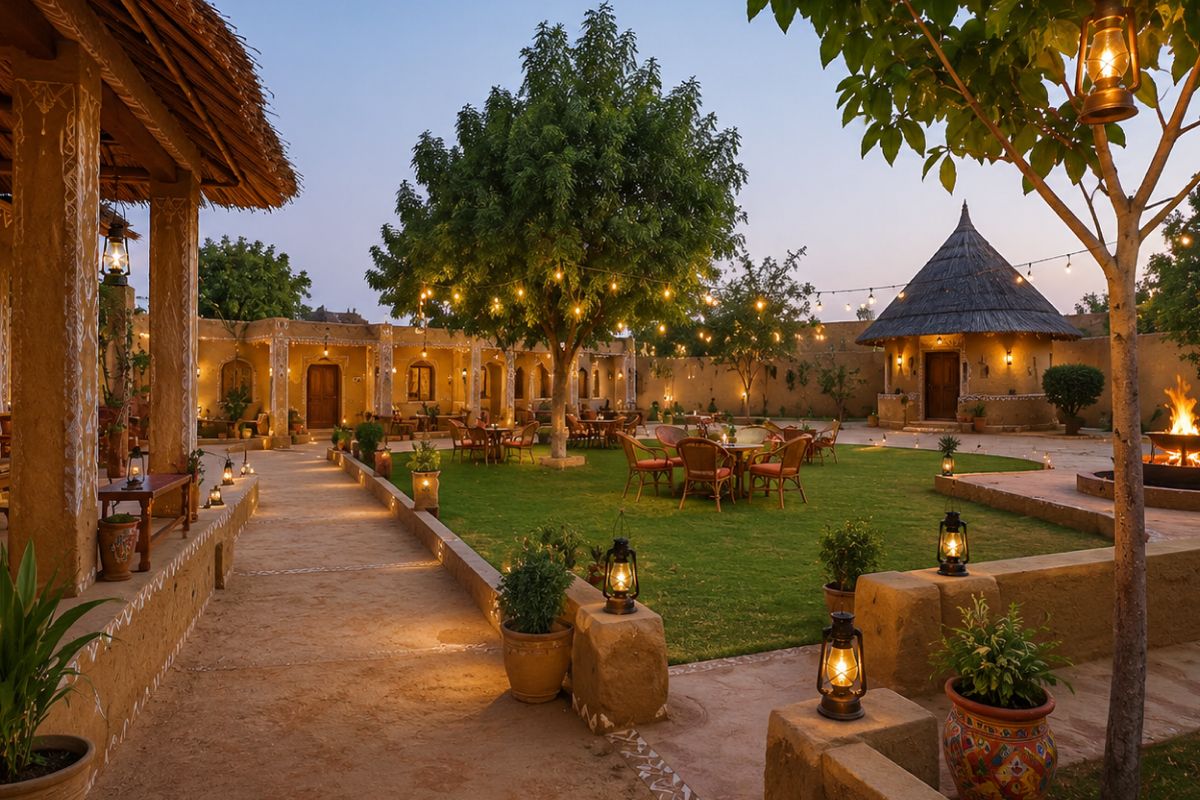 Jain Option
Desert Boy's Dhani
Pure Vegetarian Rajasthani Heritage & Cultural Dining
Authentic desert-style restaurant near Sunset Point offering traditional floor seating, evening folk music performances, and homemade pure veg thalis.
Must Try: Ker Sangri, Bajre ki Roti with Desi Ghee, Panchmel Dal, Lassi
Timing: 12:00 PM to 10:30 PM
Average Cost: ₹350 to ₹650 per person
Location: Near Amar Sagar Pol / Sunset Point, Jaisalmer
Family Dining Choice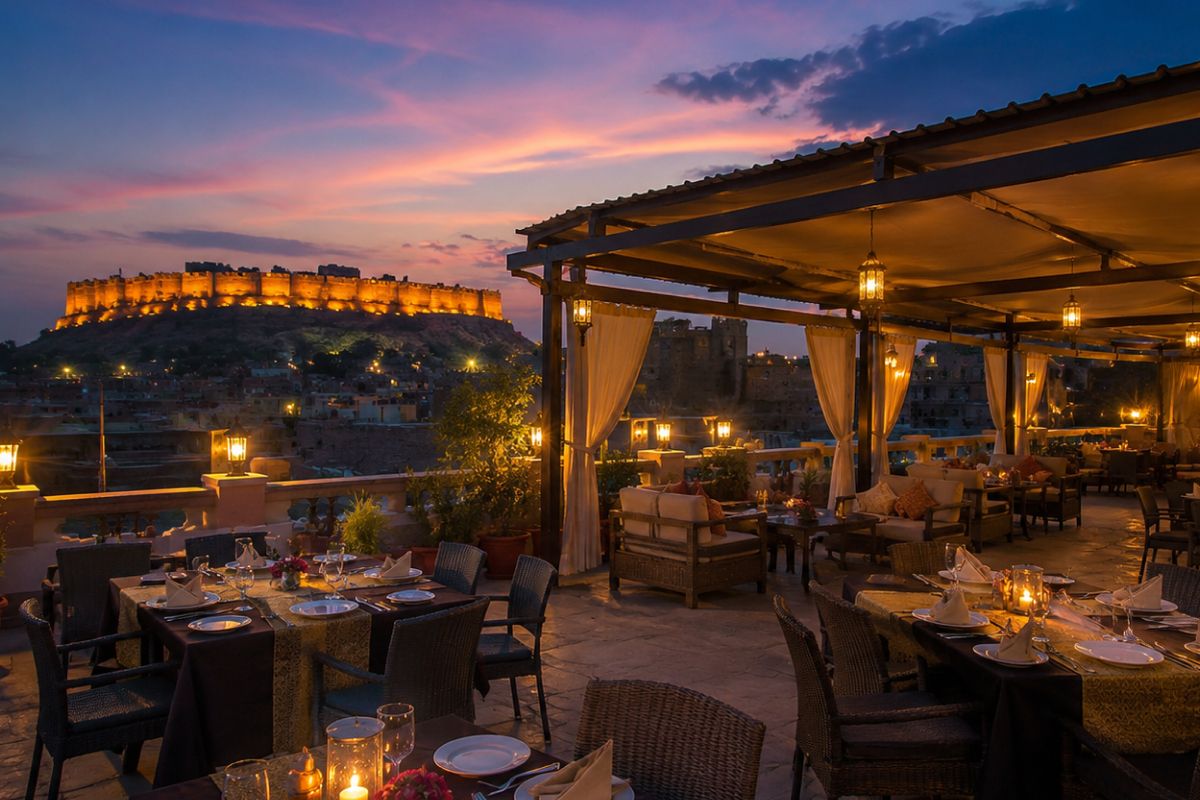 Jain Option
The Trio
Pure Vegetarian Rajasthani Fine Dining
Famous heritage dining venue near Mandir Palace offering an upper terrace with views of Jaisalmer Fort and high-quality pure veg Rajasthani specialties.
Must Try: Special Veg Thali, Malai Kofta, Ker Sangri, Gulab Jamun
Timing: 12:00 PM to 3:30 PM & 7:00 PM to 10:30 PM
Average Cost: ₹450 to ₹850 per person
Location: Mandir Palace Complex, Gandhi Chowk, Jaisalmer
Family Dining Choice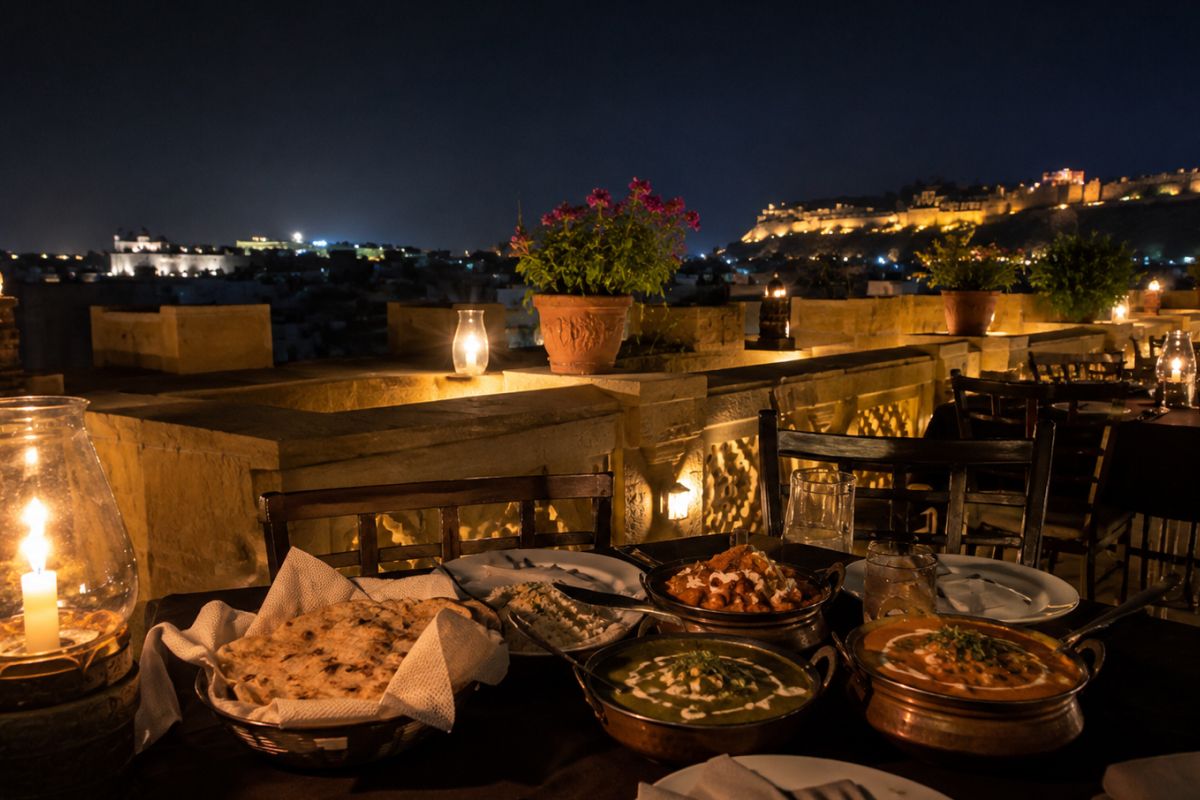 Jain Option
Pleasant Haveli Rooftop Restaurant
Pure Vegetarian Rajasthani & North Indian Rooftop
Scenic rooftop restaurant offering panoramic 360-degree views of Jaisalmer Fort, serving freshly prepared pure vegetarian Rajasthani thalis.
Must Try: Fort View Thali, Gatte Curry, Jeera Rice, Fresh Lassi
Timing: 7:30 AM to 10:30 PM
Average Cost: ₹300 to ₹600 per person
Location: Chainpura Street, Near Fort entrance, Jaisalmer
Family Dining Choice
Jain Food Availability
Jaisalmer has a deep Jain heritage. Pure satvik and Jain meals (prepared strictly without onion, garlic, or root vegetables) are readily available at Chandan Shree, Desert Boy's Dhani, and most major vegetarian dining halls inside the fort and city.
👨👩👧👦 Family Dining Notes
Jaisalmer's dining environment is warm and welcoming. Pure vegetarian thali restaurants offer comfortable seating for multi-generational families with mild thali options for children and senior citizens.
Suggested Itinerary
2-Day Escape
- Day 1
Morning
Arrive in Jaisalmer and check into your hotel. Begin your exploration at Jaisalmer Fort (Sonar Qila) - walk the ancient bastions, tour Raj Mahal Fort Palace Museum, and admire the 12th-century Jain Temples.
Afternoon
Enjoy a traditional Rajasthani lunch near Gandhi Chowk. Visit Patwon Ki Haveli to explore its 5-mansion complex and state archaeology museum, followed by Nathmal Ki Haveli.
Evening
Head to Gadisar Lake at sunset for a peaceful boat ride around the Tilon Ki Pol gateway. Enjoy Dal Baati Churma and Makhaniya Lassi for dinner at a rooftop pure veg restaurant.
- Day 2
Morning
Drive 6 km north to Bada Bagh to photograph the royal yellow sandstone chhatris in soft morning light. Continue 18 km southwest to Kuldhara abandoned village to explore its historic ruins.
Afternoon
Depart by 3:00 PM for Sam Sand Dunes (45 km west). Enjoy a 4x4 jeep dune bashing session or camel ride across golden sand dunes as the sun sets.
Evening
Check into your desert camp for an evening of Langa-Manganiyar folk music, Kalbelia dance, star-gazing around the campfire, and a traditional Rajasthani dinner buffet.
3-Day In-Depth Experience
- Day 1
Morning
Arrive in Jaisalmer. Settle into your hotel and head straight to Jaisalmer Fort (Sonar Qila). Explore the grand Suraj Pol gate, Raj Mahal Palace, and the exquisite Fort Jain Temples.
Afternoon
Have lunch in the fort area. Spend your afternoon touring the grand havelis of the merchant era - Patwon Ki Haveli, Nathmal Ki Haveli, and Salim Singh Ki Haveli.
Evening
Walk to Vyas Chhatri on the city's northern hill for a dramatic sunset view of the illuminated fort. Enjoy dinner at a heritage pure vegetarian restaurant.
- Day 2
Morning
Early morning visit to Gadisar Lake for golden sunrise light and boat riding around Tilon Ki Pol gateway.
Afternoon
Drive north to Bada Bagh to wander among the royal cenotaphs. Stop by Amar Sagar lake palace and Lodhurva Jain Temple (the ancient Bhati capital).
Evening
Proceed to Khuri Sand Dunes (40 km southwest) for a serene camel ride over quiet sand dunes, followed by traditional village folk music and dinner under the stars.
- Day 3
Morning
Visit Kuldhara abandoned village to explore its ruined streets and learn about Paliwal Brahmin history. Explore local bazaars in Jaisalmer for mirror-work embroidery and leather crafts.
Afternoon
Experience a high-energy afternoon desert safari at Sam Sand Dunes with 4x4 jeep dune bashing and quad biking.
Evening
Wrap up your Jaisalmer journey with a lavish Rajasthani Thali dinner before departing for Jaisalmer Railway Station or Airport.
Travel Tips
Booking & Finance
- Book camel safaris and desert camps through reputable operators or your hotel to avoid aggressive touts near the main fort entrance.
Transport & Getting Around
- Carry cash in small denominations when visiting remote locations like Kuldhara or desert villages, as mobile network and UPI connectivity can be patchy in deep Thar areas.
Photography Guidelines
- Choose Khuri Sand Dunes over Sam Sand Dunes if you prefer a quieter, less commercialized desert sunset with rolling dunes and traditional village atmosphere.
Weather & packing
- Carry warm woolen clothing (jackets, thermals, scarves) for desert winter nights (Dec-Jan), as temperatures at Sam dunes can drop to 4°C–7°C despite 25°C daytime sun.
Food & Water Safety
- Sample authentic Ker Sangri with Bajre ki Roti and Makhaniya Lassi at certified pure vegetarian thali restaurants.
Culture & Etiquette
- Wear comfortable slip-on walking shoes when exploring Jaisalmer Fort and Jain temples, as leather footwear must be removed inside temples and lanes feature steep cobblestones.
- Respect Jain temple rules inside the fort: refrain from carrying leather bags, belts, or wallets inside the sacred precincts.
General Advice
- Hire a licensed local guide inside Jaisalmer Fort and Patwon Ki Haveli to appreciate the intricate architectural details and royal history.
How To Reach
- By Air
- Jaisalmer Airport (JSA) operates seasonal commercial flights from major hubs like Delhi, Mumbai, Jaipur, and Ahmedabad (typically October through March). Prepaid cabs and hotel transfers are available outside the terminal (~20 minutes drive to city center). During off-season, travelers fly into Jodhpur Airport (JDH, 285 km away) and take a 4.5-hour taxi or train to Jaisalmer.
- Nearest Airport: Jaisalmer Airport (JSA) - seasonal flights (~12 km / 20 mins drive); Jodhpur Airport (JDH) - year-round major airport (~285 km / 4.5 hours drive)
- By Rail
- Jaisalmer Railway Station (JSM) is a major terminus connected by direct express trains to Delhi (Ranikhet Express), Jaipur (Leelan Express), Jodhpur (JU JSM Express), Mumbai, Kolkata, and Ahmedabad. The station is located just 2 km from Jaisalmer Fort, with auto-rickshaws and taxis readily available.
- Nearest Station: Jaisalmer Railway Station (JSM) - central location (~2 km from Jaisalmer Fort)
- By Road
- Jaisalmer is well connected via smooth 4-lane national highways (NH-11 and NH-68). Key road distances include Jodhpur (285 km, ~4.5 hours), Bikaner (330 km, ~5 hours), Udaipur (490 km, ~8 hours), Jaipur (560 km, ~9 hours), and Ahmedabad (530 km, ~9 hours). State-run RSRTC Deluxe Volvo buses and private sleeper coaches operate daily routes.
Route & Transit Tips
- Book camel safaris and desert camps through reputable operators or your hotel to avoid aggressive touts near the main fort entrance.
- Carry warm woolen clothing (jackets, thermals, scarves) for desert winter nights (Dec-Jan), as temperatures at Sam dunes can drop to 4°C–7°C despite 25°C daytime sun.
- Wear comfortable slip-on walking shoes when exploring Jaisalmer Fort and Jain temples, as leather footwear must be removed inside temples and lanes feature steep cobblestones.
- Respect Jain temple rules inside the fort: refrain from carrying leather bags, belts, or wallets inside the sacred precincts.
- Carry cash in small denominations when visiting remote locations like Kuldhara or desert villages, as mobile network and UPI connectivity can be patchy in deep Thar areas.
- Choose Khuri Sand Dunes over Sam Sand Dunes if you prefer a quieter, less commercialized desert sunset with rolling dunes and traditional village atmosphere.
Yatray Travel Partner
Plan Your Journey With Yatray
Let our experts craft a tailored travel experience for you. From securing domestic flight connections and train tickets to booking premium stays and private cabs with professional drivers — let us handle all the details.
Usually replies within a few hours.
Nearby Destinations
- Jodhpur (The Blue City)approx 285 km, 4.5 to 5 hours by road / train
Gateway to Thar famous for colossal Mehrangarh Fort, blue-painted Old City houses, Umaid Bhawan Palace, and Jaswant Thada.
- Bikanerapprox 330 km, 5 hours by road / train
Historic desert stronghold renowned for Junagarh Fort, Karni Mata Temple (Deshnoke), Gajner Palace, and camel breeding farm.
- Tanot Mata & Longewala Border Postapprox 120 km, 2.5 hours by road
Historic 1965/1971 war heritage site near the Pakistan border featuring Tanot Mata Temple and Longewala War Memorial with captured military tanks.
Frequently Asked Questions
October to March is the best time to visit Jaisalmer. Winter brings pleasant daytime weather (15°C to 25°C), ideal for fort exploration, bazaar walks, and desert camping under cool starry nights.
A 3-day to 4-day trip is ideal to comfortably cover Jaisalmer Fort, merchant havelis, Gadisar Lake, Bada Bagh, Kuldhara, and an overnight Thar Desert camp stay at Sam or Khuri.
Jaisalmer Airport (JSA) is located 12 km from the city center, operating seasonal flights (Oct–Mar) from Delhi, Mumbai, and Jaipur. The year-round major airport is Jodhpur Airport (JDH), 285 km (~4.5 hours drive) away.
Jaisalmer is called the Golden City because its fort, havelis, and city buildings are constructed from local yellow sandstone that glows with an incandescent golden hue under the desert sun.
Yes, Jaisalmer Fort (Sonar Qila) is one of the world's few living forts. Nearly one-fourth of the Old City's population resides inside its double sandstone ramparts alongside shops, temples, and cafes.
Sam Sand Dunes (45 km) is high-energy, commercialized, and popular for 4x4 jeep dune bashing and luxury camp shows. Khuri Sand Dunes (40 km) is quieter, scenic, less crowded, and offers peaceful sunsets and rustic village stays.
Yes, there are several heritage guesthouses and hotels inside the fort. However, visitors are encouraged to practice water conservation and note that auto-rickshaws have limited access in narrow fort lanes.
Famous traditional vegetarian dishes include Dal Baati Churma, Ker Sangri (wild berry and bean stir-fry), Gatte ki Sabzi, Papad ki Sabzi, Bajra Roti with white butter, and creamy Makhaniya Lassi.
Kuldhara was a prosperous 13th-century Paliwal Brahmin settlement abandoned overnight in the early 19th century when residents from 84 villages evacuated to escape exorbitant taxes and coercion by minister Salim Singh.
Yes, camel safaris at Sam and Khuri are guided and suitable for all ages. Short sunset camel rides (20–30 minutes) are gentle and very popular with families and senior travelers.
Pack light breathable cottons for warm daytime sun (20°C–25°C), but bring heavy warm jackets, thermals, sweaters, and scarves for chilly desert nights when temperatures can drop to 4°C–8°C.
Tanot Mata Temple is 120 km (~2.5 hours drive) northwest of Jaisalmer near the Pakistan border. Indian citizens can visit the temple freely without prior permits. Visiting border pillars beyond Tanot requires BSF clearance.
Yatray Recommendation
Our Take, From Experience
Jaisalmer is a destination that demands unhurried exploration. Rising dramatically out of the yellow sands of the Thar Desert, the Golden City rewards travelers who take time to experience both its medieval fortress heritage and its vast desert landscapes.
We recommend allocating at least 3 full days for Jaisalmer. Spend your first day within the living walls of Sonar Qila and the merchant havelis. Dedicate your second day to royal cenotaphs at Bada Bagh and an overnight desert safari at Sam or Khuri dunes. Use your third day to visit Kuldhara and explore local artisan markets.
When choosing desert sand dunes, consider your travel style. Sam Sand Dunes offers high-energy 4x4 jeep dune bashing and bustling luxury camps, making it great for first-timers and thrill seekers. If you prefer quiet starlit dunes and peaceful sunset walks, choose Khuri Sand Dunes.
Remember that Jaisalmer Fort is a living community. Respect local residents, support local artisans, conserve water inside the fort, and observe religious etiquette at the ancient Jain temples by depositing leather items prior to entry.
Treat yourself to authentic regional desert delicacies like Ker Sangri with Bajre ki Roti, Dal Baati Churma, and saffron Makhaniya Lassi at certified pure vegetarian thali restaurants across the city.
Your Journey Starts Here
Let us craft your perfect
Jaisalmer itinerary.
Share your dates, travel style, and budget — our concierge team will shape a calm, personalized journey.
Itinerary · Hotels · Flights · Transfers · Local guidance